Bilawal Bhutto Zardari has lost the plot. In three days he has told the country that the system was “made to collapse”, told his own coalition partner to “come to your senses”, and warned that Sindh will burn if it is divided by force. He said all this as the leader of a party that holds the presidency, the chairmanship of the Senate, the government of Sindh, and a place in the federal coalition. A party cannot hold those offices and also play the aggrieved outsider. It is time for the PPP chairman to choose between governing responsibly and leaving the government.
What he actually said
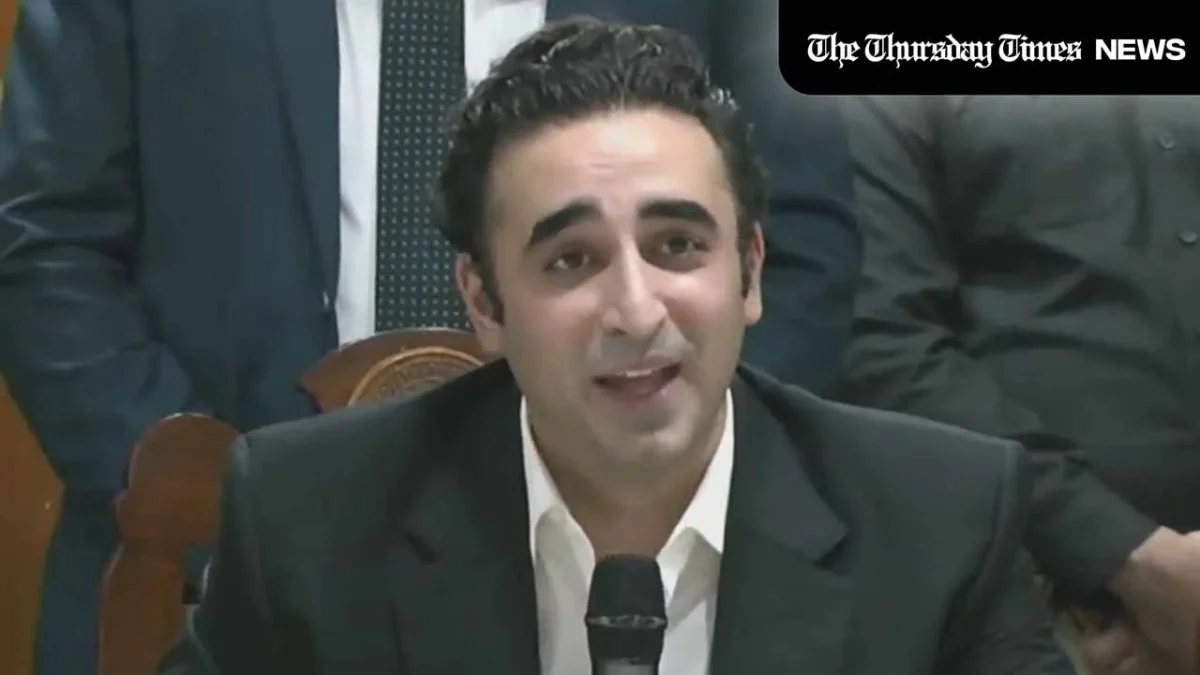
The row began on 17 November at the Karachi Press Club, where the PPP chairman argued that the governance system had not collapsed on its own but had been “made to collapse”. He called for a political and democratic reset, opposed a referendum on new provinces, and said the 27th Amendment had been passed by a “brute majority” rather than by consensus. He urged the return of reserved seats to the opposition.
He then repeated and sharpened the message in back-to-back television interviews. He asked why only the interior minister, who also chairs the cricket board, seemed to have the right to speak about a reset. He said that neither he nor President Asif Ali Zardari had been consulted on new provinces. He said that if Sindh were divided by force there would be a fire that would be hard to put out, and that he was sounding an alarm, not issuing a threat. He said his party had never issued death threats. He said he still wanted Shehbaz Sharif to succeed, that carrying the burden of this government was harming his own politics, and that the PPP could move to the opposition benches if the government did not change its attitude. He said he had told “a little too much truth”, and that the reaction proved politicians lacked the courage to hear it.
You may disagree with my suggestions, but at least listen. You should have the courage to listen to the truth.
That is a lecture, not an argument. It also comes from a man who, in the same interviews, said he was not backing away from the 27th Amendment and called the new federal constitutional court a historic achievement.
In government, attacking the government
The first and plainest fault is contradiction. Bilawal says the system has been made to collapse. The system he describes is one the PPP helped to build and still helps to run. Defence Minister Khawaja Asif reminded him on X that the party has governed Sindh for 18 years and has been a partner of the PML-N at the centre since 2022. Information Minister Attaullah Tarar put it more simply.
We are part of the same government.
Mr Tarar is right. Bilawal criticises the way the 27th Amendment was passed, yet says he is not backing away from it. His party voted for it, and Minister of State for Interior Talal Chaudhry has pointed out that a party cannot vote for a measure, take credit for it, and later distance itself by claiming pressure. Bilawal calls what happened with reserved seats a joke, yet his own party was among the beneficiaries. He says he wants the prime minister to succeed, and in the same breath says the government has decided to fight everyone, himself included. He says carrying this government harms his politics, and he has still not left it.
This is not a coherent position. It is the position of a politician who wants the protection of office and also the applause of the opposition. The public is not obliged to guess which of the two Bilawals is speaking on a given evening.
The language of bloodshed
The second fault is graver. A leader with national standing, speaking about the division of a province, chose to speak of fire, of conditions going out of his control, and of unrest that would be hard to contain. He says it was an alarm and not a threat, and that his party has never issued death threats. The defence will not do. When the chairman of the largest party in the province says that violence will follow a particular decision, and adds that he cannot guarantee to control it, listeners hear a forecast that doubles as a warning, and some will hear an invitation. Health Minister Mustafa Kamal, who leads the MQM-PThe Muttahida Qaumi Movement-Pakistan, the urban Sindh party that has long campaigned for more administrative units in the province and is a partner in the federal coalition., answered that Bilawal would be responsible if even a single drop of blood was shed. That is also a reckless sentence, but it was provoked by the first.
Sindh has a painful memory of ethnic violence. Karachi in particular does not need its political leaders to rehearse that memory for the cameras. Pakistan is fighting terrorists on its western border and carrying a punishing economic crisis; it cannot afford party chiefs who treat the street as a bargaining chip. If Bilawal believes the federal government is mishandling the question of provinces, he has parliament, the courts, and the coalition table. He has no business reaching for the vocabulary of fire.
His remark that the MQM’s history includes violence did nothing to cool matters either. It turned a debate about constitutional procedure into an ethnic quarrel in Karachi, at the very moment when the city needs the opposite.
Undermining the coalition when it matters
The third fault is timing. The country is dealing with an economic crisis, terrorist violence in Balochistan and Khyber Pakhtunkhwa, and a tense neighbourhood. Bilawal himself rattled through that list in his interviews. Having listed it, he proceeded to add to it. He told the government to calm down, hinted at crossing to the opposition benches, and suggested that the interior minister, a federal minister and a member of the very system he is part of, was unfit to speak. Whatever the merits of the point, a coalition partner who wants to be taken seriously raises such matters with the prime minister in private, and does not stage them for the television audience.
He has also given the government an easy answer. Rana Sanaullah has said that if Bilawal meant that he voted for the 27th Amendment under pressure, the remark could raise questions about his eligibility. That was a political reading and not a legal finding, and it was a clumsy overreach, which the government should drop. But the PPP chairman handed it the opening. Every ill-judged line from Bilawal now gives ministers a reason to change the subject from provinces to the PPP’s own record.
A gallery, not a chamber
The fourth fault is where he chose to argue. If the PPP has a case on how new provinces are created, and the Constitution does set out a method, the place for it is parliament and the Council of Common Interests. The PPP has the numbers and the standing to table a proposal, call for a debate, and demand a constitutional answer. Instead the chairman went to a press club and then to the evening talk shows, where applause is easier than votes. A press conference does not bind anyone. A resolution does.
The party itself seems to sense the problem. Its spokesman said the Central Executive Committee would discuss the chairman’s statement on the 27th Amendment, and reports on 19 November said Bilawal was heading to Islamabad to meet his father. The committee should ask him why a plan to defend Sindh required talk of unrest, and why a man with a constitutional case chose the street over the chamber.
His case on process is sound: a referendum organised by the executive is not the constitutional route, and ministers from both parties have said as much. That is one line in a long speech, and he squandered it.
Govern or go
Bilawal Bhutto Zardari has now to choose, and the choice cannot wait for the next press conference. If the PPP wishes to remain in the coalition, it must act like a coalition partner: raise its objections with the prime minister, press its case in parliament and the Council of Common Interests, and stop using the language of bloodshed. It must stand by the amendments it voted for, or explain exactly why it will not. It must accept that a party holding the presidency, the Senate chair, and the Sindh government is part of the system it describes as broken.
If, on the other hand, he truly believes that the government has become unbearable and its decisions dangerous, then the honest course is to leave it, withdraw support, and take his place on the opposition benches, where he may say what he likes and be judged by the voters. What he cannot do is stay in the government and condemn it at the same time, and expect the country to admire his courage.
The government, for its part, owes the country plain words: no referendum outside the constitutional process, no division of Sindh over the objection of its people, and no more talk of disqualification as an answer to a speech. But the first move belongs to Bilawal. He has spent three days asking others to find the courage to listen. It is now his turn to show the courage to decide.