On Saturday the International Monetary Fund said what had been expected since October’s staff-level agreement: Pakistan should phase out the fuel subsidy scheme it launched in September, and any future help for motorists should be “limited, timebound, targeted using established social assistance programs, and accommodated within the FY27 budget envelope”. The scheme was the right answer to a war that pushed petrol to a record Rs458.41 a litre in April. It also did something Pakistan rarely manages: it reached millions of people within weeks, through a digital system, and left a record of who received what. The question now is not whether to retire it, but how. Much of the answer is already in the government’s own plans.
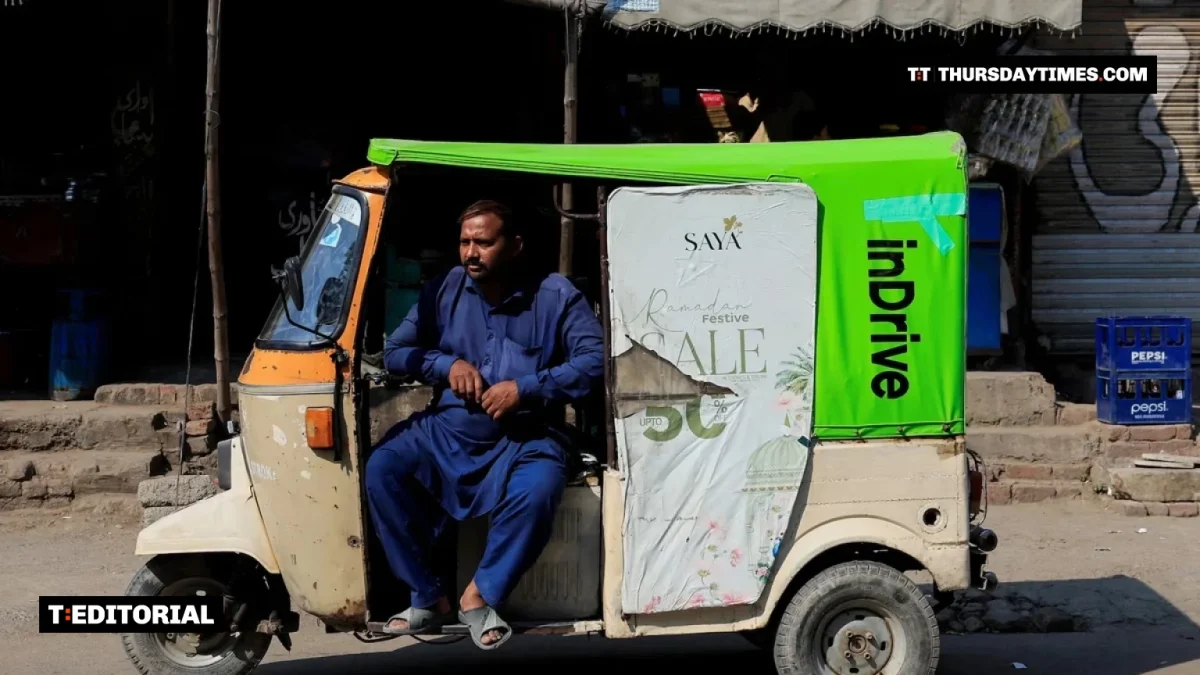
Start with what was built. By November 4, according to the Prime Minister’s Office, 15.5 million people had registered for the Prime Minister’s Fuel Relief Scheme, 63.2 million tokens had been issued, and 59.4 million of them had been redeemed. Rs28.6 billion had been paid out. Motorcycle and rickshaw riders receive a weekly token worth Rs500, and owners of cars with engines of up to 800cc get Rs100 off each litre on up to 10 litres every 10 days. People register by sending their identity card number and vehicle details to 9771, and petrol stations check the token before giving the discount. Prime Minister Shehbaz Sharif called the scheme a “game changer” for future welfare programmes. On delivery, he has a point.
The scheme also showed that the state can fix its mistakes quickly. When a government review in October found that about 31,000 people had missed out on discounted fuel, including more than 10,000 whose tokens expired before they could use them and about 13,000 who were refused at the pump or hit a technical fault, officials ordered audits of petrol stations and went back to the people who had been turned away. A rule that motorcycles had to be registered in the applicant’s own name was relaxed for bikes and three-wheelers that change hands on open transfer letters. Those are the habits of a system that is learning.
The fuel relief scheme in numbers
Of 63.2 million fuel tokens issued, 59.4 million had been redeemed by November 4. Source: Prime Minister’s Office briefing; Oil and Gas Regulatory Authority price notifications.
Why the Fund calls it broad
The IMF’s objection fits into two words of its statement: “broad targeting”. The scheme decides who should get help by what a person rides, not by what a household earns. A motorcycle in Pakistan belongs to the factory worker and the delivery rider, but also to the student from a comfortable home and the clerk with a second income. The 15.5 million registrations are more than the roughly 10 million women who receive the Benazir Income Support Programme’s quarterly stipend, and their families are, by the government’s own survey, among the poorest in the country.
Some of the people hit hardest by the war are outside the scheme altogether. Many auto-rickshaws in Lahore and Karachi run on liquefied petroleum gas, which has sold well above its official price for much of this year, and a petrol token does nothing for their drivers. The poorest households often own no vehicle at all. They feel the price of fuel in bus fares, in flour, and in the cost of vegetables carried to market by truck. Inflation was 9.6% in October, and the State Bank raised its policy rate to 12% the same month. Relief that follows the fuel tank will always miss the family that has no tank to fill.
Then there is the cost. Petroleum Minister Ali Pervaiz Malik has put the monthly bill at between Rs25 billion and Rs40 billion at different points since September. That is not ruinous on its own. But the budget has little room. The Federal Board of Revenue collected Rs4.089 trillion in the first four months of the fiscal year, about Rs95 billion short of its target, and interest payments rose by almost 37% in the first quarter. Every rupee spent on a subsidy that reaches the comfortable along with the poor is a rupee that cannot go to the poor alone, or towards the cut in the petroleum levy that so many motorists want.
Pakistan has built two good machines: one that knows who rides a motorcycle, and one that knows who is poor. Now it should connect them.
The plan is already on the table
None of this is news to the government, and it deserves credit for having said so first. Finance ministry officials said in October that Pakistan was working on an overhaul that would move electricity, gas, fuel, and other subsidies away from broad price relief and towards direct cash support for lower-income households, with BISP as the main channel. Seasonal Ramadan support has already moved from discounted goods at Utility Stores to cash grants through BISP. The plan sent to the cabinet this month to free the price of LPG would pay for subsidies only for households that meet BISP or poverty-test criteria. The fuel scheme should take the same road.
The tools are in place. BISP chooses families through the National Socio-Economic RegistryBISP’s database of household surveys, known as the NSER. It records each family’s members, education, assets, and income, and is open for new registrations all year., which gives every household a proxy means testA score from 0 to 100 worked out from a household’s living conditions and assets. A lower score means a poorer household. The cut-off for BISP’s core cash programme is 32. score. The programme has spent the past year opening digital wallet accounts for its roughly 10 million beneficiaries and handing out SIM cards so that women can receive payments on their own phones. RaastThe State Bank of Pakistan’s instant payment system. It lets people send and receive money, or pay by scanning a QR code, through any bank or payment app. QR codes are printed on more than 45 million gas and electricity bills, 2.03 million merchants now take digital payments, and Islamabad has set December 31 as its deadline to go fully cashless. Pakistan can now put relief straight into a mother’s wallet instead of handing out a discount at a petrol pump.
A four-step exit
Ending the scheme well is a matter of order. A sensible sequence would look like this.
None of these steps needs new law or a new agency. The first is an announcement. The second is a data match between two government databases that already exist, and the power ministry has been running a similar exercise on electricity bills for almost a year. The third is a line in the budget. The fourth is a habit. Taken together, they are close to a word-for-word answer to the IMF’s request for support that is “limited, timebound, targeted using established social assistance programs, and accommodated within the FY27 budget envelope”.
The trigger matters most. This year the government had to design a scheme in the middle of a crisis, while petrol stations were busy and prices were changing week by week. A rule written in calm weather, with its cost known in advance, means that the next time oil jumps, help reaches the poorest families within days and nobody has to argue about whether the budget can afford it. It also gives the finance ministry what it needs most from any subsidy, which is a ceiling.
“This is the IMF setting Pakistan’s terms.”
The commitment to let fuel prices follow world markets while protecting the most vulnerable is Pakistan’s own, made under the Extended Fund Facility. Its officials and its LPG plan already point the same way. Pakistan is choosing the design, and it should own it.
“The poor will pay for this.”
The poorest families are mostly outside the fuel scheme today. Moving the money through BISP would reach many of them for the first time. The real risk is ending relief overnight, and that is why the taper and the trigger come first.
Credibility is worth money
The timing is good. The IMF’s Executive Board is due to meet in December to approve the review agreed in October, which would release about $1 billion under the Extended Fund Facility and $210 million under the Resilience and Sustainability Facility, taking total disbursements to about $5.7 billion. The Fund says the meeting is “subject to the fulfillment of program requirements”. A published timetable for the fuel scheme, agreed before the board sits, removes a question from the table.
Credibility also pays in a quieter way. Khyber Pakhtunkhwa’s debt rose 7.7% to Rs836.4 billion last year, yet the cost of servicing it fell to 3.5% of the province’s receipts, from 4.1% the year before. At the federal level, the first quarter ended with a combined surplus of Rs1.27 trillion, and the petroleum levy brought in a record Rs381.82 billion. Jamaat-e-Islami says that, after rounds of talks, the government is considering a phased reduction of that levy. A government that winds down one subsidy on schedule, and protects the poor while it does so, has a much stronger case when it argues that the next step, whether a lower levy or a larger stipend, is affordable.
The war is not over, and oil can rise as fast as it fell. That is the strongest reason to act now. Petrol has been cut four times in four days and costs Rs330 a litre from Saturday, and diesel Rs360. The best moment to change a subsidy is when prices are falling and the change is felt least.
In the middle of a war, Pakistan designed a digital subsidy, registered 15.5 million people, and paid out billions of rupees through it in a matter of weeks. It can retire that scheme with the same competence. If it does, it will leave behind something more valuable than a discount at the pump: a permanent, targeted shield for its poorest families, ready for the next time the world’s oil price turns against them.