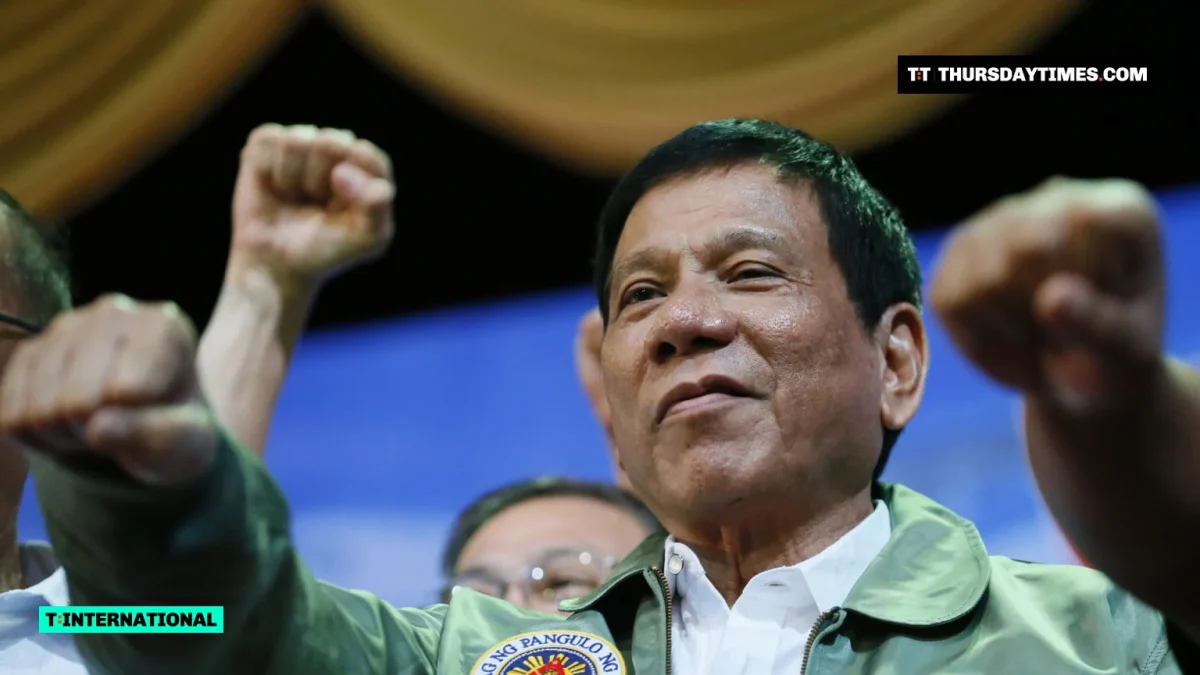
THE HAGUE (The Thursday Times) — Former Philippine president Rodrigo Duterte goes on trial at the International Criminal Court on Monday, the first Asian leader to be tried there, over the thousands of killings carried out in his “war on drugs”.
The 81-year-old is charged with crimes against humanity, specifically murder and attempted murder. Pre-trial judges have ruled there were substantial grounds to believe he was responsible for them during a “widespread and systematic attack against a civilian population”. The court will examine 49 incidents that left 76 people dead, which prosecutors describe as examples of a much wider pattern. Duterte denies the charges, and his lawyers say the death toll came from excessive police enforcement, not an official policy of killing drug users and dealers.
What happens on Monday
On the first day, judges are expected to check whether Duterte understands the charges and whether he pleads guilty or not guilty, before opening statements. The trial is expected to be lengthy, with four-hour sittings each day and around 100 witnesses to be called by prosecutors. Duterte has been held in the Netherlands since he was arrested in Manila and flown to The Hague on a chartered jet in March last year. He did not appear at pre-trial hearings in February, saying in a statement that he was “old, tired and frail” and had memory loss.
The case against him
The court says thousands of people were murdered between 2011 and 2019, first when Duterte was mayor of Davao and then after he became president in 2016. Philippine police reported more than 6,000 deaths in anti-drug operations, although independent groups say the real figure is much higher. “His promise was to kill thousands and he did,” prosecutor Julian Nicholls said after earlier hearings. Defence lawyer Nicholas Kaufman has argued that Duterte’s speeches were full of “hyperbole, bluster and rhetoric” and that he should not be judged on his “vulgar language”.
Duterte is the only defendant, but prosecutors have named eight “co-perpetrators” who they say helped plan the killings. They include Ronald “Bato” dela Rosa, 64, a sitting senator and the former national police chief, who is the subject of an ICC arrest warrant. He has been in hiding since May, after Philippine authorities failed in an attempt to serve the warrant at the Senate.
A divided Philippines
Duterte remains popular, and his supporters argue he should not be in The Hague, accusing the government of President Ferdinand Marcos of selling out national sovereignty. The Philippines withdrew from the ICC in March 2019 under Duterte, but the court says it keeps jurisdiction over crimes alleged to have been committed before that date. His daughter, Vice-President Sara Duterte, is widely considered a front-runner for the 2028 presidential election.
Families of victims and rights groups have welcomed the trial. “This trial tells the world that no leader, however powerful, stands above the law,” said Raul Pangalangan, who chairs the Philippine Truth Commission documenting abuses linked to the campaign. He added that the courtroom “will hear only a small part of the story”, and that thousands of Filipino families are still waiting for answers at home.