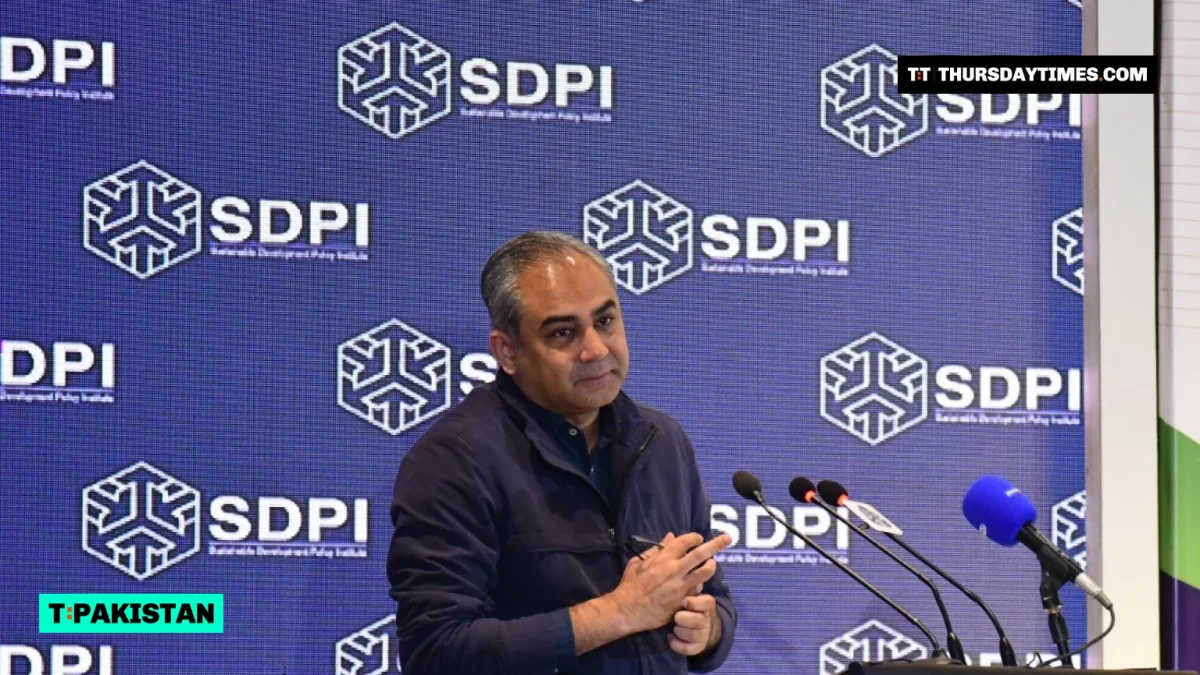
ISLAMABAD (The Thursday Times) — Interior Minister Mohsin Naqvi on 24 November set out four red lines for social media platforms operating in Pakistan: terrorism, hate speech, incitement to violence, and the sexual exploitation of children.
“There are four red lines for us: terrorism, hate speech, incitement to violence and sexual exploitation of children,” Naqvi told a seminar on social media platforms and the post-truth era, organised by the Sustainable Development Policy Institute (SDPI) in Islamabad. “On these four points, there is no compromise.”
“But freedom of speech can never become a shield for those who cross these red lines,” he said.
Naqvi said social media companies had acted on only 47 per cent of the complaints lodged by the Counter Terrorism Department, and tied online content to attacks on the ground. “Very often, the hate that killed them began on a mobile phone,” he said.
He said the drive was not aimed at the press or at critics. “This is not about technology; this is about people,” he said. “We are not saying that free speech must be curtailed. Journalists must report, citizens must question and dissent must be heard, including criticism of the government.”
Terrorists still online
“The state should not feel helpless,” Naqvi said. “Yet, we see terrorist groups still recruiting, raising funds and spreading fear on these very platforms.”
He questioned why the Balochistan Liberation Army, a banned terrorist outfit, was still able to use social media for recruitment, fundraising, and propaganda, and urged international platforms to act against accounts linked to designated groups. “Someone needs to stop them. This is our request.”
Registration and a single complaints channel
Under the new regime, Naqvi said, “social media platforms, over-the-top (OTT) services and major content creators must register with the authority”, the Social Media Protection and Regulatory Authority (SMPRA), and appoint authorised representatives in Pakistan.
“Registration is not a licence to silence anyone; it tells us who is accountable when something goes wrong,” he said.
All complaints to the National Cyber Crime Investigation Agency (NCCIA) will be moved to the Pak ID mobile app so that citizens have one channel and can follow their cases, he said, while SMPRA is building a centralised system to track complaints.
Action against platforms would come in stages, starting with engagement, followed by a notice, and then penalties, and would be lawful, transparent, and open to review. “Blocking an entire platform will remain a last resort,” he added.
Naqvi acknowledged that the NCCIA was stretched, saying Punjab, a province of about 140 million people, had only 61 of the agency’s personnel, including clerks and drivers. He said the agency was being given more staff, digital forensic facilities, and AI-based investigative tools, and defended the new authority’s role.
He cited a case in which a platform’s cooperation helped the NCCIA identify an alleged child abuser in Abbottabad. “When a platform acts, a child is protected,” he said, inviting the companies to work with the authorities. “Let us sit together, not across the table, but on the same side of it.”
SMPRA and the NCCIA, both set up under the amended Prevention of Electronic Crimes Act (PECA), are at the centre of several constitutional petitions and court proceedings across the country.
Ministers call for balance
Federal Minister for IT and Telecommunication Shaza Fatima Khawaja said the Constitution required a balance between freedom of expression and access to information on one side, and privacy, honour, reputation, and dignity on the other.
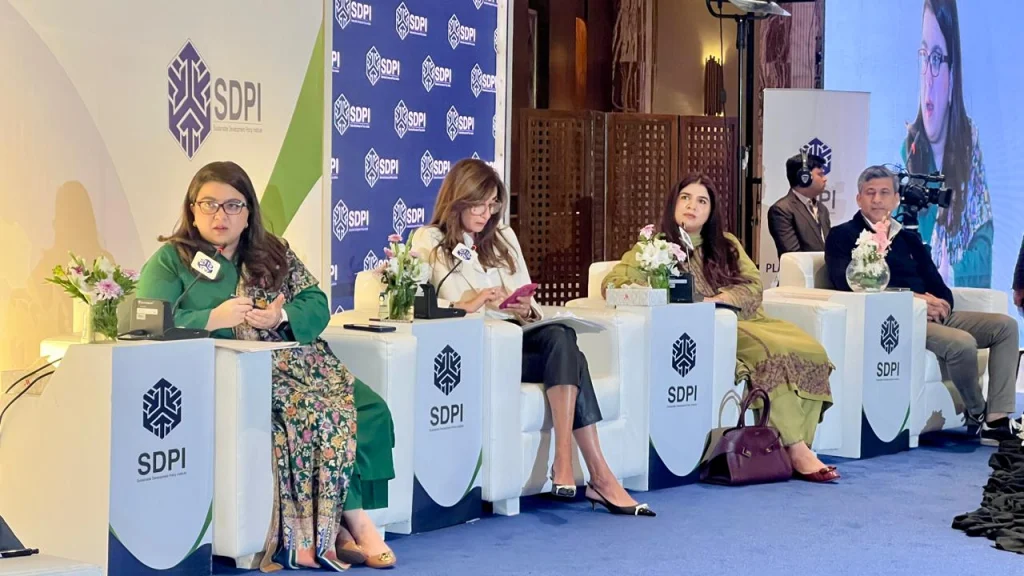
She called for closer coordination between the platforms and domestic bodies such as the Pakistan Telecommunication Authority (PTA) and the NCCIA, particularly on online gender-based harassment and targeted campaigns against public figures, and urged the authorities to back complaints with proper legal context rather than bulk submissions. She cautioned against blanket bans that could stifle innovation, noting that Pakistan’s IT exports had passed $4.6 billion.
Law Minister Azam Nazeer Tarar said the European Union, the United Kingdom, and countries in the region had brought in strict rules to protect citizens, particularly women and children, online. Legislation alone could not solve the problems of the digital age, he said, without shared responsibility among regulators, platforms, and users.
Information Minister Attaullah Tarar said Pakistan had nearly 100 million social media users and around 160 million smartphone users, and that anyone with a smartphone could now produce and spread content, making verification harder.
Canadian journalist Tanya Goudsouzian said professional journalists played a vital role in filling information gaps, and that not everyone with a camera could be considered a journalist. Algorithms and artificial intelligence had sped up the spread of misinformation, she said, and allowed extremist groups to push propaganda far beyond their physical reach.
What the platforms said
Meta Pakistan’s head of public policy, Dania Mukhtar, said the company’s policy on dangerous organisations and individuals bars content that supports or glorifies violent groups, and that government requests are reviewed against its Community Standards, local law, and the principles of necessity and proportionality. “Meta maintains Global Community Standards while respecting local laws,” she said.
Fahad Muhammad Khan Niazi, TikTok’s head of public policy and government relations for emerging markets, said the platform removed 33 million pieces of content in Pakistan in the second quarter of 2026, about 1.1 per cent of local uploads, and was continuing to work with the PTA and the IT ministry.
The next steps are registration with SMPRA and the staged enforcement Naqvi described. Whether the new authority and the NCCIA keep their powers in their present form may be settled in court, where the petitions against them are still pending.
Information Minister Attaullah Tarar spoke at a separate SDPI debate the next day; he said social media now pays in dollars for terror content and harassment. For a closer look at the platforms’ replies and the 47 per cent figure, see our analysis, Meta and TikTok are sitting on half of Pakistan’s terror complaints.