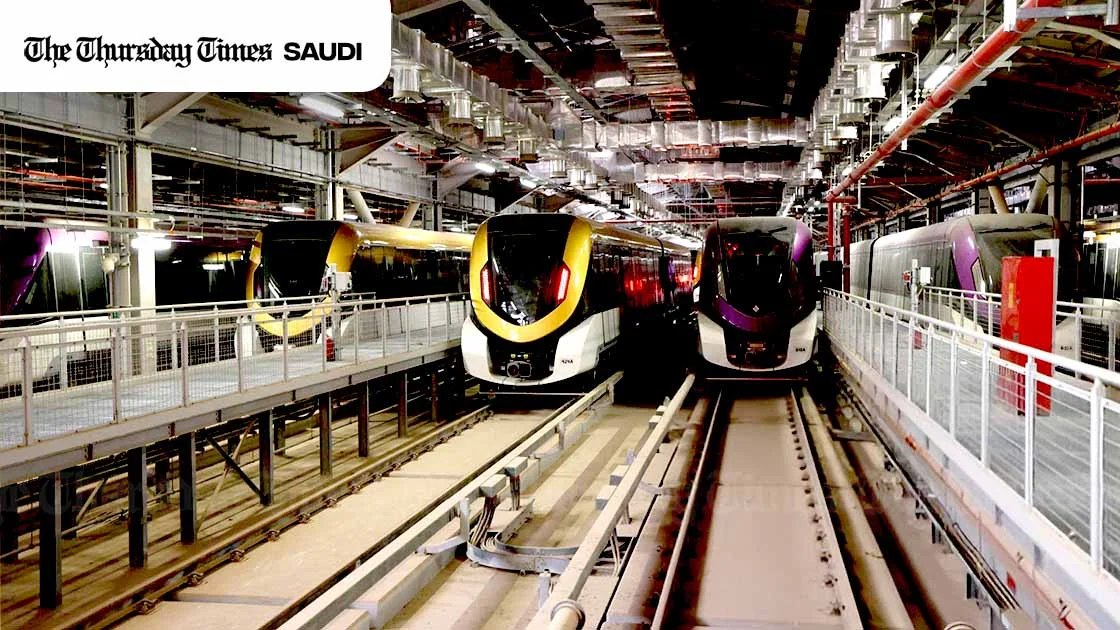
Riyadh (The Thursday Times) — On 27 November, Riyadh will see the launch of the first phase of its new metro system, one of the largest transformative transport projects in Saudi Arabia. This historic achievement, which comes within the framework of Saudi Vision 2030, highlights Riyadh's commitment to strengthening its infrastructure and modernising its transport to keep pace with global standards. With a network of six lines linking the city and its surroundings, the first phase begins with the operation of three main lines, revolutionising the system of movement within the capital.
The pillar of Riyadh's urban transformation
The Riyadh Metro is an essential part of Vision 2030. It is not merely a means of transport but a symbol of the Kingdom's urban and economic transformation. The metro holds a unique position as the world's longest automated metro system, and embodies Riyadh's ambition to become one of the most modern and sustainable cities in the world.
The network extends over 176 kilometres and includes 84 stations, making it one of the most ambitious transport projects in the region. The metro is expected to change radically the pattern of movement in the city, providing a faster, more efficient and more environmentally friendly alternative to private vehicles.
Three main lines bring a step change
The partial launch of the metro will include three distinct lines. The first runs from Al-Urubah to Al-Batha, a vital route linking central commercial and residential areas. The second serves King Khalid International Airport Road, easing access to one of the city's most important transport hubs. The third links the intersection of Abdulrahman bin Auf Street and Sheikh Hassan bin Hussein Street, improving movement within densely populated areas.
These lines are of strategic importance, having been chosen carefully to meet the needs of Riyadh's residents and visitors, while improving the flow of passengers in key areas. By mid-December, three further lines will be added to cover main routes such as King Abdullah Road and Medina Road, making the network more comprehensive and extending its reach.
Towards a more sustainable future
One of the most prominent features of the Riyadh Metro is its commitment to the principles of environmental sustainability. The system incorporates energy-efficiency technologies such as regenerative braking, which reuses the energy produced by braking to reduce electricity consumption. In addition, solar panels installed at stations and depots contribute up to 20% of the energy needs of essential facilities, with the ultimate aim of running the entire network on renewable energy.
This environmental approach is not limited to reducing the carbon footprint; it also supports the Kingdom's ambitious vision of meeting global sustainability standards. Through these efforts, the Riyadh Metro can become a model for sustainable urban transport projects in the region and beyond.
The Challenges of Overcoming Obstacles
Despite the delays the project faced because of logistical challenges and the effects of the Covid-19 pandemic, the launch of the Riyadh Metro is a historic step in transport infrastructure. Investment of more than $22 billion underlines the Kingdom's commitment to a qualitative leap in the public transport sector.
The Kingdom is seeking to make the metro accessible to everyone, with ticket prices and discounted packages expected to be announced soon. These efforts are not merely a modernisation of transport; they also reflect a deeper vision of reshaping urban life in Riyadh, with a smart and sustainable transport network that inspires other cities around the world.
Redefining the Travel Experience
The Riyadh Metro is not merely a means of linking parts of the city; it represents a comprehensive urban transformation that will enhance quality of life. With the integration of advanced technology and environmental initiatives, the metro is expected to become the preferred mode of transport in the capital. This achievement shows the Kingdom's ability to meet challenges and devise modern solutions that serve the needs of the future.