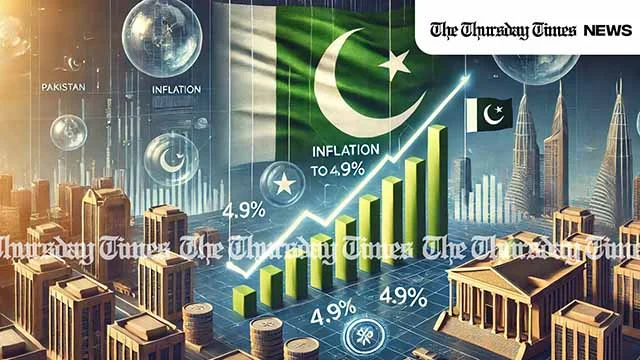
Islamabad (The Thursday Times) — Inflation in Pakistan fell to a six-year low in November, bringing the public and businesses relief after a long period. The consumer price index, which was dangerously high last year, is now an encouraging reflection of the economy's stability.
Inflation in Pakistan fell to 4.9 per cent, its lowest level since 2018, an important milestone for the national economy. The sharp decline is a sign of tight monetary policies, improving supply chains and a stabilising economy. It has raised fresh hope among businesses and the public, and could prove a turning point after several years of uncertainty.
Sharp fall compared with the past
The latest figures show a marked improvement on last year's rising inflation. The steady decline in the consumer price index suggests that the measures taken to contain inflation are succeeding. As economic reforms advance, the fall in inflation has been a breath of fresh air for market participants.
Urban and rural impact
The fall in inflation was more pronounced in rural areas, where reliance on local resources helped keep the cost of living down. In urban areas, however, inflation remained somewhat higher, reflecting the complexity of supply chain adjustments in densely populated areas. These contrasting trends highlight the need for balanced policy measures for urban and rural economies.
Core inflation
Core inflation, which excludes volatile items such as food and energy, rose slightly. Although it is well below its peak, it remains a concern for economists who monitor underlying price pressures. Its persistence indicates that structural problems in the economy, such as weaknesses in production and distribution, have still not been fully resolved.
Impact of monetary policy
The State Bank of Pakistan's tight monetary policies have played an important part in curbing inflation. High real interest rates have not only stabilised consumer prices but also supported the rupee, strengthening overall economic confidence. This monetary discipline, though challenging for borrowers, has proved effective in creating a favourable environment for sustainable growth.
Hope amid challenges
Although the fall in inflation is a welcome development, economic stability remains a fragile prospect. Policymakers are urged to remain cautious, because external shocks or supply chain disruptions could quickly reverse recent gains. Sustaining the current momentum, addressing underlying inflation and ensuring a broad-based economic recovery is a major challenge for the future.