KABUL (The Thursday Times) — Afghanistan risks losing up to 20,000 women teachers and 5,400 healthcare workers by 2030 as Taliban restrictions on girls’ education and women’s employment continue, according to a new UNICEF analysis.
UNICEF said Afghanistan risks losing up to 20,000 women teachers and 5,400 healthcare workers by the end of the decade as current restrictions continue. The agency warned that the crisis is not limited to the girls and women already excluded from classrooms and workplaces, but extends to the essential public services Afghanistan will depend on in the coming years.
The restrictions are not an abstract failure of governance. They are the direct result of decisions taken by the Taliban authorities since returning to power in 2021. Girls have been barred from education above sixth grade, women have been pushed out of many areas of public life, and employment opportunities have been narrowed under a system that has made exclusion a central feature of rule.
UNICEF’s warning therefore lands not only as a humanitarian alert, but as an indictment of the Taliban regime’s own policies. By blocking girls from secondary and higher education, the Taliban is not merely restricting individual rights. It is cutting off the future supply of female teachers, nurses, doctors, midwives and social workers that Afghanistan’s schools and hospitals require.
The damage is already visible. UNICEF says more than one million girls have been denied the right to continue learning since the Taliban imposed its ban on secondary education in 2021. If the restrictions remain in place, that figure could rise to more than two million by 2030, leaving an entire generation of Afghan girls pushed out of education before they can reach adulthood.
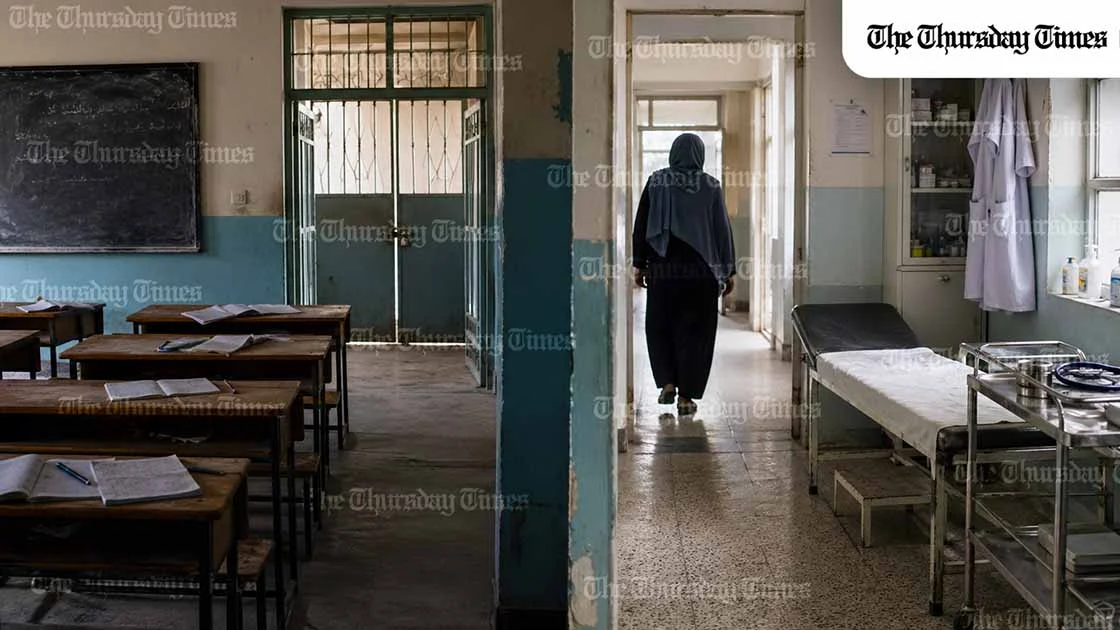
The crisis is especially serious because Afghanistan’s education and healthcare systems depend heavily on female professionals. In many communities, women and girls can only realistically access schooling or medical care through female teachers and health workers. A shortage of women professionals therefore does not simply weaken public services. It can make those services unreachable for large numbers of women and children.
That is why the projected loss of 20,000 female teachers is so damaging. Fewer women teachers means fewer classrooms where girls can learn in a socially acceptable and safe environment. It also means fewer role models, fewer pathways into employment, and fewer educated women able to support families and communities.
The healthcare impact may be even more severe. UNICEF warned that Afghanistan could lose 5,400 female healthcare workers by 2030, with Reuters reporting that the figure could rise to 9,600 by 2035. In a country where women often depend on female professionals for maternal and child healthcare, such a decline would directly affect pregnancy care, childbirth, newborn health and access to treatment.
The Taliban’s restrictions have created a self-defeating crisis. A regime that claims to govern Afghanistan is blocking the education of the girls who could become its future teachers and health workers. In practical terms, the same policies that push women out of public life are also weakening the institutions that Afghan families rely on to survive.
UNICEF Executive Director Catherine Russell said Afghanistan cannot afford to lose the future teachers, nurses, doctors, midwives and social workers who sustain essential services, warning that this will become the reality if girls continue to be excluded from education.
The Taliban authorities have repeatedly defended restrictions on women and girls through their own interpretation of Islamic law, but the consequences are increasingly being measured in empty classrooms, understaffed clinics and collapsing professional pipelines. The longer the restrictions remain, the harder it will be for Afghanistan to rebuild even if the policies are later reversed.
UNICEF’s report describes a dual crisis: Afghanistan is losing trained female professionals today while also preventing the next generation of girls from becoming the professionals who could replace them tomorrow. That is the deeper danger. The country is not only suffering immediate harm. It is being stripped of future capacity.
For Afghan families, the consequences are painfully practical. A girl who cannot continue school cannot become a teacher. A young woman barred from training cannot become a nurse or midwife. A mother who cannot access female healthcare may avoid treatment altogether. A village without women professionals may find that education and healthcare exist in name, but not in reach.
This is why the Taliban regime’s responsibility cannot be softened or hidden behind passive language. These outcomes are not accidental. They flow from deliberate restrictions imposed and maintained by the authorities now controlling Afghanistan. UNICEF’s figures show what those policies are likely to cost the country by 2030.
Afghanistan’s crisis is often described through conflict, poverty and foreign isolation. UNICEF’s warning adds another layer: a country can also be weakened from within when it blocks half its population from learning, working and serving society.
If the current path continues, Afghanistan may enter the next decade with fewer girls in school, fewer women in hospitals, fewer mothers receiving safe care, and fewer professionals able to keep essential services alive.
That is the real cost of the Taliban’s restrictions. They do not only silence girls today. They erase the teachers, doctors, nurses and midwives Afghanistan will need tomorrow.∎