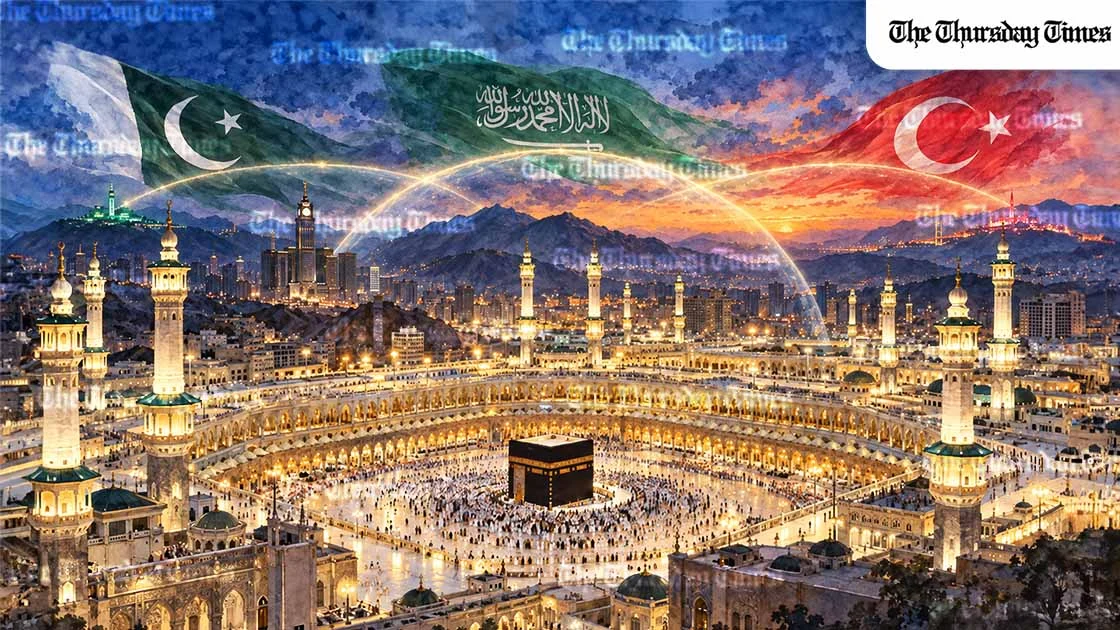
دنیا بھر کے مسلمانوں کے لیے مکہ مکرمہ اور مدینہ منورہ محض شہر نہیں ہیں۔ یہ اس روحانی جغرافیے کا حصہ ہیں جو جدید سرحدوں، فوجی اتحادوں اور ریاستوں کی اسٹریٹجک اصطلاحات سے کہیں پہلے کا ہے۔
اسی لیے ان کے تحفظ کے سوال کو روک تھام، فوجی تعیناتیوں اور دفاعی سازوسامان کی جانی پہچانی زبان تک محدود نہیں کیا جانا چاہیے۔
اگر مکہ دفاعی معاہدے کو کوئی معنی رکھنا ہے تو اسے خطرے کا جواب دینے کے بندوبست سے بڑھ کر کچھ بننا ہوگا۔ اس کی اصل قدر اس میں ہوگی کہ آیا وہ خطرے کو مقدس شہروں تک پہنچنے ہی سے روکنے میں مدد دے سکتا ہے یا نہیں۔
اس کے لیے طاقت یقیناً درکار ہے۔ لیکن اس کے لیے دانش مندانہ فیصلہ سازی بھی ضروری ہے۔
ایسے کسی ڈھانچے میں پاکستان کا مقام واضح ہے۔ سعودی عرب کے ساتھ اس کے تعلقات کئی دہائیوں کے دفاعی تعاون، سیاسی روابط اور عوام کے درمیان گہرے رشتوں پر قائم ہیں۔ تاہم حرمین شریفین سے تعلق سفارت کاری سے کہیں آگے ہے۔ لاکھوں پاکستانیوں کے لیے مکہ مکرمہ اور مدینہ منورہ مذہبی زندگی میں ایک قریبی مقام رکھتے ہیں۔ اس لیے ان کے تحفظ کو محض ایک اسٹریٹجک ذمہ داری نہیں بلکہ امانت سمجھا جاتا ہے۔
یہ جذبہ طاقتور ہے۔ اسے احتیاط کے ساتھ برتا بھی جانا چاہیے۔
مقدس ذمہ داریاں اس لیے مضبوط نہیں ہو جاتیں کہ انہیں بڑھتے ہوئے جنگی انداز میں بیان کیا جائے۔ سب سے قابلِ اعتبار سلامتی پالیسی اکثر وہی ہوتی ہے جو کسی کو اتحاد کی طاقت آزمانے پر مجبور ہونے سے پہلے ہی تصادم کو روک دے۔
ڈھال سب سے زیادہ مؤثر اس وقت ہوتی ہے جب اس کی موجودگی ہی حملے کی حوصلہ شکنی کر دے۔
یہ اصول اس لیے اہم ہے کہ موجودہ دور کے تنازعات اب جنگ اور امن کے خانوں میں آسانی سے نہیں سماتے۔ ڈرون نسبتاً کم لاگت میں سرحدیں عبور کر لیتے ہیں۔ سائبر حملے کسی فوجی کے دوسرے ملک میں داخل ہوئے بغیر اہم ڈھانچے کو مفلوج کر سکتے ہیں۔ حکومتوں کے یہ جاننے سے پہلے کہ کیا ہوا ہے، غلط معلومات الجھن پیدا کر سکتی ہیں۔ مسلح گروہ سیاسی خلا، کھلی سرحدوں اور علاقائی رقابتوں سے فائدہ اٹھاتے ہیں۔
میدانِ جنگ وسیع ہو چکا ہے، اس لیے دفاع کے معنی بھی وسیع ہونے چاہئیں۔
لہٰذا حرمین کے گرد اجتماعی سلامتی کا مطلب روایتی عسکری منصوبہ بندی سے کہیں زیادہ ہونا چاہیے۔ انٹیلی جنس کا تبادلہ، ڈرون شکن نظام، سائبر استعداد، اہم تنصیبات کا تحفظ، قبل از وقت اطلاع کے نظام اور بحران میں رابطے کا طریقۂ کار، یہ سب ایک ہی ڈھانچے کا حصہ ہونے چاہئیں۔
پاکستان اور ترکیہ اس مساوات میں مفید تجربہ لے کر آتے ہیں۔ پاکستان برسوں سے شورش، دہشت گردی اور غیر روایتی سکیورٹی خطرات کا سامنا کر رہا ہے۔ ترکیہ نے نمایاں ٹیکنالوجی اور دفاعی صلاحیتیں تیار کی ہیں۔ سعودی عرب سیاسی مرکزِ ثقل فراہم کرتا ہے اور اسلام کے دو مقدس ترین مقامات کا خادم ہونے کے ناتے اس پر ایسی ذمہ داری عائد ہوتی ہے جو کسی دوسری ریاست پر نہیں۔
لیکن صلاحیت اکیلی حکمتِ عملی نہیں ہوتی۔
یہ خطہ پہلے ہی ایسے بہت سے تنازعات کا شکار ہے جن میں شک ثبوت سے بہت پہلے یقین کی شکل اختیار کر لیتا ہے۔ حوثی، ٹی ٹی پی (TTP)، ٹی ٹی اے (TTA) اور بی ایل اے (BLA) مختلف سیاسی تاریخوں سے ابھرے ہیں اور مختلف حالات میں کام کرتے ہیں۔ غیر متوازن جنگ، پراکسی مقابلے اور غیر ریاستی عناصر کے استعمال کی مشترکہ خصوصیات کا مطالعہ مفید ہو سکتا ہے۔ لیکن حکمتِ عملی کا موازنہ فکری شارٹ کٹ نہیں بننا چاہیے۔
مشرقِ وسطیٰ اور جنوبی ایشیا نے ان بیانیوں کی بھاری قیمت چکائی ہے جو حقائق سے زیادہ تیزی سے پھیلتے ہیں۔
Claims of foreign sponsorship or covert coordination should therefore be investigated rigorously, not merely repeated because they fit an existing geopolitical story. Good intelligence narrows uncertainty. Poor intelligence, or intelligence used carelessly, can widen wars.
This distinction is particularly important when sacred geography is involved.
The Haramain should never become rhetorical accelerants in disputes that can still be contained politically. Their protection should be a reason for greater discipline, not less.
That means constructing an alliance capable of speaking two languages at once.
The first is the language of defence. No hostile actor should doubt that threats to Saudi territory, civilian populations or the holy cities would meet a serious and coordinated response.
The second is the language of de-escalation. Political communication, mediation, intelligence channels and diplomacy must remain available precisely when tensions are at their highest.
A mature security order needs both.
The temptation in public debate will always be to ask how many troops might be sent, which systems might be deployed, or what capabilities individual states could bring to a confrontation. But such questions can obscure the more important point.
Operational secrecy is normal in serious defence relationships. Political intent matters more.
Pakistan does not need to publish an inventory of what it would contribute in order to make its commitment credible. What matters is whether Riyadh and Islamabad possess the trust, mechanisms and readiness required to act together when necessary.
Resolve is not measured in press releases.
Nor is restraint the opposite of resolve.
In fact, states that are genuinely confident in their capabilities are often better placed to exercise restraint. They do not need to turn every provocation into a spectacle of retaliation. They understand that deterrence is successful when adversaries calculate that escalation will fail, while diplomacy still gives them a way to step away from it.
That is the balance the Makkah Defence Pact should seek.
It should be formidable enough that its commitments cannot be dismissed, but sophisticated enough that military force remains the last instrument rather than the first instinct.
The Haramain themselves offer a useful metaphor. For centuries they have stood at the centre of a Muslim world divided by geography, language, politics and competing interests. Their significance has endured precisely because it is greater than those divisions.
Any security architecture built around them should aspire to the same principle.
It should not merely gather weapons around sacred ground. It should build a protective distance between sacred ground and the region’s conflicts.
Pakistan can make an important contribution to that task, not only through military capability but through intelligence, diplomacy, technological cooperation and political restraint.
The ultimate success of such an alliance should not be measured by the force it one day deploys.
It should be measured by how rarely that force becomes necessary.
The strongest defence of the Haramain would be one that keeps the turbulence of the region far from their gates.
That is more than deterrence.
It is stewardship of a trust larger than any single state.