MADRID (The Thursday Times) — At least 68 people were killed on Wednesday when two high-speed trains collided on the Madrid–Seville line in Spain’s Toledo province, nine months after a crash between trains of the same two operators on the same route killed 45 people. It is Europe’s deadliest rail crash since 2013.
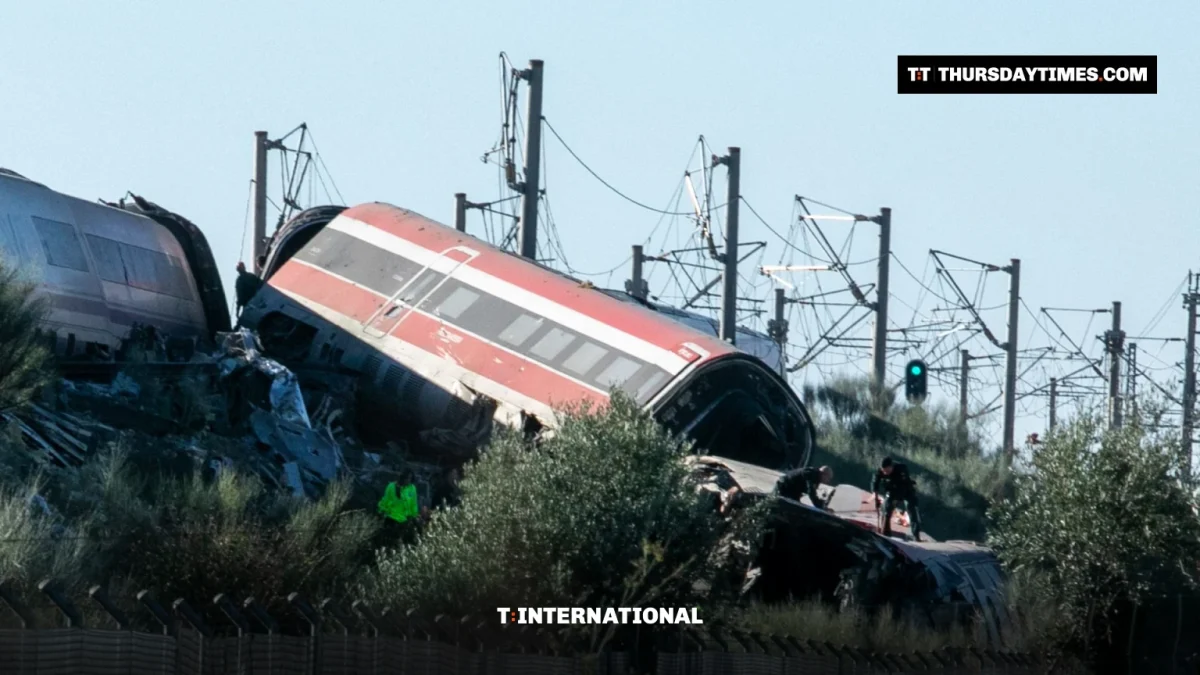
A Renfe AVE train struck the rear of a stationary Iryo train near Urda station at around 8.54am, according to preliminary Transport Ministry information, and Iryo carriages derailed, with at least three plunging down an embankment. The toll climbed through the day from 10 to 30, 32 and then around 64 before the Castilla-La Mancha regional president, Emiliano García-Page, said it had risen to 68, with rescuers still going carriage by carriage in search of more victims. Health Minister Mónica García said 80 people were injured, 15 of them very seriously.
The Renfe train was carrying 397 passengers and the Iryo train 147, said Esther Padilla, a spokesperson for the Castilla-La Mancha regional government. Television footage showed a carriage left on an elevated section of track and wreckage strewn across the embankment below.
Line shut, campaign halted
Rail infrastructure operator Adif suspended all traffic on the high-speed line between Madrid and Andalusia. Hundreds of ambulances, funeral vans, firefighters, medical helicopters and mobile intensive care units were sent to the scene, Madrid sent extra emergency teams, and the Civil Guard dispatched a disaster investigation unit, and the mayor of Urda said a sports hall was being prepared to receive passengers and the injured.
Prime Minister Pedro Sánchez, who faces a general election next month, cleared his schedule and said he was “shocked by the serious train accident in Toledo”. The opposition People’s Party and other parties cancelled campaign events. Real Madrid, Barcelona and Atlético Madrid all issued condolences.
Second disaster in a year
In January, a derailed train smashed into an oncoming service near Adamuz in Córdoba province, killing 45 people and triggering a national debate over spending on railway maintenance. The worst rail disaster in Europe since then was the 2013 derailment at Santiago de Compostela, also in Spain, which killed 80 people.
Cleared through a red signal
Transport Minister Óscar Puente said the Renfe train had been authorised to continue despite an active red signal, triggered by a computer communications failure that automatically halted traffic because of the stationary train ahead, and that an “erroneous decision” had been made to restart it. Renfe said its train had continued “as instructed” and that the investigation would have to establish the exact sequence of events.
Sánchez, speaking near the site, said “all of Spain” was in mourning and promised to fix any failures uncovered. “What is unacceptable for a country like Spain is to suffer two high-speed rail accidents in the same year,” he said, adding that the two crashes appeared to have unrelated causes.