Washington (The Thursday Times) — Armed resistance groups active against the Taliban government in Afghanistan sharply stepped up their operations during October 2026. There have been numerous claims of attacks on Taliban checkpoints, military installations, vehicles and key personnel in the south, north, east, west and centre of the country.
According to a report in the ‘Long War Journal’, published by the American research institute the Foundation for Defense of Democracies, anti-Taliban groups claimed responsibility for a total of 82 attacks in October, more than double the number in September.
The operations included explosive device attacks, rocket and mortar attacks, ambushes and targeted killings of key Taliban officials.
According to the resistance groups' claims, 122 Taliban personnel were killed and 68 wounded in the attacks. The report says the operations were reported in 21 of Afghanistan's provinces, including Kandahar, Helmand, Zabul, Badakhshan, Baghlan, Takhar, Kabul, Bamyan, Parwan, Kapisa, Panjshir, Wardak, Ghor, Herat, Sar-e Pul, Kunar, Nangarhar, Nuristan, Ghazni, Paktia and Logar.
Afghan United Front claims 36 attacks as resistance intensifies in Taliban stronghold
In October, the largest number of attacks was claimed by the Afghan United Front, the group led by former Afghan military commander Lieutenant General Sami Sadat.
According to the ‘Long War Journal’, the Afghan United Front claimed 36 operations over the month, more than three times as many as the second most active group.
Most of these attacks took place in Kandahar and Helmand, which are regarded as key political, military and ideological centres of the Taliban.
Sami Sadat is a former commander of the 215th Helmand Corps of the former Afghan National Army. He grew up in Helmand, and his group has focused particularly on challenging the Taliban's hold in southern Afghanistan.
According to the journal, Sami Sadat holds a unique position among the prominent leaders of the anti-Taliban resistance, because his organisation's operations are centred largely on southern Afghanistan, where the Taliban's influence has historically been strong.
On 26 October, the Afghan United Front claimed responsibility for seven attacks in Ghor, Badakhshan, Ghazni, Zabul, Kandahar and Parwan within just 24 hours.
The Long War Journal described these operations, carried out in different provinces on the same day, as an indication of the organisation's improved military planning and its ability to coordinate attacks.
11 attacks by Ahmad Massoud's National Resistance Front
The National Resistance Front, led by Ahmad Massoud, claimed responsibility for 11 attacks in October.
These operations were reported in Badakhshan, Baghlan, Panjshir, Herat, Kandahar and Wardak.
The attacks include operations by two groups affiliated with the National Resistance Front, the Shaheed Massoud Brigades and Panjshir Unit 01.
The Shaheed Massoud Brigades, which announced its formation on 12 September, claimed responsibility for an attack on a Taliban vehicle in Panjshir on 24 October. According to the organisation, four Taliban personnel were killed and two wounded in the operation.
One significant operation in October took place on 4 October in the city of Faizabad in Badakhshan, where the National Resistance Front claimed to have killed the Taliban's deputy intelligence chief, Safiullah Mutawakkil, and two of his bodyguards.
However, the Taliban also inflicted significant losses on the resistance group.
On 18 October, the National Resistance Front commander Mirwais Khan was killed in clashes with the Taliban in the Parian district of Panjshir.
This was the death of the organisation's second important commander in the past three months. Earlier, on 19 August, the Taliban had killed the resistance commander Haseeb Panjshiri in the northern Salang area of Parwan.
According to the Long War Journal, the continuing deaths of key commanders show that, despite the increase in operations, the resistance groups face serious challenges in terms of leadership and military capability.
Claimed attack on Bagram Air Base as Afghanistan Freedom Front steps up activity
The Afghanistan Freedom Front, led by Yasin Zia, former Chief of the General Staff of the Afghan National Army, claimed responsibility for 10 attacks during October.
The operations were carried out in Badakhshan, Parwan, Kabul, Kapisa, Kunar, Logar, Nuristan and Takhar.
On 22 October, the Afghanistan Freedom Front claimed an attack on Bagram Air Base using indirect fire, in which, according to the group, more than 10 Taliban personnel were killed or wounded.
Bagram is regarded as one of Afghanistan's key military installations and was formerly a major base of US forces.
For the second consecutive month, the Afghanistan Freedom Front also claimed operations against the Taliban in Kamdesh district of Nuristan.
Kamdesh lies close to the Pakistan border.
According to an analysis by ‘The Long War Journal’, the continuing operations in this area may be part of an attempt by the Afghanistan Freedom Front to gain freedom of movement and establish supply routes.
However, this possible strategy has not been independently verified.
New group in anti-Taliban resistance: Afghanistan National Liberation Front formed
At the end of October, a new group emerged within the anti-Taliban resistance.
On 29 October, Afghan media reported that Abdul Sattar Hussaini, a former member of parliament from Farah province, and two other members of the Afghanistan Freedom Front had broken away from their organisation and formed the Afghanistan National Liberation Front.
On 31 October, the new group claimed responsibility for its first operation, against the Taliban's 203rd Mansoori Corps in Gardez, the city in Paktia.
According to the group, two Taliban personnel were killed and one wounded in the attack.
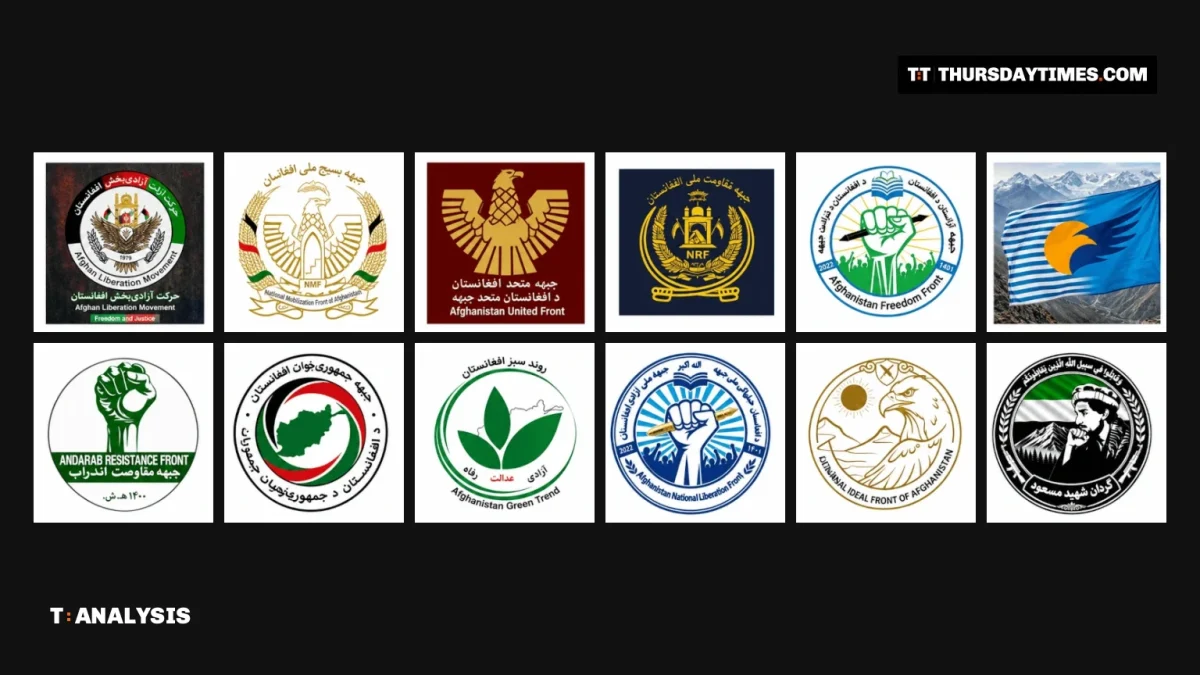
‘The Long War Journal’ pointed out that the Afghanistan National Liberation Front had adopted an emblem almost identical to that of the Afghanistan Freedom Front, the main difference being only in the colours.
According to the journal, the formation of the new organisations points to an increase in anti-Taliban activity, but also reveals growing divisions within the resistance movement.
The anti-Taliban groups have so far failed to organise under a unified leadership and a common strategy.
Amrullah Saleh's Green Unit carries out eight attacks, claims to have shot down India-made helicopter
The Green Unit, the military wing of the Green Trend movement linked to Amrullah Saleh, Afghanistan's former vice-president and former head of the intelligence agency the National Directorate of Security, claimed responsibility for eight attacks in October.
The operations were reported in Badakhshan, Panjshir, Bamyan, Helmand and Herat.
According to ‘The Long War Journal’, this was the highest monthly figure so far for the Green Unit, which began military operations this year.
The Green Unit also claimed to have shot down an India-made Cheetal helicopter in Panjshir, in which both pilots were injured.
The Taliban, however, denied the claim.
According to Taliban officials, the helicopter was not hit in an attack but struck rocks while landing at an unsuitable site.
The two sides give differing accounts of the incident, and the actual cause of the helicopter crash has not been independently verified.
Afghanistan Republican Front carries out nine attacks, Taliban patrol targeted in Ghor
The Afghanistan Republican Front, led by Tahir Zamir, a former governor of Bamyan, claimed responsibility for nine attacks during October.
The operations were reported in Bamyan, Sar-e Pul, Ghazni, Ghor and Kabul.
On 11 October, the organisation claimed responsibility for an explosives attack on a Taliban patrol in Firozkoh, the capital of Ghor.
According to the organisation, four Taliban personnel were killed and two injured in the operation.
Meanwhile, the Homeland Soldiers Front claimed on 19 October to have targeted the Taliban district governor of Kalafgan district in Takhar.
This was the organisation's first announced operation since its temporary seizure in July of the centre of Yaftal Sufla district in Badakhshan.
Taliban prison official killed in Nangarhar; more attacks by various groups
The National Mobilization Front claimed responsibility for the killing of a senior Taliban prison official in Jalalabad, in Nangarhar, on 5 October.
The Taliban also confirmed the official's death.
Later, on 15 October, the Taliban claimed to have killed the man allegedly responsible for the killing, in the Dand Patan district of Paktia.
The Freedom and Justice Movement, led by former Afghan military commander Hamid Saifi, claimed responsibility for an attack on a Taliban checkpoint in Parwan on 22 October.
According to the group, one Taliban member was killed and two were wounded in the operation.
The Afghanistan Liberation Movement claimed an ambush on a Taliban convoy on 17 October.
On 31 October, another new anti-Taliban group, the National Ideal Front, claimed responsibility for three attacks in Ghazni, Baghlan and Helmand.
According to the group, one Taliban member was killed and two were wounded in these operations.
Doubtful videos: 14 alleged attacks excluded from monthly figures
In its report, The Long War Journal did not accept all the claims made by anti-Taliban groups as genuine.
The National Independence Front claimed responsibility for 14 attacks during October, but the journal did not include these operations in its overall figures.
According to the report, several videos released by the group on social media appeared to be old.
Similarly, a video released with an alleged operation on 29 October also appeared clearly to have been staged beforehand.
On the basis of this evidence, The Long War Journal excluded the group's 14 alleged attacks from the total of 82 attacks for October.
The journal's caution is important also because, in the armed conflict under way in Afghanistan, independent verification of claims by various groups about attacks and casualties is often not possible.
Attacks have doubled, but is the Taliban's hold on power really under threat?
The unusual rise in anti-Taliban resistance attacks during October points to a changing security situation in Afghanistan.
In particular, the growing activity of Sami Sadat's Afghan United Front has created a new challenge for the Taliban in southern Afghanistan.
Meanwhile, groups such as Amrullah Saleh's Green Unit and the Afghanistan Republican Front have also stepped up their operations markedly.
However, the increase in the number of attacks is not conclusive proof that the Taliban government is in immediate danger of losing power.
Divisions among the resistance groups, the continual formation of new ones, the lack of a joint leadership and the killing of key commanders raise questions about their long-term military capability.
According to an analysis by ‘The Long War Journal’, the activities of the Afghan United Front have significantly increased the number of anti-Taliban attacks, but the fragmentation of the resistance movement and the losses suffered by its leadership could become a major obstacle to its future success.
Armed resistance to the Taliban in Afghanistan is undoubtedly gathering strength once again, but the real test is not to increase the number of attacks but to unite the various groups under a common political and military strategy.