US midterms: Three NASA astronauts vote from the space station

Anil Menon says he, Luke Delaney and Jessica Watkins filled out electronic ballots, and his sleeping quarters served as the voting booth

Join the conversation
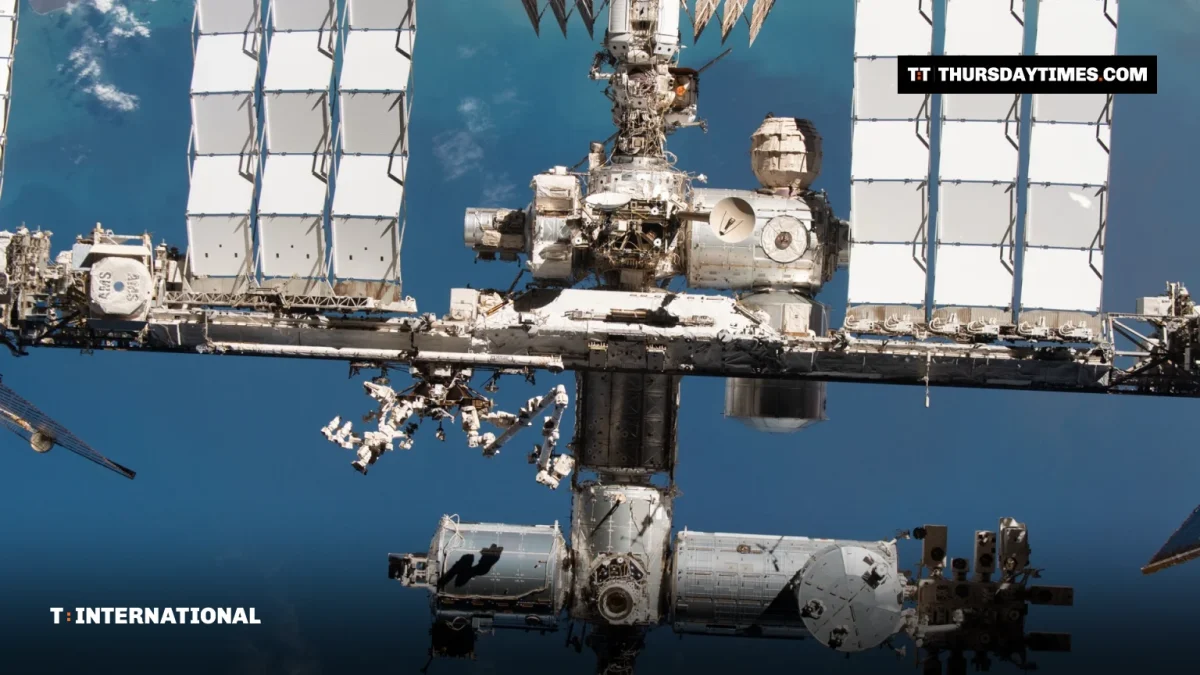
The International Space Station with its solar panels, against the blue Earth below
The International Space Station above the Earth, photographed from a SpaceX Crew Dragon. File photo. — NASA
Part of a running storyUS midterms 2026See all 22 updates

US midterms 2026

Voting under way
Senate51 for control, 50 for Republicans
34Democrats
31Republicans
House218 for control
0Democrats
0Republicans
The seven Senate toss-ups
Michigan6am
Abdul El-Sayed
Mike Rogers
Texas6am
James Talarico
Ken Paxton
Maine6am
Troy Jackson
Susan Collins
Ohio5:30am
Sherrod Brown
Jon Husted
Iowa7am
Josh Turek
Ashley Hinson
Kansas6am
Adam Hamilton
Roger Marshall
Alaska10am
Mary Peltola
Dan Sullivan

Seats follow race calls by US election desks and are not official results. The Senate count starts from the 65 seats not on the ballot. Democrats include independents who sit with them. Poll-closing times are Pakistan time, Wednesday. Full results and coverage

Listen to this articleUS midterms: Three NASA astronauts vote from the space station2 min · device voice0:00 / 1:48

— Three NASA astronauts have voted in the US midterm elections from the International Space Station, about 400km above the Earth, astronaut Anil Menon said on Tuesday.

“Yes, you can even vote from space! All three US crew members had the privilege of voting from space station. We filled out an electronic ballot and sent it securely to the election officials,” Menon wrote on X. Luke Delaney and Jessica Watkins are the other two Americans on board.

In a short video, wearing an “I voted” sticker, Menon showed off his “voting booth”, which is really his sleeping quarters. “Inside of it is my computer, where I was able to fill out an electronic form and send it to Harris County so I could vote today,” he said.

Most NASA astronauts register in Harris County, Texas, home to the Johnson Space Center in Houston. Texas passed a law allowing voting from space in 1997, and astronaut David Wolf used it that year to vote from Russia’s Mir space station.

The ballot takes a long route home. According to NASA, it travels by relay satellite to a ground antenna in New Mexico, then to Mission Control in Houston, and finally to the county clerk. It is encrypted so that only the astronaut and the clerk can read it.

The first polls close at 4am on Wednesday, Pakistan time. Follow the results here.

The conversation

Comments are open on this story. An editor reads every one before it appears.

No one has said anything yet. Be the first.

Published by Thursday Media International thursday.media