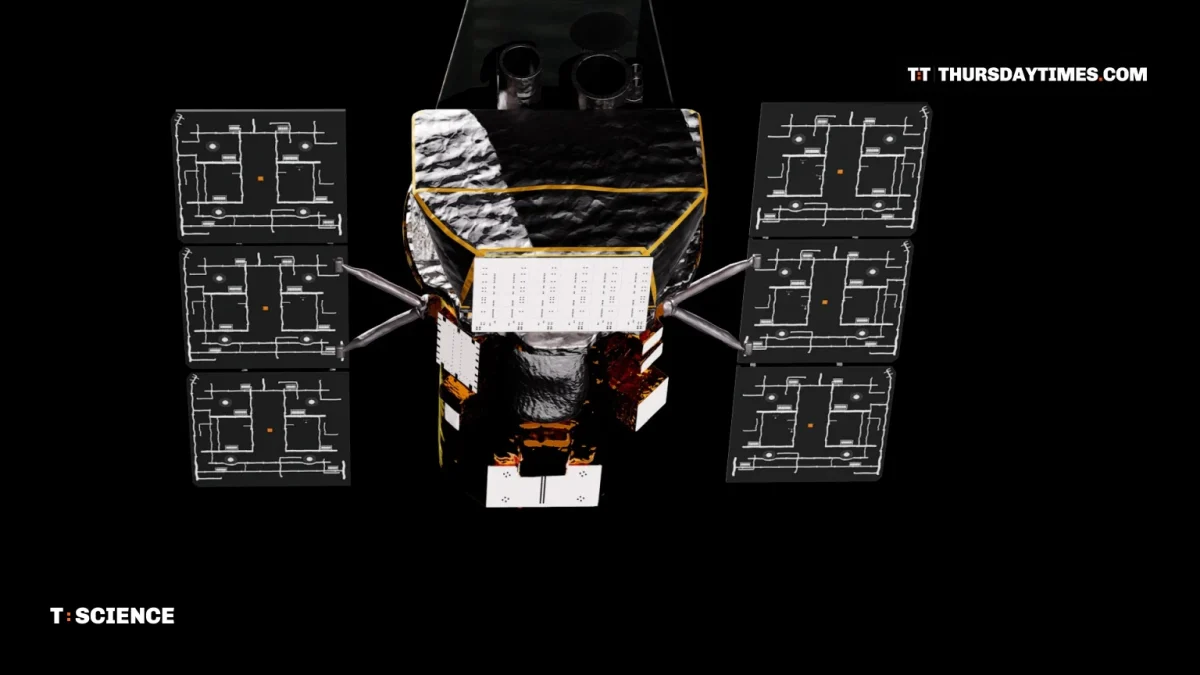
WASHINGTON (The Thursday Times) — NASA’s Neil Gehrels Swift Observatory has fallen back to Earth, re-entering the atmosphere over Indonesia on Wednesday, almost 22 years after its launch, the space agency said.
The US Space Force confirmed the re-entry at 7:39am Eastern time, or 5:39pm in Pakistan, over the North Sumatra region, NASA said. It expected most of the spacecraft to burn up on the way down, but said some components may have survived. Its statement did not mention any damage or injuries.
The 1,500-kilogram observatory came down days earlier than the Friday date projected earlier this week. It sank too low after a commercial mission to lift it to a higher orbit was called off, and it had no engine of its own to climb back up.
Launched in 2004 on a planned two-year mission, Swift was built to catch gamma-ray bursts, the most powerful explosions in the universe, by swinging quickly towards each one and alerting other observatories. It went on working for more than two decades, also studying black holes, flaring stars and supernovae.