For two weeks the vice president of the United States has been on the telephone almost every day to Field Marshal Asim Munir and to Qatar’s prime minister, trying to turn a battered ceasefire into a deal with Iran. Few channels in this war have carried so much, so quietly. Pakistan should keep this one open, and it should know exactly what it wants to come out of it.
The facts of the past fortnight are simple enough. JD Vance has taken charge of the indirect talks with Tehran himself, according to people with direct knowledge of them. He wrote to Mohsen Rezaei, the secretary of Iran’s Supreme National Security Council, proposing a return to direct negotiations, and Iranian officials say the letter created positive momentum. Mediators in Islamabad and Doha have discussed a working-level technical meeting between the two sides. Donald Trump, asked on Friday what his message to Iran was, said only: “We’re talking to them.”
None of this is guaranteed to last. The same week that Vance spoke of “some progress”, American aircraft struck Iran’s Qeshm Island, three tankers hit mines in the Strait of Hormuz and a Qatari gas carrier bound for Pakistan came under fire hours after Iran had cleared its passage. The military is ready to resume heavy strikes at short notice if the president changes his mind. A window has opened. It can close as fast.
How Pakistan came to hold the line
It is worth remembering how unlikely this role once looked. When the United States and Israel attacked Iran on February 28, Pakistan was a neighbour with a long border, a large Shia population and every reason to fear the fire spreading east. Eight months later it is one of two countries both Washington and Tehran will take calls from.
Eight months of Pakistani mediation
February 28
The United States and Israel attack Iran. The war closes most Gulf energy routes.
April
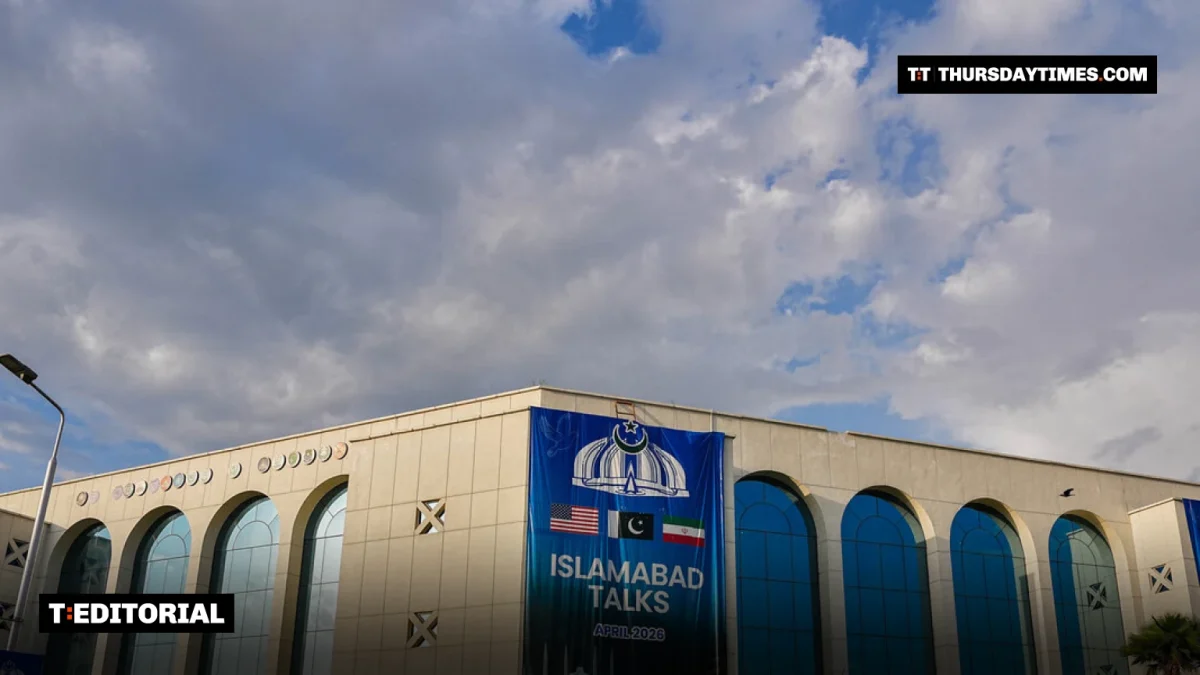
A ceasefire holds long enough for the Islamabad talks, with Vance leading the American team.
June
A US-Iran memorandum of understanding, brokered with Islamabad and Doha. It collapses in August after attacks on shipping resume.
October
Field Marshal Munir travels to Tehran twice. On October 26 Pakistan brings the Saudi and Turkish leaders of the Makkah PactThe joint defence agreement between Pakistan, Saudi Arabia and Türkiye, under which an attack on one member is treated as an attack on all. to their first joint talks with Iran.
November
Vance takes the talks in hand and speaks to Munir almost daily. A technical meeting is under discussion.
That did not happen by accident. It rested on things Pakistan built over years and spent carefully this year: a working relationship with the Trump White House, a military that Tehran deals with as a serious counterpart, and a reputation, in the Gulf capitals, for keeping its word. When Pakistan asked Iran to let Qatari cargoes through to Pakistani terminals, several reached the Gulf of Oman safely. When Islamabad proposed that the Makkah Pact countries meet Iran together, Riyadh said its delegation went “in support of the mediation efforts carried out by the State of Qatar and the Islamic Republic of Pakistan”.
“Few channels in this war have carried so much, so quietly. Pakistan should keep this one open.”
What the war has cost Pakistanis
This is not a diplomatic hobby. Ordinary Pakistanis have paid for the war at every turn. Petrol touched Rs458.41 a litre on April 3 and diesel Rs520.35, prices that pushed up bus fares, freight charges and the cost of everything carried by road. QatarEnergy, which supplies most of Pakistan’s imported liquefied natural gas, has declared force majeureA clause that lets a supplier suspend deliveries without penalty when events outside its control make them impossible. and told Pakistani buyers it will deliver nothing before the end of December, which means the country goes into the peak of winter demand without its main supplier.
Further west, the Reko Diq copper and gold project in Balochistan, the biggest foreign investment Pakistan has seen in a generation, may not start producing until 2030, two years late, with security in the province and the war next door both cited. Millions of Pakistani families depend on wages earned in Saudi Arabia, the United Arab Emirates and Qatar, all within range of the war. Every week the fighting goes on is a week of risk for them.
What the war has cost
What Islamabad should ask for
A mediator who wants nothing for his own country is not trusted for long. Pakistan should be open about what it wants from a settlement, because its interests are also the region’s.
First, the Strait of Hormuz must reopen before anything else, and stay open. Iran has tied its reopening to five conditions, among them recognition of new shipping lanes drawn up with Oman. Whatever form that takes, the test is simple: tankers carrying Pakistani fuel and gas must be able to sail without asking anyone’s permission.
Second, the deal should be built in a sequence both sides can see. Iran wants sanctions relief and the restoration of oil waivers. Washington wants a firm and verifiable commitment that Iran will not rebuild its nuclear programme. The Swiss round in the summer showed the bridge: Iran agreed then to invite United Nations inspectors to its nuclear sites. Pakistan should press for that commitment to be the first thing written down, because it is the one that makes everything else possible.
Third, a ceasefire needs guarantors who live in the region. The Makkah Pact countries and Qatar met Iran together in October. A settlement that gives them a standing role in watching it, rather than leaving it to the moods of distant capitals, will last longer.
Fourth, and most important, mediation must never become participation. Pakistan has rightly made clear that it stands with Saudi Arabia, and the military’s spokesman has said the Makkah Pact’s wording does not bar new members. But the country’s value in this crisis rests on the fact that it has not fired a shot in it. That is the asset to protect.
“Mediation must never become participation. Pakistan’s value in this crisis rests on the fact that it has not fired a shot in it.”
What the others owe the talks
Pakistan cannot carry this alone, and it should say plainly what it expects of the others. Washington cannot talk peace by day and strike by night. The quiet, limited raids of recent weeks, Qeshm Island among them, may be meant as pressure, but to the people Pakistan is trying to persuade in Tehran they look like proof that American promises mean little. If the United States wants a technical meeting, it should give its mediators a pause in the strikes to offer in return.
Tehran owes the talks something too. The memorandum of understanding signed in June did not die of American bad faith alone. It collapsed after the Revolutionary Guards went back to attacking ships. Every mine laid in the strait, and every tanker set alight in it, weakens the mediators who have argued in Washington that Iran can be dealt with. Iran says it wants an end to fighting on all fronts. It can start by not starting new ones at sea.
And the Gulf states, which have most to lose from a wider war, should keep doing what they have done: keep the Qatari track alive, keep Riyadh beside Islamabad, and keep the door open to Tehran. A deal that the region has built is one the region will defend.
The spoilers, and the right register
There will be people who want the talks to fail. The military’s spokesman warned last month of “powerful spoilers and detractors” who believe conflict serves their interests. Some sit in capitals that have never been comfortable with Pakistan in the middle of anything. Others will simply want the next round of strikes. Neither should set Pakistan’s pace.
The spokesman also found the right words for the moment: Pakistan is “cautiously optimistic”. That is the tone the state should keep in public. The talks are not over and they are not won. Overselling a deal that has not been signed would cost Pakistan more than saying nothing.
There is also a lesson in the American election. Voters in the United States punished the party that took them into this war, and the vice president said so out loud. Washington’s appetite for fighting has shrunk. Tehran’s ability to absorb punishment is not infinite. Those are the conditions in which deals get done, and Pakistan, for once, has a seat close to the table.
A national asset
Pakistan has spent decades being told what its role in the world should be. In this war it found one for itself, and found it through patience rather than noise. The Field Marshal’s telephone, the foreign office’s cables and the quiet work of officials in Islamabad and Doha are now part of the machinery by which a war might end.
That channel is a national asset. The government should keep it open, keep it quiet and keep it honest, and it should not let anyone, at home or abroad, turn it into a stage. If a ceasefire comes out of these weeks, Pakistanis will feel it at the pump, in their gas bills and in the safety of their families in the Gulf. That is reason enough to see it through.