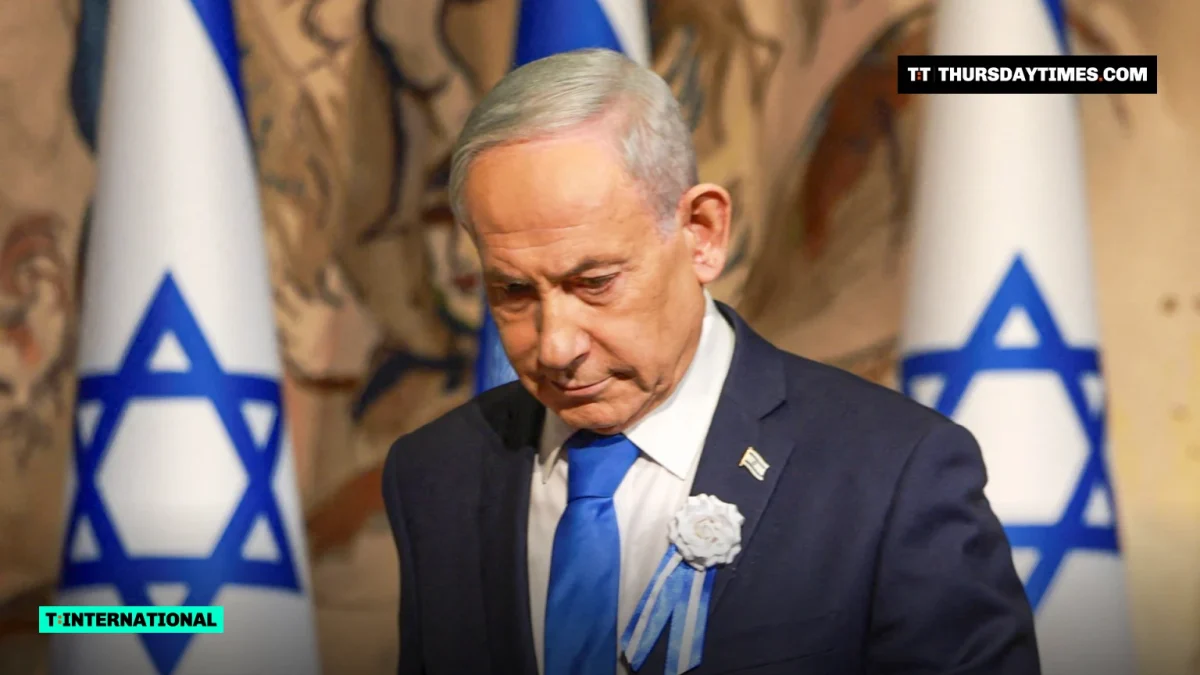
JERUSALEM (The Thursday Times) — Israel’s security cabinet has ordered the military to step up preparations for a possible attack on Iran, Israeli media reported on Wednesday evening, as Tehran warned that any new war would make military bases from West Asia to Europe targets.
The cabinet, chaired by Prime Minister Benjamin Netanyahu, issued directives that could lead the military to carry out activities that might trigger a war, according to the reports. There was no official statement from the Israeli government.
The directives became public after opposition leader Gadi Eisenkot told Netanyahu, who is serving as prime minister in a caretaker capacity, not to deploy the military “without a direct and immediate threat” until a new government is formed.
A caretaker on the way out
President Isaac Herzog asked Eisenkot to try to form a government after Netanyahu’s coalition lost its parliamentary majority in last month’s election. Netanyahu has said the war on Iran will go on until the government in Tehran collapses.
Tehran’s warning
Mohsen Rezaei, the secretary of Iran’s Supreme National Security Council, said in a social media post: “If the US launches another war against Iran, every military base involved in the aggression, from West Asia to Europe, will be a legitimate target for Iran’s lethal strikes.”
The warning follows a claim by an adviser to parliament speaker Mohammad Bagher Ghalibaf that Iran had turned down a request for talks from US Vice President JD Vance, and Ghalibaf’s statement that the Strait of Hormuz would never return to its pre-war status.
President Donald Trump has said he is prepared to return to war if diplomacy mediated by Qatar fails, while Secretary of State Marco Rubio has said Washington’s economic pressure on Iran is working well enough that large-scale military operations are not needed.
Oil prices rose on Wednesday after Tehran rejected a US proposal to move its stockpile of highly enriched uranium to a third country. Brent crude settled $1.27, or 1.39%, higher at $92.76 a barrel.
The United States and Israel launched their offensive against Iran on February 28. A ceasefire followed in April, and a framework agreement was signed in June, but talks have yet to produce a final settlement.