NEW DELHI (The Thursday Times) — Delhi Police have drawn up draft rules that would cap gatherings at Ramlila Ground at 50,000 people, allow protests there only between 10am and 5pm, and bar marches and processions from the venue, one of three sites designated for demonstrations after police stopped allowing them at Jantar Mantar last month.
The draft standard operating procedure, prepared by senior officers in the city’s Central district, has been sent to Delhi Police headquarters for approval, officers said. A senior officer said the draft was at an initial stage, that its provisions had not been finalised, and that it would take effect only once the competent authorities had approved it. Officers expect the guidelines to be issued in the coming days.
Under the draft, 50,000 would be the ground’s maximum capacity, but the number of people allowed at any single event would be decided by the competent authority, based on the nature of the gathering, the expected turnout, the space available, and public safety. The ground would work as a static venue, with no marches or processions either setting off from the site or forming part of an event.
Permission in two steps
Organisers would first need a “venue availability certificate” from the Municipal Corporation of Delhi, which owns the ground, before applying for police permission through the arrangement cell of the deputy commissioner of police for the Central district. Applications would ordinarily have to be filed at least 10 days before an event. The certificate on its own would not authorise a gathering, and police permission and any other clearances would still be required.
The draft puts much of the burden of running a protest on its organisers. They would be responsible for the peaceful assembly and dispersal of the crowd, for coordinating with traffic police on vehicle movement, drop-off points, and parking, and for keeping roads, footpaths, and emergency routes clear. They would also have to provide drinking water, medical help, toilets, and waste disposal, follow noise rules, get safety clearances for any temporary structures, name a liaison person, and share details of volunteers when asked.
Participants would be barred from carrying lathis, firearms, swords, spears, and other sharp objects, and no drone could be flown over or near the ground without prior approval. Senior officers said similar guidelines would be drawn up for Burari Ground and CBD Ground once the Ramlila rules were settled.
After Jantar Mantar
Delhi Police de-notified Jantar Mantar, the stretch beside the 18th-century observatory that had for decades been the capital’s best-known protest site, through a standing order on October 11. The order followed recommendations from a committee set up by the Union home ministry to find alternative venues, and it named Ramlila Ground in central Delhi, Burari Ground in the north, and CBD Ground in the east as the new sites for demonstrations.
It came a day after police detained a string of opposition leaders, including former chief ministers Mamata Banerjee, Arvind Kejriwal, and Pinarayi Vijayan, at a Jantar Mantar protest by the youth-led Cockroach Janta Party, which was demanding the resignation of Chief Election Commissioner Gyanesh Kumar over the revision of India’s voter rolls.
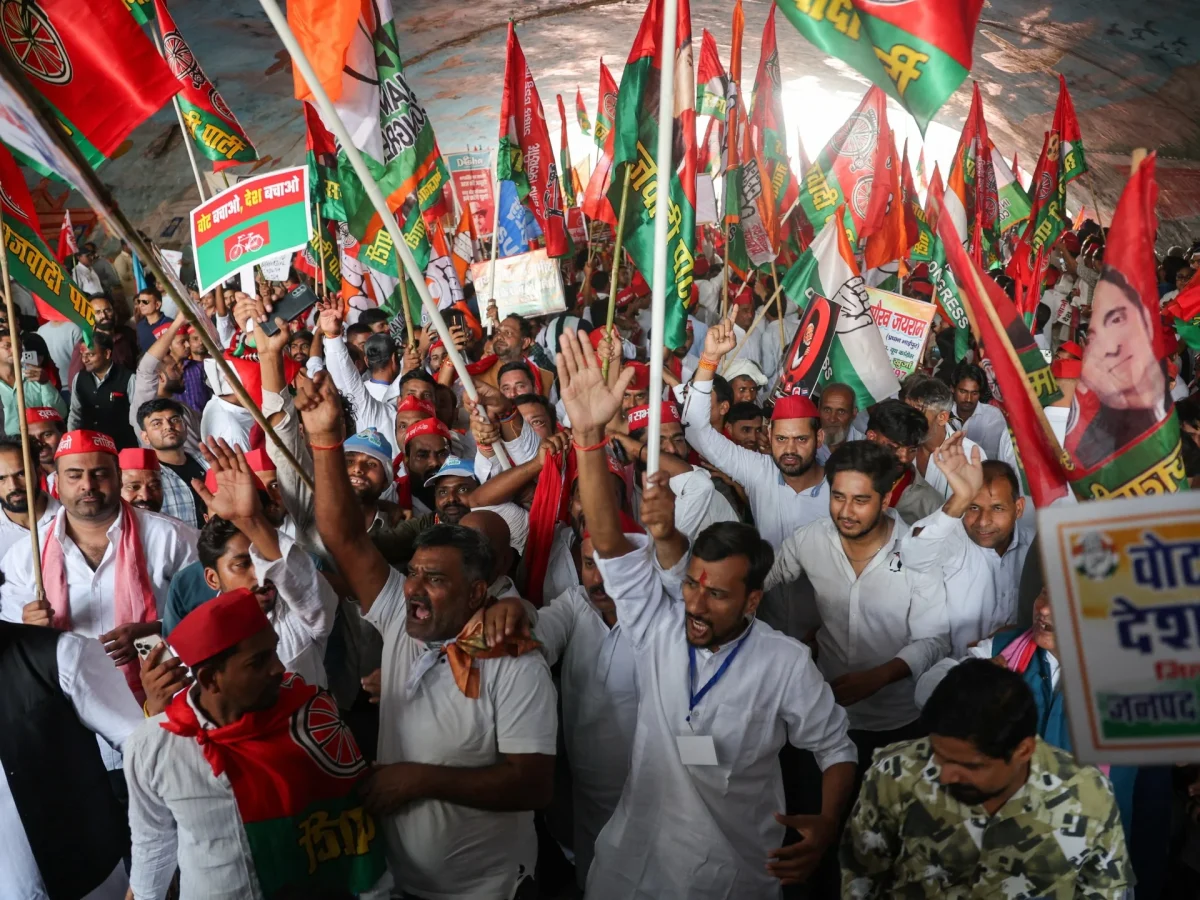
On November 1, the opposition INDIA bloc held a mass rally at Ramlila Ground against the Special Intensive Revision of electoral rolls. Police allowed it on conditions that included ending it by 5pm and leaving crowd management and traffic arrangements to the organisers, the same terms the draft would now make standard. On Wednesday, police in the capital stopped a students’ march against toxic air a few hundred metres after it set off towards Jantar Mantar.
Ramlila Ground has a long history as a stage for mass politics in Delhi, from Jayaprakash Narayan’s rally on the eve of the 1975 Emergency to Anna Hazare’s anti-corruption fast in 2011.