DUBLIN (The Thursday Times) — Europe will send officials from the European Union and from the United Kingdom, France, Germany, Italy, and Poland to the next round of talks on ending Russia’s war in Ukraine, European Council President António Costa said, after a summit at which leaders argued over who should speak for the continent.
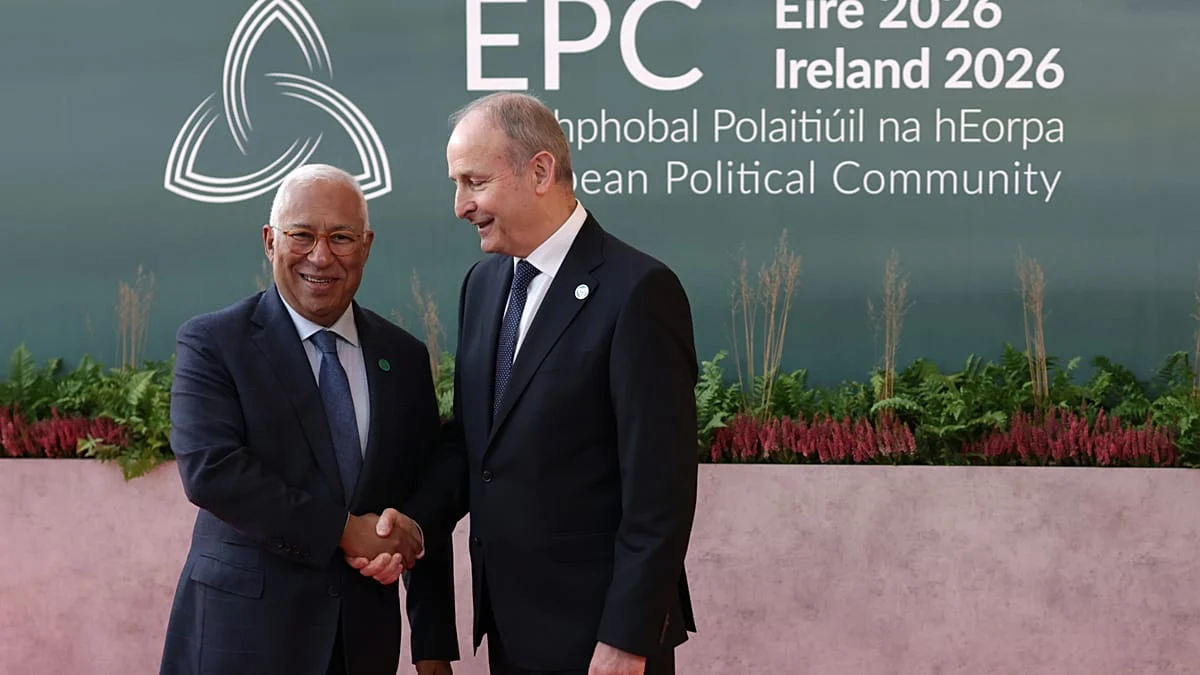
The five countries are all members of the “Coalition of the Willing” that backs Kyiv. “This is ultimately a team effort,” Costa told a news conference at the end of the EU leaders’ meeting in Dublin on Friday, saying Europe must speak with one united voice in all discussions that shape the future of Ukraine and the security of the continent.
National security advisers from the EU and the five countries will take part in the talks at a technical level, a senior European official said. Europe has yet to name anyone to negotiate at the highest level. “Our European team will continue to act in full unity and in close coordination with all member states,” Costa wrote on X.
European governments have feared that US-mediated talks between Washington, Moscow, and Kyiv could leave them on the sidelines while Russia and the United States settle a war on their doorstep. After meeting President Vladimir Putin in Moscow on Thursday, US special envoy Steve Witkoff said the talks would be widened to include Europe.
The Kremlin has been more cautious. Spokesman Dmitry Peskov said Moscow had no objection to European participation, but that a decision on broadening the talks could be made once it understood the Europeans’ “true intentions and willingness to help advance the peace process”. Russia’s foreign ministry said the subject had not come up at Putin’s meeting with the Americans.
‘Please, no surprises’
German Chancellor Friedrich Merz used the summit to send a message to Donald Trump, who is due to meet Putin and Chinese President Xi Jinping in Shenzhen next week.
“Some here in Dublin fear this could turn into a ‘second Anchorage moment’,” Merz said, referring to the Alaska summit at which European leaders were stunned by Trump’s overtures to Putin in the absence of Ukrainian or European envoys. “I therefore want to state our message to the United States very clearly: please, no surprises. Continue to play as part of ‘Team Europe’ and ‘Team Ukraine’.”
Leaders had disagreed over whether Europe should be represented by a single envoy or a team. Italian Prime Minister Giorgia Meloni, who argued for one voice, warned in a letter to Costa last week that “by projecting the image of a Europe that is in disarray, we are merely serving the interests of those who want this war to continue”.
The EU’s foreign policy chief, Kaja Kallas, had put herself forward for the role. “I know that the Russians don’t want me, but, you know, do we have a say, ‘Who is representing Russia?’” she said.
Fears over Russia’s demands
European leaders are wary that Washington could accept Russian demands to reshape the continent’s security arrangements as the price of a deal. Putin told the US envoys on Thursday that any foreign troops deployed in Ukraine would be legitimate targets for Russia, and the Kremlin on Friday denied a report that its negotiators had demanded Finland leave NATO.
Ukrainian President Volodymyr Zelenskyy has pressed for a European seat at the table. “Europeans are already involved. And we need to make sure that Europe becomes a regular part of these negotiations,” he told leaders in Dublin.