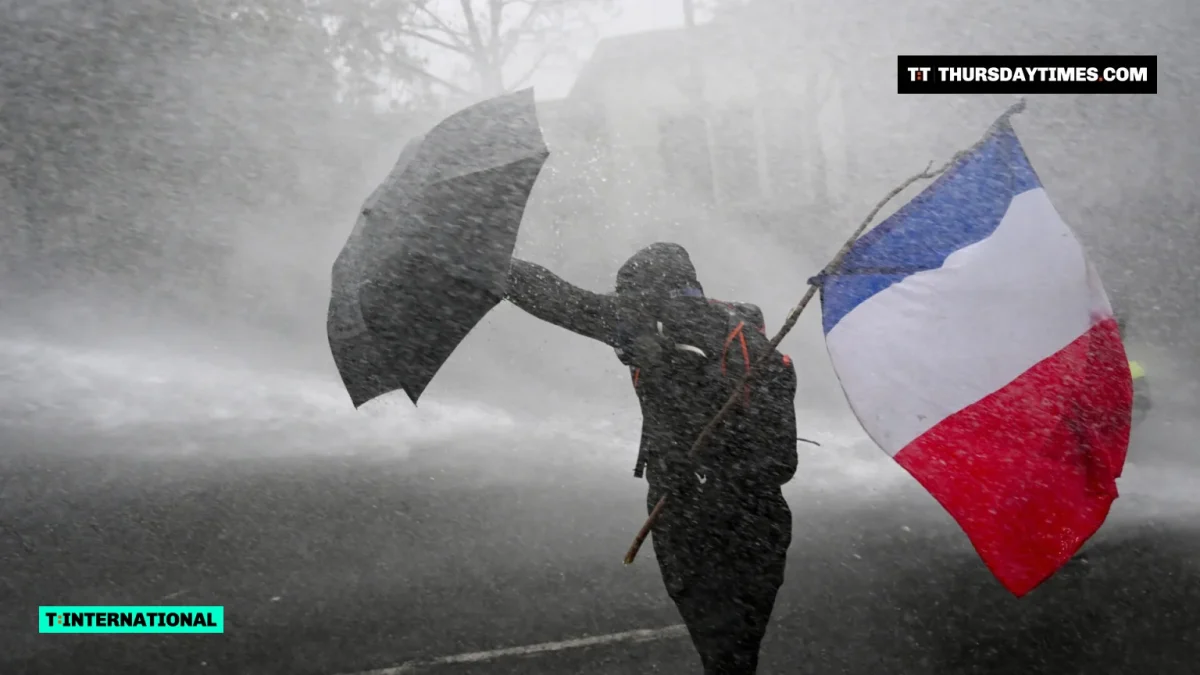
PARIS (The Thursday Times) — France is bracing for a fifth Saturday in a row of protests, as demonstrators angry about the cost of living are joined by activists opposed to a bill that would give police who use their weapons a presumption of self-defence.
The Yellow Vest movement, high-school students, unions, and campaigners against violence towards children are due to rally in Paris and dozens of other towns and cities from the early afternoon. The Interior Ministry has announced a deployment of 70,000 police. The government expects 50 to 60 events around the country, although the Yellow Vests’ own map lists 237 planned gatherings, many of them sit-ins and roundabout protests rather than marches.
In the capital, the Yellow Vests and protesters against police violence are expected to gather at Place de la République and march towards Nation, while a separate march against violence towards children is due to head for Bastille. Estimates published before the rallies put the likely turnout in Paris at between 30,000 and 60,000 people across the three events.
France, the European Union’s second-largest economy, has been gripped for more than a month by school blockades and demonstrations over the cost of living, ahead of a presidential election next year that the far right sees as its best chance yet of taking power. Most of the rallies have been peaceful, but some have been marred by violence on the fringes and by accusations of police brutality.
The police bill has become a new focus of anger. Approved by the National Assembly and due to go to the Senate, it would grant officers who use their weapons a presumption of legitimate self-defence. Its supporters, including Marine Le Pen’s far-right National Rally, say it would stop officers from automatically falling under suspicion of using disproportionate force.
Activists call it a “licence to kill”. They say it would make it even harder to hold the security forces to account in a country where few cases of alleged police brutality ever reach a criminal court. Lawyers last week denounced alleged police violence at recent protests that they said had led to “mutilations”, including injuries to hands, feet, and eyes.
“Society’s in bad shape,” said Claire Bourdille, of a collective campaigning against violence towards children and teenagers. “We can’t focus on one cause more than another.” Activists have spent recent months demanding better protection for children against sexual abuse.
Turnout has been falling. About 146,000 people took part in protests across France last Saturday, according to the authorities, far fewer than on earlier weekends. The biggest turnout came during a union-led strike on Thursday last week, when more than half a million people took to the streets nationwide, according to official figures.
Karl Ghazi, of the CGT union, said there was “real activist fatigue” after a month and a half of protests. Saturday’s march in Paris, he said, would “essentially be child rights activists on one side and people against the ‘licence to kill’ on the other.”
Unions have called a new day of strikes for Tuesday after rejecting the government’s promise to raise the minimum wage by 0.6 percent as “crumbs”. Blockades also continued on Friday at a couple of dozen secondary schools, mostly in the Paris region.
At the end of October, police fired tear gas at cost-of-living protesters in Paris as similar youth-led demonstrations swept Germany and other parts of Europe.