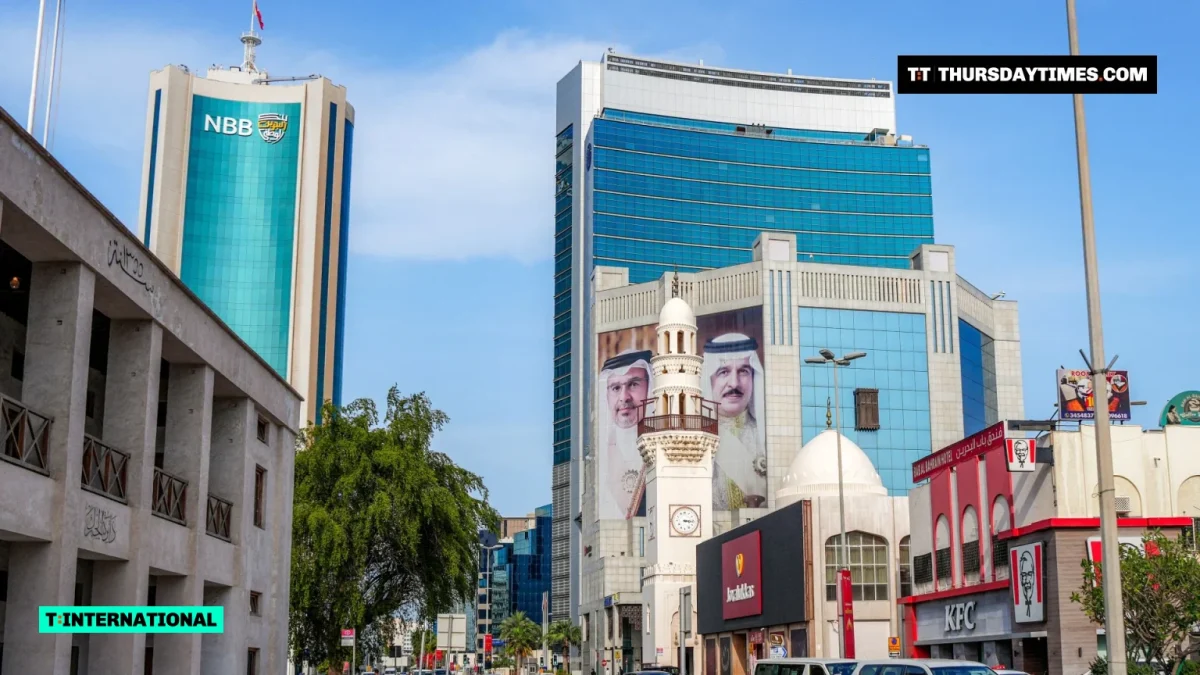
MANAMA (The Thursday Times) — Sirens sounded across Bahrain early on Sunday as the Interior Ministry warned of a potential threat and told citizens and residents to go to the nearest safe location, before announcing less than an hour later that the danger had passed.
The ministry urged people to stay calm and to follow updates only through official channels. It did not say what the threat was or where it had come from.
In a second statement, the ministry said the alert was over and the danger had passed, but that the precautionary measures already in force would stay in place. It did not say whether anything had been intercepted, and there were no immediate reports of damage or casualties.
A Gulf state on the front line
Bahrain, which hosts the headquarters of the US Navy’s Fifth Fleet, has been drawn repeatedly into the war that began with US and Israeli strikes on Iran on February 28. The two sides agreed a ceasefire in April, but fighting resumed after negotiations stalled, despite a memorandum of understanding signed in June.
On Thursday, Iran’s Revolutionary Guards said they had destroyed a US early-warning radar in Bahrain. Washington denied the claim and said two drones had been shot down. Earlier this month, Bahrain and Kuwait said their air defences had intercepted Iranian drone attacks.
The alert came a day after the US mission in Saudi Arabia told Americans in the kingdom to exercise heightened vigilance over the threat of Houthi attacks, as the Saudi-led coalition said it had destroyed two drones launched towards Riyadh and the south of the country.
Shipping through the Strait of Hormuz, the route for much of the Gulf’s oil and gas, remains at the centre of the confrontation between Washington and Tehran, with ships and seafarers hit by mines, drones, and missiles in recent weeks.