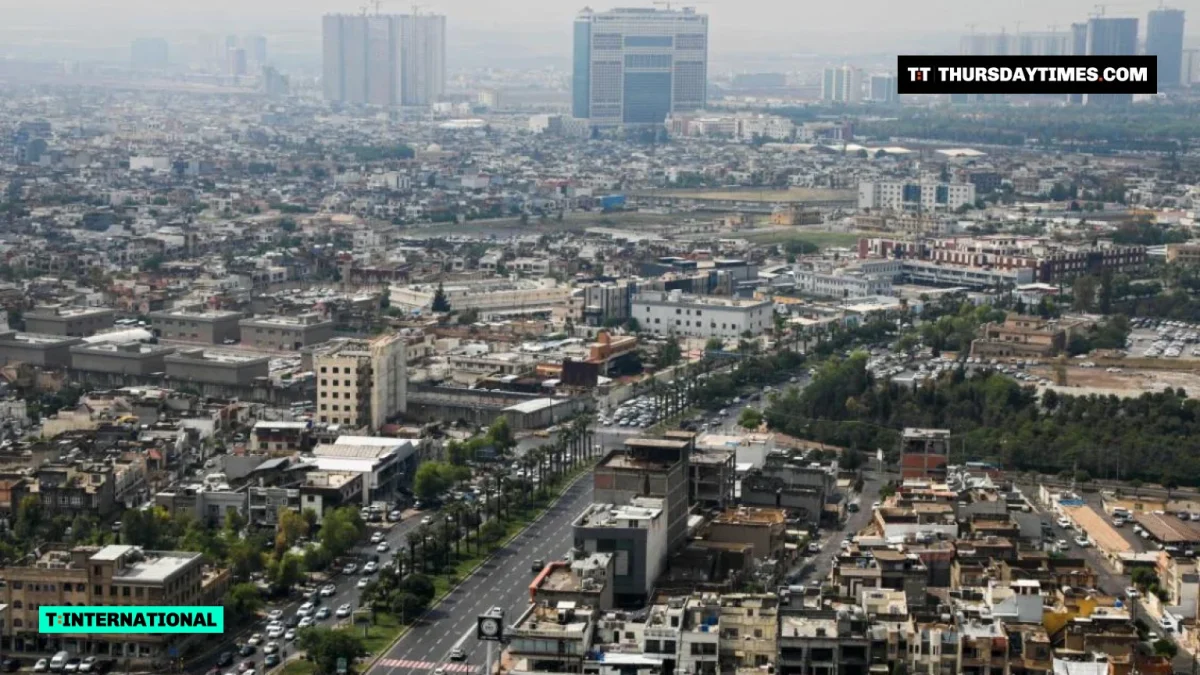
ERBIL (The Thursday Times) — Heating kerosene delivered to homes in Erbil reached 400,000 Iraqi dinars (about $240) for a 200-litre barrel on Saturday, traders said, as families across Iraq’s Kurdistan Region wait for subsidised winter fuel from Baghdad that officials say will cover less than a fifth of their needs.
A barrel sold for 380,000 dinars at the city’s wholesale market on Saturday morning, said Sherwan Ahmed, a kerosene trader and member of the Erbil Oil Market Council. Traders later cut the wholesale price by 15,000 dinars, he said, but prices have risen by about 60,000 dinars a barrel over the past month as temperatures fell and the subsidised supply was delayed.
Kerosene, known locally as white oil, is the main heating fuel for most homes in the region, where winters are harsh in the mountains. Families who cannot wait for the subsidised fuel are buying it at market prices.
A fifth of what is needed
Falah Sayed Mawlud, director general of oil and minerals at the Kurdistan Regional Government’s Ministry of Natural Resources, said this week that the 50 million litres of kerosene approved by Baghdad would arrive next week, and that distribution in Erbil, Duhok, Sulaymaniyah, and Halabja would start in mountainous areas. He put the subsidised price at 62,000 dinars for a 200-litre allocation, plus transport, less than a sixth of Saturday’s wholesale price.
The region needs about 269 million litres for the winter, Mawlud said, so the federal shipment covers less than a fifth of it. Sulaymaniyah governorate alone needs 110 million litres, more than twice the whole shipment, according to a local fuel official.
Officials have given differing accounts of how much each household will receive. Dilan Ghafour, a member of the Iraqi parliament’s finance committee, said on Friday that the federal Oil Products Distribution Company had asked the regional government to deposit 250 dinars a litre before the fuel is released, and that the first batch would amount to 50 litres per family, a quarter of a standard barrel. Further batches would follow, Ghafour said, bringing the region’s total this year to 200 million litres.
Iraq’s Oil Ministry said all approvals for supplying the region had been completed. Its spokesperson, Salim al-Rukabi, said the Kurdistan Regional Government’s office in Baghdad had been formally notified, and that the region’s authorities must now complete their procedures to receive and distribute the fuel. Prime Minister Ali al-Zaidi ordered the region’s subsidised winter kerosene released on November 1.
Cooking gas after Khor Mor
The squeeze comes a week after a drone attack shut the Khor Mor gas field in Sulaymaniyah province, cutting gas to the region’s power stations and hitting the field’s loading depot for liquefied petroleum gas, the household fuel used for cooking and heating. Many households heat their homes with electricity as well as kerosene.
Baghdad will begin sending 760 tonnes of liquefied petroleum gas a day to the region on Monday, Mawlud said on Saturday, with 300 tonnes for Erbil, 200 tonnes for Duhok, and 260 tonnes for Sulaymaniyah and Halabja. “The liquefied gas the Kurdistan Region needs is available. There is no danger and there will be no crisis,” he said. The deliveries are to continue until production at Khor Mor returns to normal.
A household gas cylinder now sells for more than 15,000 dinars in Erbil and 12,000 dinars in Sulaymaniyah and Halabja, local officials said. Omar Abdullah, who oversees gas distribution in Sulaymaniyah, said the federal gas would go to filling stations at a low price that would bring costs down noticeably.
Last winter, the regional government allocated 200 litres of kerosene to each household at a subsidised 103,500 dinars. By January 4 this year, nearly 135 million litres had gone to 674,501 families, the Natural Resources Ministry said, while another 415,222 households were still waiting.