ANTALYA (The Thursday Times) — Scientists behind a UN report on overshooting the 1.5C warming limit defended its credibility on Saturday, after Saudi Arabia and other large developing countries questioned its scientific standing and sought to keep it out of the main political decision expected from the COP31 climate summit.
The UN Environment Programme’s Limiting Overshoot report, published in September, looks at how to keep an almost certain breach of the Paris Agreement’s 1.5C goal as small and as short as possible, what crossing the threshold will mean for people and ecosystems, and how temperatures could be brought back down.
The European Union, the UK, the Least Developed Countries, and small island states are among those pushing for the summit in Antalya to make the response to overshoot one of its priorities.
Doubts raised behind closed doors
In closed-door consultations this week on the summit’s cover decision, the Arab Group, led by Saudi Arabia, tried to cast doubt on the report’s rigour by arguing that it had not been peer-reviewed, according to people familiar with the discussions.
The Like-Minded Developing Countries, a bloc that includes India and China, called for the cover decision to avoid citing reports produced outside the UN climate process, which observers took as a thinly veiled reference to the UNEP report. Some large emerging economies have also argued for keeping such “grey literature”, work published outside academic journals, out of the text. Several of them had already questioned whether a final political decision should exist at all.
‘External peer-reviewers were brought in’
Debra Roberts, a South African scientist who co-chaired the Working Group II of the Intergovernmental Panel on Climate Change (IPCC) in its last assessment cycle and was part of the report’s core coordinating team, said its authors had followed the standard process for a global assessment of existing science, in line with IPCC practice. The only difference, she said, was that governments did not review the outputs.
“It was certainly reviewed internally by the authors, external peer-reviewers were brought into the process, and UNEP also reviewed it,” she said. Forty-four experts from around the world wrote the report, which largely draws together existing research, and a further 44 reviewers examined it over a year.
Bill Hare, chief executive of Climate Analytics and one of the reviewers, said the report was under attack “because some people don’t like the conclusions”. “If you as a government are basing your economy on burning and selling fossil fuels, then the last thing you want to do is accept that we are overshooting 1.5C, because then obviously you will take on some responsibility for paying for the damage,” he said.
Laurence Tubiana, chief executive of the European Climate Foundation and one of the architects of the Paris Agreement, said the report “tells us a truth some would rather hide”. “We are on course to exceed 1.5C and limiting how far and for how long is a matter of survival for us all,” she said.
Authors also pointed out that other grey literature, including UNEP’s Emissions Gap and Adaptation Gap reports and the work of the International Energy Agency, is routinely used in IPCC assessments and sometimes cited in COP decisions. Manjeet Dhakal, a Nepalese adviser to the Least Developed Countries, said the overshoot report was comprehensive and that countries should be guided by it in Antalya.
A wider fight over science
The row is the latest in a series of clashes over the place of climate science in policy-making. Most governments want the IPCC to finish its main assessment reports in time to inform the next UN global stocktake of climate action, due to be completed in November 2028. A smaller group of countries led by Saudi Arabia, India, and Russia has resisted, saying that timeline is too rushed for scientists and governments from developing countries to contribute. The IPCC is due to meet online in early December to try to break the deadlock.
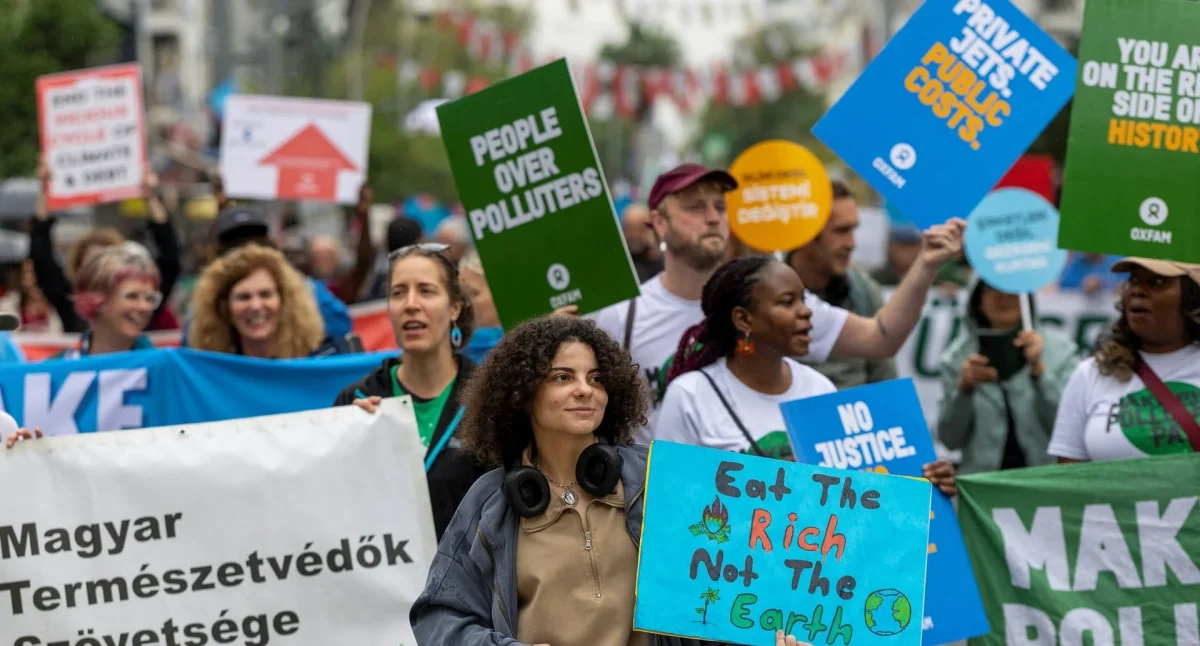
A tracker released at the summit this week found that current policies put the world on course for 2.7C of warming by 2100. Climate activists marched in Antalya on Saturday to demand faster action as ministers arrived for the final stretch of the talks, which also drew a delegation of US Democratic lawmakers this week. The summit runs until November 19.