DUBAI (The Thursday Times) — Iran’s crude oil production fell to 1.86 million barrels a day in October, 46% below its pre-war level and now less than the country’s refineries used to process before the war, according to International Energy Agency estimates and Iranian Oil Ministry figures.
The Oil Ministry’s figures show that Iranian refineries consumed more than 1.873 million barrels a day in the 2024–25 Iranian year, before the fighting disrupted production and refining. New processing units added since then may have raised the refineries’ needs, while war damage means actual domestic demand may now differ from the pre-war level.
The slump comes as a US naval blockade keeps Iranian crude off world markets. Tanker-tracking data from the analytics firm Kpler show that Iran’s crude loadings stopped in mid-August, leaving Tehran little choice but to keep output close to what its own refineries can absorb.
Refineries under pressure
Homayoun Falakshahi, a senior analyst at Kpler, said on Thursday that Iran’s naphtha loadings had fallen by about 100,000 barrels a day in recent months, and that its fuel oil loadings were down to 15% of pre-war levels. If Iran cannot export its naphtha, he said, it may be forced to partly shut some refinery units.
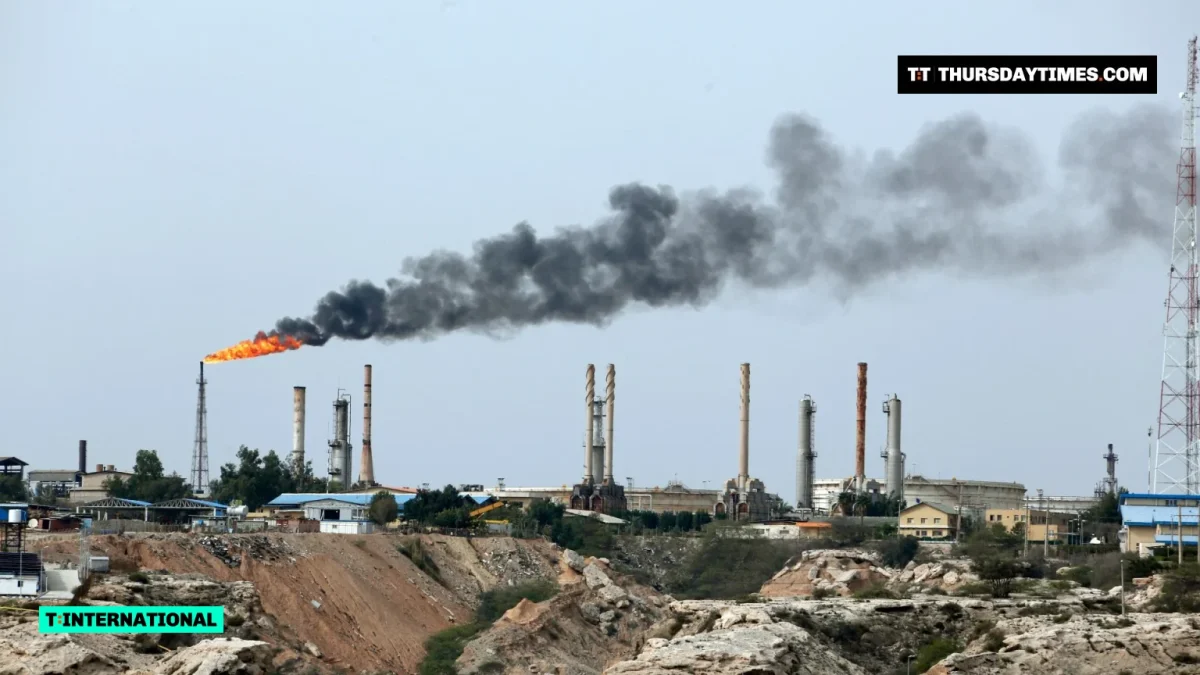
Naphtha is mainly used as a feedstock for petrochemicals. Several units at Iran’s biggest petrochemical complexes, at Assaluyeh and Mahshahr, which together account for about 70% of the country’s petrochemical output, were hit during the war, limiting how much of the surplus the industry can take at home. The small Lavan refinery, with a capacity of 35,000 barrels a day, was also damaged.
Some products are still getting out. Kpler data show that shipments of liquefied petroleum gas have continued at reduced levels, and the advocacy group United Against Nuclear Iran says 11 Iranian LPG cargoes have passed the blockade since it began, with another 12 small tankers waiting at anchor in the Gulf of Oman. There have been no confirmed reports of naphtha cargoes getting through.
Gulf rivals recover
The rest of the Gulf is moving the other way. OPEC figures show that its members, together with the UAE, which left the organisation on May 1, produced 27.16 million barrels a day in October, up 1.96 million from September. Iran’s output was 1.34 million barrels a day below its 2025 level, while Iraq and the UAE together added 1.3 million.
Iraq pumped 4.5 million barrels a day in October, and its oil minister has said production went above five million in November. Saudi Arabia says it has raised its output to 10.5 million barrels a day, as OPEC figures showed the kingdom recovering to its highest level since the war began.
The IEA said this week that global oil supply outran demand in October for the first time since the war began, and that oil held in tankers at sea rose by 86 million barrels during the month, tipping the market back into surplus.