MANILA (The Thursday Times) — The Philippines on Saturday signed preliminary agreements to explore drawing on oil held in storage in Indonesia and Thailand during emergencies, as Southeast Asian countries look for ways to shield themselves from the supply shocks caused by the war with Iran.
PNOC Exploration Corporation, the state-run oil and gas explorer, signed separate letters of intent with Indonesia’s Interport Mandiri Utama and the Shell Company of Thailand on the sidelines of the ASEAN Business and Investment Summit in Manila, a day before the Philippines opens the ASEAN leaders’ summit.
The Economic Research Institute for ASEAN and East Asia (ERIA), a regional think tank, said the projects would explore “oil ticketing mechanisms”, including the “potential use of existing oil storage facilities in Indonesia and Thailand to support oil supply security and emergency preparedness in the Philippines”. ERIA and the Indonesian Business Council are taking part as knowledge partners.
Under an oil ticketing arrangement, a country pays for the right to buy oil held in another country’s storage if its own supplies are cut, instead of building tanks and buying stocks of its own upfront. The system is used in the European Union but would be the first of its kind in Southeast Asia. Laos and Timor-Leste are also considering joining, according to reports.
Japan backs a regional reserve
The deals come as Japan prepares to help the Association of Southeast Asian Nations stockpile petroleum products jointly, people familiar with the plan said. ASEAN is considering stockpiling bases in Indonesia and Thailand from as early as 2027, from which member countries could draw supplies in an emergency, and the plan is expected to be formalised around the summit.
Tokyo, which relies on Southeast Asia for petroleum-derived goods such as surgical gloves, launched a “Power Asia” framework in April to make Asian supply chains more resilient. Prime Minister Sanae Takaichi is due to attend a summit of the Asia Zero Emission Community, which groups Japan, Southeast Asian countries, and Australia, on Tuesday. On Thursday, a group of governing Liberal Democratic Party lawmakers handed her proposals that included closer cooperation on ASEAN’s joint stockpiling.
Hardest hit by the Gulf war
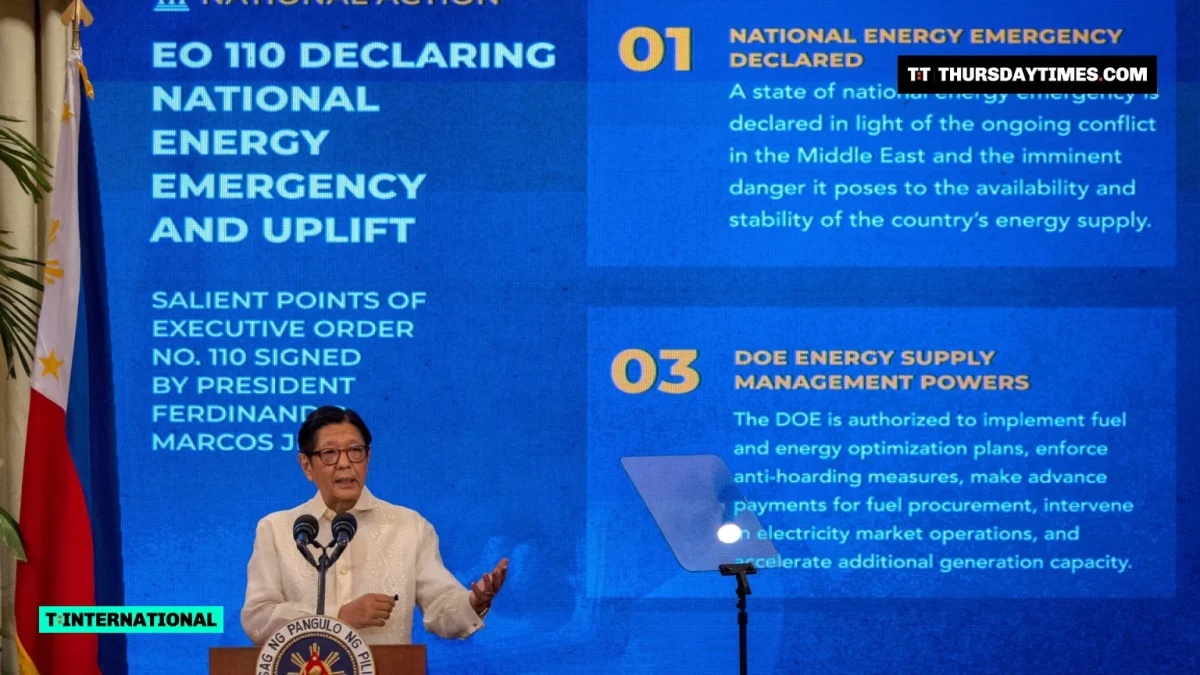
Many Southeast Asian economies depend on the Middle East for crude and hold thin reserves, which left them among the hardest hit when shipping through the Strait of Hormuz was effectively blocked. The Philippines, which imports about 98% of its oil from the Gulf, became the first country to declare a national energy emergency in March, and President Ferdinand Marcos Jr has called for a regional study on joint stockpiling.
Manila is also weighing a Philippine Strategic Petroleum Reserve Act, which would create the country’s first state-owned oil reserve. Noel Baga, an energy lawyer and professor at the University of the Philippines, said the reserve should be the priority, because only storage and refineries at home could “truly ensure the country’s energy security, reduce dependence on oil imports, and reduce oil prices”.
Gulf exports have begun to recover, and the International Energy Agency said this week that the oil market had swung back into surplus. Energy security is expected to be on the table at the ASEAN summit in Manila, which runs until Tuesday, alongside Myanmar and the South China Sea.