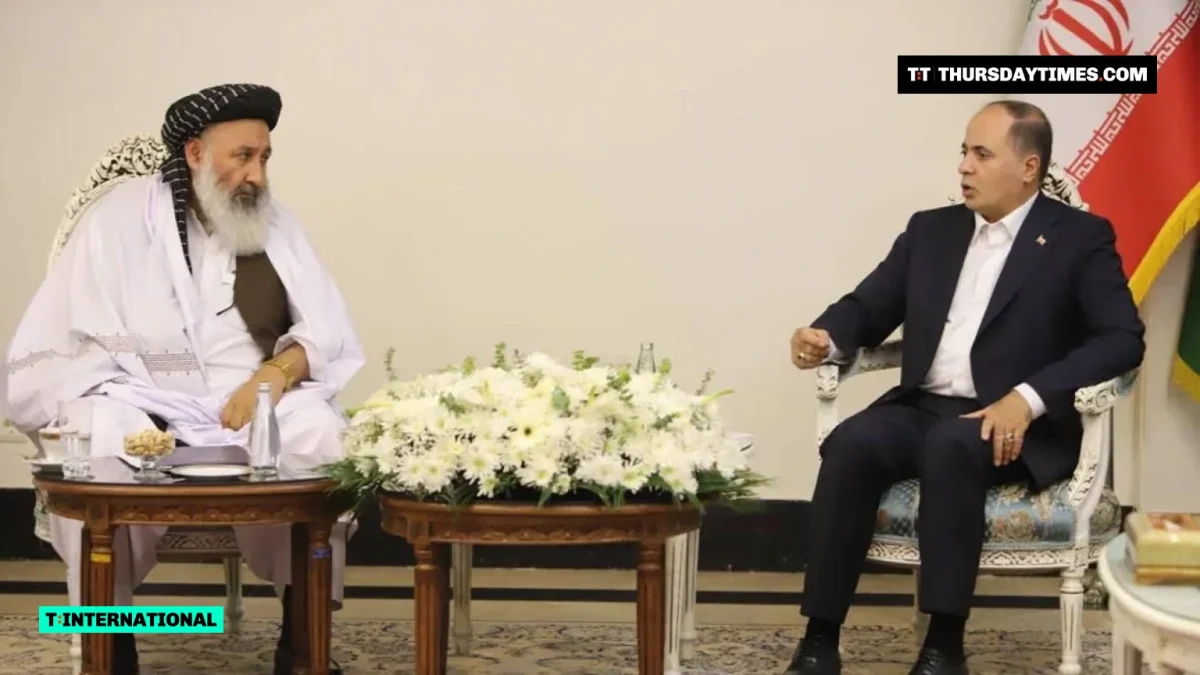
TEHRAN (The Thursday Times) — Trade between Iran and Afghanistan has reached about $2.7 billion a year, with farm goods making up roughly a quarter of it, Iran’s agriculture minister said after talks with Afghanistan’s finance minister over the weekend.
Agriculture Minister Gholamreza Nouri said the two sides focused on easing the movement of goods across the border and expanding trade. He said Afghanistan wants to use Iran’s transit network to reach regional and international markets, and to raise imports into Iran and exports to third countries through Iranian territory. Tehran welcomed the idea and was ready to strengthen cooperation, he said.
Nouri pointed to Iranian transit routes to the Persian Gulf and open waters, and invited Afghan investors to build terminals and port facilities in the Chabahar region. He said the government has formed a working group on relations with Afghanistan under the first vice president, with several ministers as members.
Border crossings and farm cooperation
The minister said round-the-clock customs operations, simpler border formalities, more transit traffic, and joint efforts against smuggling are needed to lift trade. He announced that Iran is ready to reopen the Yazdan border crossing and to help activate border markets.
On agriculture, Nouri offered cooperation in mechanisation, livestock breeding, plant breeding, and the supply of veterinary medicines, vaccines, and day-old chicks. He said Iranian research centres are ready to train Afghan experts, and that some Afghan specialists have already completed short courses. He also listed help with alternative crops to replace poppy, which is banned in Afghanistan, as an area for joint work.
Nouri said he hopes the seventh meeting of the Iran-Afghanistan Joint Commission will be held in Kabul as soon as possible. Afghanistan’s finance minister, who heads the Afghan side of the joint economic committee, said joint action against smuggling would strengthen legal trade, and that both countries have wide scope for investment in agriculture, mining, transport, banking, and finance.