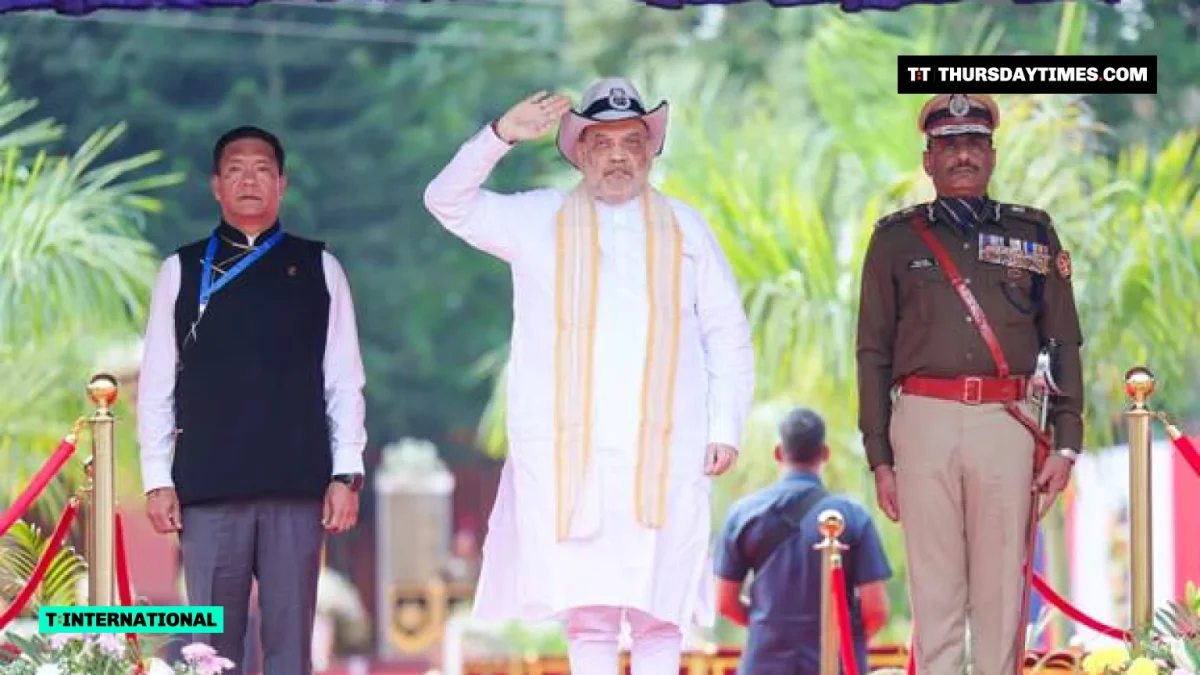
ITANAGAR (The Thursday Times) — Home Minister Amit Shah has called the proposed 11,200-megawatt Siang Upper Multipurpose Project in Arunachal Pradesh a “national project” and offered talks and a rehabilitation package to the communities that oppose it, in his first public remarks since violent protests against the dam last month.
Speaking on Saturday at the ceremony in Itanagar at which the President’s Police Colour was presented to Arunachal Pradesh Police, Shah said the dam was extremely important for the state’s development, the country’s energy security, the state’s budget and income, and its strategic interests. “We will hold positive and constructive discussions,” he said.
He urged residents to take their concerns to the state government and, through it, to the Union Home Ministry. Shah said affected communities would receive a comprehensive rehabilitation package, and that their heritage, culture, and religious beliefs would be protected.
Chief Minister Pema Khandu said in a post on X that Shah had made clear the project would move forward only through dialogue and after taking the people of Siang into confidence. Shah said Khandu had briefed him on the situation on Friday.
What the opponents want
On 20 November, the Siang Indigenous Farmers’ Forum and the Adi Bane Kebang United sent Shah a joint memorandum. They asked for the project to be cancelled, for pre-feasibility work to stop immediately, and for a judicial inquiry into the violence of 23 October in Pasighat. They also sought the release of protesters still in custody, the withdrawal of criminal cases, and the removal of central security forces from the region.
The Pasighat clashes broke out in East Siang district hours after a 12-hour bandh called by groups opposing the dam. A police station, an NHPC office, and several police vehicles were set on fire, and police used tear gas to disperse the crowd. Reports on Saturday said groups opposing the project had told Shah they would talk, but not under pressure.
The forum estimates that the reservoir could submerge 27 villages and displace between one lakh and 1.5 lakh indigenous people. Villagers fear losing paddy fields, orchards, and the livelihoods that depend on them, and many revere the river as Ane Siang, or Mother Siang.
Assam Congress president Gaurav Gogoi has separately sought an independent assessment of the downstream impact, and prior consultation with Assam and the affected communities. Plans to harness the Siang date back to 1982, and the river gained strategic weight as China advanced hydropower plans on the Yarlung Tsangpo, as the Siang is known in Tibet.