SEOUL (The Thursday Times) — South Korea’s education minister, Choi Kyo-jin, resigned on Sunday, three days after the country’s university entrance exam was held under tight anti-cheating rules following an AI-assisted cheating scandal.
Choi announced the decision on X. He wrote that the exam “concluded without any major incidents” but that, as the minister in charge, he did not believe he was “immune from public criticism that we failed to prepare adequately in advance”. “Now that the exam is over, I take full responsibility and hereby offer my resignation,” he added. President Lee Jae Myung accepted the resignation, the presidential office said.
How the scandal unfolded
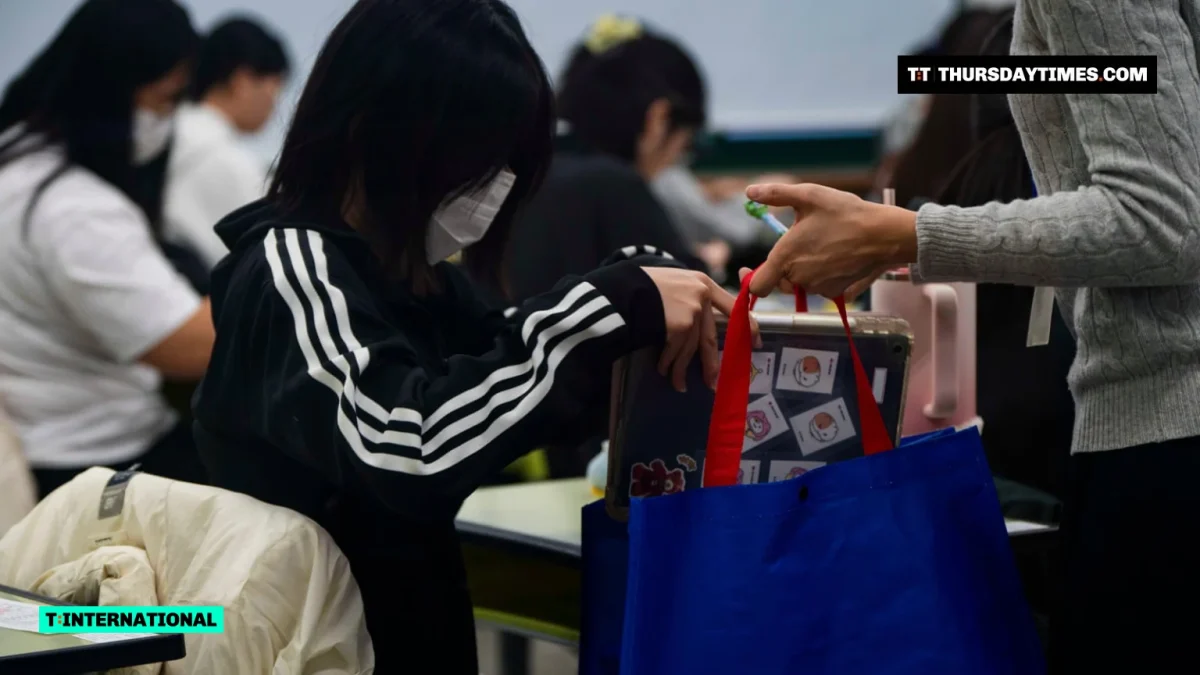
The row began on Sunday 15 November, when the top scorer in a national tax accountant exam confessed to using a miniature camera and a smartphone to achieve a near-perfect score, just four days before the university entrance exam known as the suneung. Officials scrambled to put new safeguards in place: phones were banned from the exam rooms, public Wi-Fi was blocked in testing areas, and invigilators checked candidates’ glasses, watches, collars, sleeves, and buttons for concealed cameras. Our earlier story sets out the measures in full.
Choi struggled to reassure the public, and teachers’ unions criticised the government’s response as belated. Asked at a parliamentary hearing on Monday whether he was confident that authorities could catch would-be cheaters on exam day, the 72-year-old replied: “Due to my age, I am not confident I could.” The answer drew a public backlash. He also did not appear at the press conferences held in the days before the exam, where a vice minister announced the preventive measures instead.
What happened on exam day
Officials said 111 cases of misconduct involving electronic devices were identified during Thursday’s exam, nearly half of them detected through the emergency alerts that the government sent to every phone in the country. The alerts sound at full volume and cannot be silenced, so that anyone who had not handed in a device would be caught out.
The annual eight-hour suneung determines which university a candidate can attend and, in turn, their future prospects. South Korea goes to great lengths to protect it: aircraft take-offs and landings are rescheduled during the English listening paper, the stock market opens an hour late, and cars are stopped 200 metres from every exam centre.