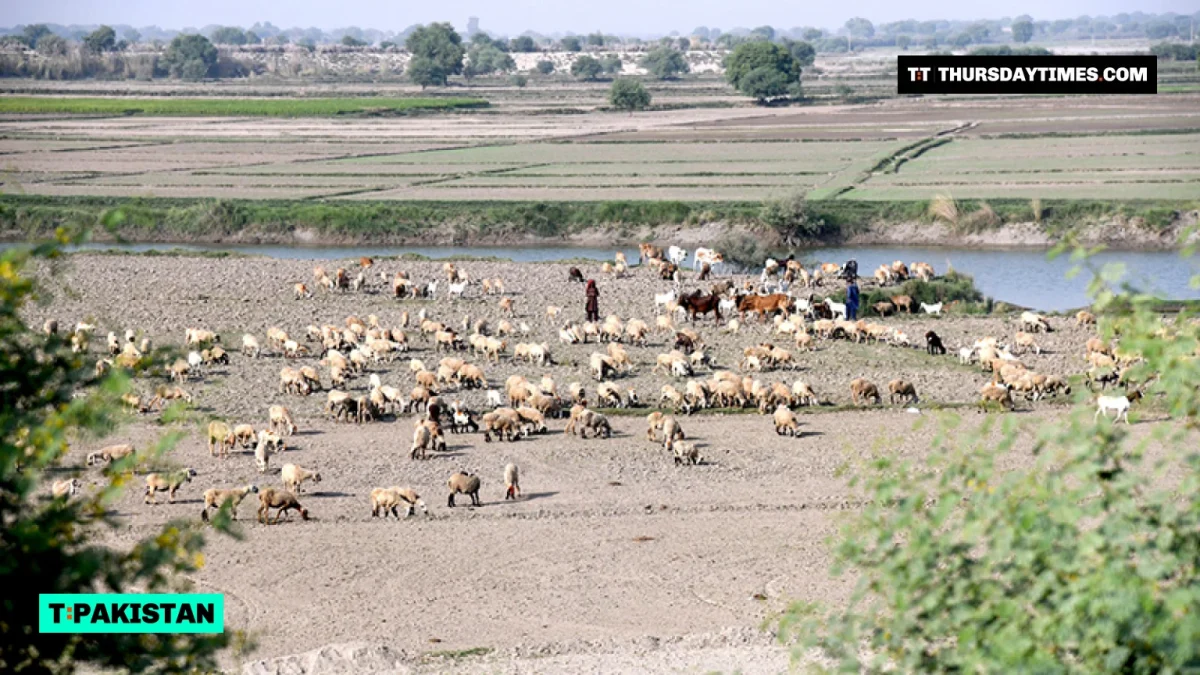
KARACHI (The Thursday Times) — Sindh is facing a growing risk of drought after months of below-normal rain, which threatens crops, livestock, and rural livelihoods, according to a fresh report from the Pakistan Meteorological Department’s National Drought Monitoring and Early Warning Centre.
The province has had below-normal rainfall in every month since July, measured against the 1991-2020 average. The shortfall was 61 percent in July, 22 percent in August, and 90 percent in September. It reached 100 percent in October and stood at 99 percent over 1-20 November.
Balochistan and southern Punjab also dry
Balochistan also recorded below-normal rainfall in all five assessment periods, with deficits of 41 percent in July, 12 percent in August, 68 percent in September, 80 percent in October, and 79 percent over 1-20 November. The report said southern parts of the country, particularly Sindh, Balochistan, and southern Punjab, have had persistent shortages from 1 July to 20 November, even though the July-September monsoon normally supplies a large share of the year’s rain.
The north fared better. Khyber Pakhtunkhwa and Gilgit-Baltistan both recorded surpluses in October and over the first 20 days of November, but the improvement did not reach the south, where October and November are normally dry months.
A 237-day dry spell and a dry outlook
A monitoring map covering 29 March to 20 November showed a longest dry spell of 237 days, counting days with less than 1 millimetre of rain. Long dry spells reduce soil moisture, raise moisture loss through evaporation, and limit the water available for farming and for households, with rain-fed areas the most exposed.
The Met Office expects normal to below-normal rainfall in Sindh, Balochistan, and southern Punjab from December to February. Winter rain normally helps restore soil moisture and supports rabi crops, so a continued shortage could slow the recovery after the weak monsoon, hurt crop growth, and add pressure on surface water and groundwater.
The centre has advised authorities to strengthen drought monitoring through District Coordination Committees, activate early warning systems, share information with communities, and identify vulnerable households. Farmers and herding families are among those most at risk. Earlier this month, Sindh ordered a drought survey in Thar after crop failures there; read our report.