ISLAMABAD (The Thursday Times) — Mohsin Naqvi has put a number on a problem Pakistanis have lived with for years. Of the complaints the Counter Terrorism DepartmentProvincial police units that investigate terrorism and track terrorist propaganda, recruitment, and fundraising online. sends to social media platforms, the interior minister said, only 47 per cent are acted on. That leaves more than half of what Pakistan’s counter-terrorism officers flag still online, and the companies hosting it have yet to explain why.
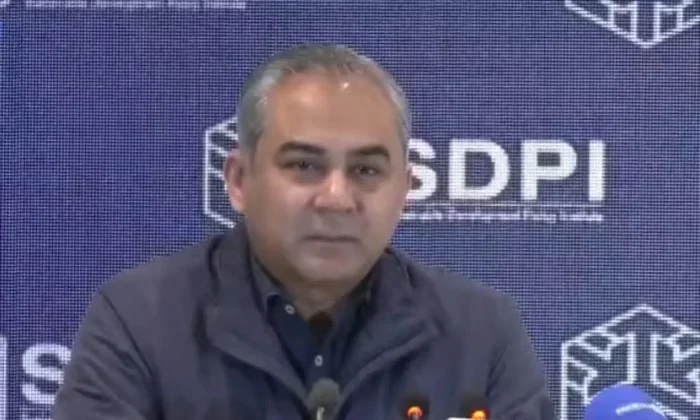
Naqvi made his case at Tuesday’s seminar on social media, organised by the Sustainable Development Policy Institute (SDPI). The platforms should register with the new regulator, appoint authorised representatives in Pakistan, and face penalties in steps if they do not comply, with blocking kept as the very last resort. It is a measured position, and the platforms’ own answers on the day showed why it is needed.
Four lines, no compromise
“There are four red lines for us: terrorism, hate speech, incitement to violence and sexual exploitation of children,” Naqvi said. “On these four points, there is no compromise.” It is a good list, and narrow by design. Each item is already illegal where the big platforms have their headquarters and already banned under their own rules, so no company can claim it is being asked for something new. He also said that dissent, including criticism of the government, must be heard, which answers the usual objection that regulation is cover for censorship.
“Very often, the hate that killed them began on a mobile phone.”Mohsin Naqvi, Interior Minister
In a country that has buried thousands of civilians and soldiers killed by terrorists, that line needs no defence. Naqvi named the Balochistan Liberation Army, a banned terrorist outfit, as one group still using mainstream platforms. He also showed what cooperation can do: a platform’s help let investigators identify an alleged child abuser in Abbottabad. “When a platform acts, a child is protected,” he said. The question is why the platforms act only about half the time.
The 53 per cent
The platforms came with numbers of their own, and none of them answer that question. Fahad Muhammad Khan Niazi, who heads public policy and government relations for TikTok in emerging markets, said the company removed 33 million pieces of content in Pakistan between April and June, about 1.1 per cent of everything uploaded in the country in that quarter. It is a large figure. It says nothing about the complaints Pakistan’s counter-terrorism officers actually filed, how many TikTok upheld, or how long the rest stayed up.
Dania Mukhtar, head of public policy at Meta Pakistan, said each government request is checked against Meta’s rules and then given a legal review for necessity and proportionality before content is restricted in Pakistan. That process may suit a dispute over satire or a political post. Propaganda for a banned terrorist group is not a borderline call, and a review built for borderline speech gives the BLA and others time they should not have.
Both companies publish global transparency reports. Neither offered a Pakistan figure to set against the minister’s: how many counter-terrorism complaints arrived, how many were refused, and on what grounds. Until they do, the 47 per cent is the only number on the table, and it was the government that put it there.
Removing the excuses
The government is not waiting for the platforms to move first. Federal Minister for IT and Telecommunication Shaza Fatima Khawaja said complaints should cite the legal provision they rely on and give enough local context for a reviewer far away to see why a post matters in Quetta or Peshawar. Large numbers of complaints sent without explanation, she warned, could lower the chance of any of them being acted on.
That is sound advice, and it strengthens Naqvi’s hand. A complaint that names the law, the group, and the harm leaves a reviewer in another country with no reason to say no. Every refusal after that is a decision the platform will have to defend.
Building the capacity
Naqvi was candid about the state’s side of the job. Punjab, a province of about 140 million people, has 61 personnel at the NCCIANational Cyber Crime Investigation Agency, which took over cybercrime investigations under the amended Prevention of Electronic Crimes Act., he said, clerks and drivers included.
He did not leave the figure hanging. The agency is being strengthened with more staff, digital forensic facilities, and AI-based investigative tools, he said, and citizens’ complaints are to move to the Pak IDNADRA’s mobile app for identity documents and citizen services. app, giving them one channel and a way to follow their cases. A properly staffed agency, filing well-argued complaints through one system, will build a record the platforms cannot wave away.
Registration is the right ask
“Registration is not a licence to silence anyone; it tells us who is accountable when something goes wrong.”Mohsin Naqvi, Interior Minister
Registration with SMPRASocial Media Protection and Regulatory Authority, the regulator set up under the amended Prevention of Electronic Crimes Act to register platforms and act on unlawful content., local representatives, formal notices, and penalties are fair things to ask of companies that earn money in Pakistan. The European Union and the United Kingdom ask for much the same. A market of about 100 million social media users is reason enough to expect it here.
SMPRA and the NCCIA were both set up under the amended PECAPrevention of Electronic Crimes Act, 2016, Pakistan’s main cybercrime law, which was amended in 2025., and both face constitutional petitions. The record Naqvi is building, with clear legal grounds for each request, a staffed agency, and a single complaints channel, is also what will carry the new framework through the courts.
The platforms’ move
Naqvi has drawn four narrow lines, invited dissent, and promised to fix the state’s own side of the system. The next step belongs to the companies. They should publish how they answered Pakistan’s counter-terrorism complaints, explain each refusal, and act on terrorist content without a review process built for borderline speech.
“Let us sit together, not across the table, but on the same side of it,” he told them. It is a fair offer. The platforms should take it, and the 53 per cent is the place to start.