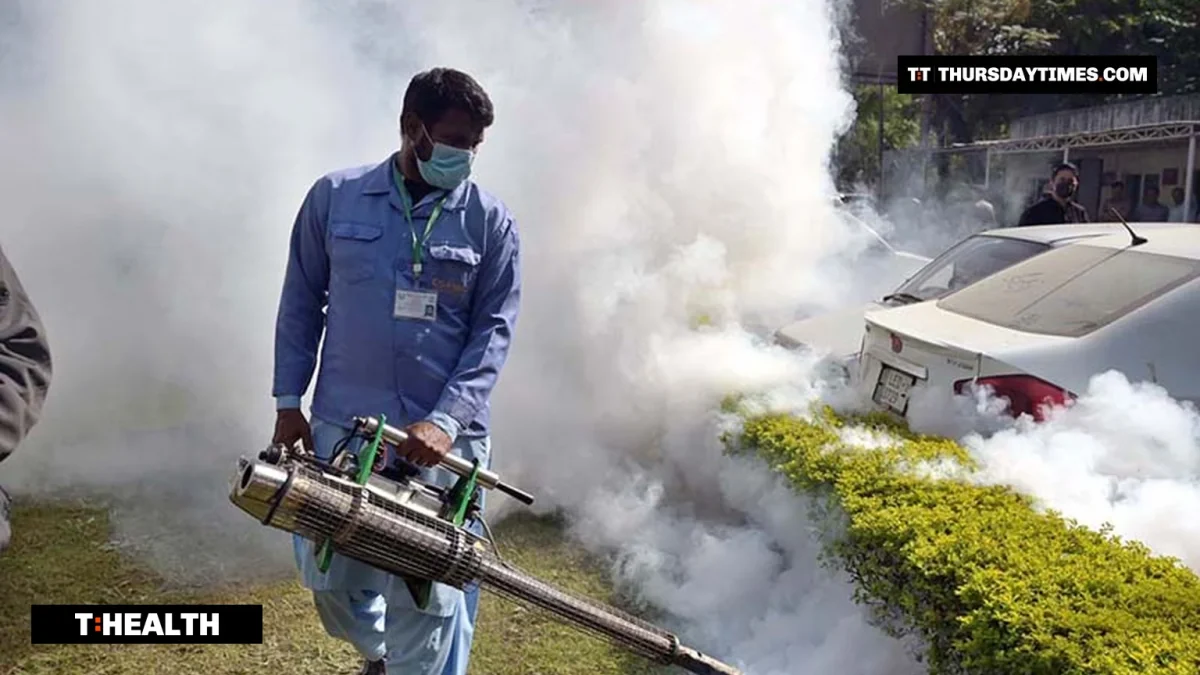
RAWALPINDI (The Thursday Times) — Confirmed dengue cases in Rawalpindi fell 43.1 percent in November from the October peak, and none of the district’s 113 confirmed cases this year has been fatal, according to a District Health Authority review.
The authority recorded 29 new confirmed cases in November, against 51 in October, 27 in September, and none in August, taking the year’s total from 84 to 113. In the same period last year the district reported 1,586 cases. The review credits sustained surveillance, falling temperatures, and tougher enforcement.
Transmission peaked in mid-month, with 18 cases between 4 and 17 November, then slowed to fewer than one a day. The district confirmed no new case on 25 November. Of 826 suspected patients screened in the month, 3.51 percent tested positive, and 7,223 have been screened so far this year. Hospital admissions fell from an early-month high of 11 patients to seven, three of them confirmed cases.
What the field teams found
The authority said 1,400 field teams, 415 working outdoors and 985 indoors, monitor 17,859 hotspots registered with the Punjab Information Technology Board. Union councils rated high or critical risk, meaning a Breteau Index above 7, fell 81 percent, from 21 on 1 November to four on 25 November. Critical councils, with an index above 10, fell 85.7 percent, from seven to one. The Breteau Index counts the containers holding larvae for every 100 houses inspected.
Teams inspected 429,972 houses and 139,752 outdoor spots during the month and found larvae at 9,564 houses and 527 outdoor spots. Enforcement continued alongside the inspections: in November the authority registered 312 FIRs, sealed 28 premises, issued 395 challans, and collected Rs 722,000 in fines. So far this year it has registered 3,110 FIRs, sealed 714 premises, and collected Rs 3.878 million in penalties.
District Health Officer Dr Jawad Zahid said dengue cases have fallen significantly over the past two years, and that the authority would keep up the anti-dengue measures at the same pace.
What residents should still do
Dengue is spread by Aedes mosquitoes, which breed in standing water and bite during the day. The World Health Organization advises people to empty or cover containers that hold water, use repellent, and see a doctor for a high fever with severe headache, pain behind the eyes, or muscle and joint pain. Most cases are mild, but the WHO says severe dengue needs hospital care, and that people with suspected dengue should avoid aspirin and ibuprofen because of the risk of bleeding.