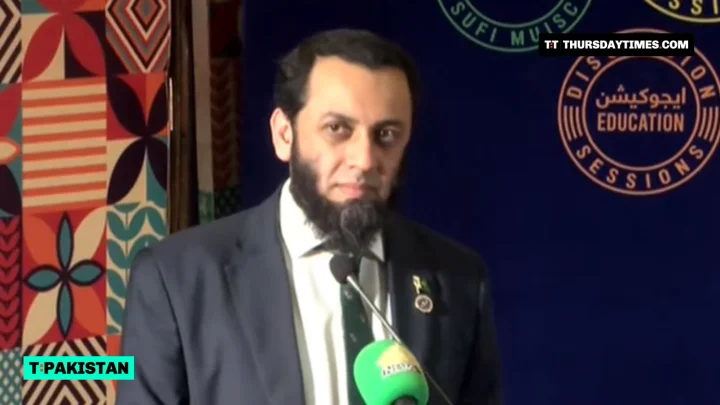
KARACHI (The Thursday Times) — Pakistan has recorded nine wild polio cases this year, against 31 in 2025 and 74 in 2024. That is real progress, and it is also the point at which eradication drives tend to stall. On Tuesday the Prime Minister’s Focal Person for Polio Eradication, Ayesha Raza Farooq, sat down with national and Sindh teams to settle what Karachi must do in the next six months.
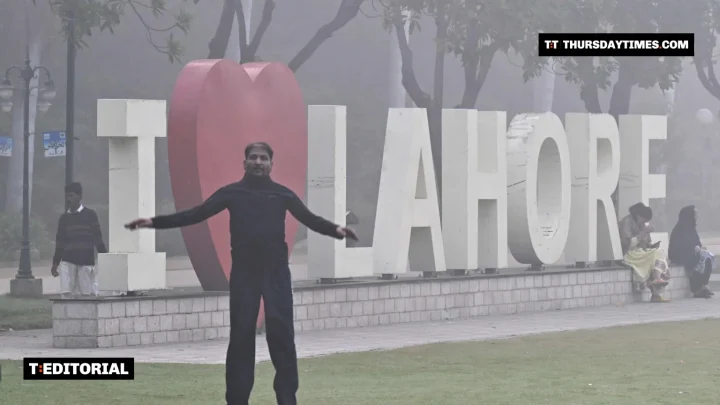
The consultation, covered in our report on the Karachi plan review, described the city as one of the country’s most critical reservoirsA place where a virus keeps circulating among people and sewage even when few children fall ill, so that it can seed other areas. of poliovirus transmission. This analysis sets out where the drive stands and what a six-month plan would have to change to count as a success.
The count has fallen, but the year is not over
The long arc is encouraging. Pakistan recorded 147 wild polio cases in 2019 and 84 in 2020. It then fell to a single case in 2021, a figure that briefly raised hopes of an early finish. Cases returned, with 20 in 2022 and six in 2023, and then rose sharply to 74 in 2024. The 2025 total was 31, and the National Emergency Operations Centre has confirmed nine so far in 2026, seven in Khyber Pakhtunkhwa and two in Sindh.
Wild polio cases in Pakistan, by year
Source: Pakistan Polio Eradication Programme and National Emergency Operations Centre figures. The 2026 count is to 18 November, so the year is not over.
The trend since 2019 is steeply down, and the 2024 spike was a setback rather than a reversal. But a low count is not a broken chain. In 2021 Pakistan recorded a single case, and the virus was back the following year. Most infected children are never paralysed, so the case count says least about the virus just when it matters most.
Pakistan and Afghanistan are the last two countries where wild poliovirus is still spreading. The world recorded 99 cases in 2024. The WHO polio emergency committee, in a statement this month, counted 29 wild cases worldwide this year, 25 of them in Afghanistan. Its Pakistan figure predates the programme’s latest confirmations.
“A low case count tells you the least about the virus exactly when it matters most.”
What the sewage says
This is why programme managers watch environmental surveillanceRegular testing of sewage samples for poliovirus. It shows whether the virus is circulating in a community even when no child has been paralysed. more closely than the case tally. Here the news is better than the headline count suggests. The share of environmental samples testing positive fell to 13.1 per cent in the first half of 2026, from 48.1 per cent in the same period of 2025. The number of positive samples in those six months fell from 369 to 100.
Sewage samples positive for wild poliovirus, January to June
Source: National Emergency Operations Centre. Bar lengths are scaled to the 2025 rate.
The WHO committee’s tally points the same way. So far this year 204 environmental samples have tested positive across the two countries, 128 of them in Pakistan, against 747 in all of 2025. The committee also noted the progress in the Peshawar, Quetta, and Karachi blocs. It then added a warning that applies directly to this story: some parts of Karachi still have local transmission, and transmission remains intense in southern Khyber Pakhtunkhwa.
The programme has cut the virus’s sewage footprint sharply in a year. It has not yet cleared the places where the virus has the most room to hide.
Why Karachi is a reservoir
Karachi is densely populated, and routine immunisation coverage there has been described as unsatisfactory. A virus that gets into a crowded lane with under-vaccinated children can travel a long way before anyone notices.
The recent record shows both the progress and the risk. Sewage samples in Karachi tested positive in the weeks before a booster drive in May, when five were reported. In June the Sindh emergency centre reported one positive among 29 samples, and in September one Karachi site tested positive. In October a six-month-old boy from Jamali Colony in Karachi East was confirmed with wild polio, the first case from the city since December 2024. The programme said he was malnourished and had been exposed to virus already circulating in Karachi.
That detail matters more than the case itself. The child did not bring the virus in from elsewhere: it was already circulating in the city. A reservoir catches the youngest and most vulnerable first.
Karachi in 2026, month by month
May
Five Karachi sewage samples positive. A booster drive ran from 12 to 25 May in 89 union councils, for children up to 10 years old.
June
One positive among 29 samples collected across Sindh. An external audit led to new vaccination teams being selected and trained in Karachi.
September
One Karachi surveillance site positive.
October
First Karachi case since December 2024, a six-month-old boy in Jamali Colony, Karachi East.
Sources: Sindh Emergency Operations Centre, National Emergency Operations Centre, and the Polio Programme. Sample counts for Karachi alone were not consistently published.
Missed children and refusals
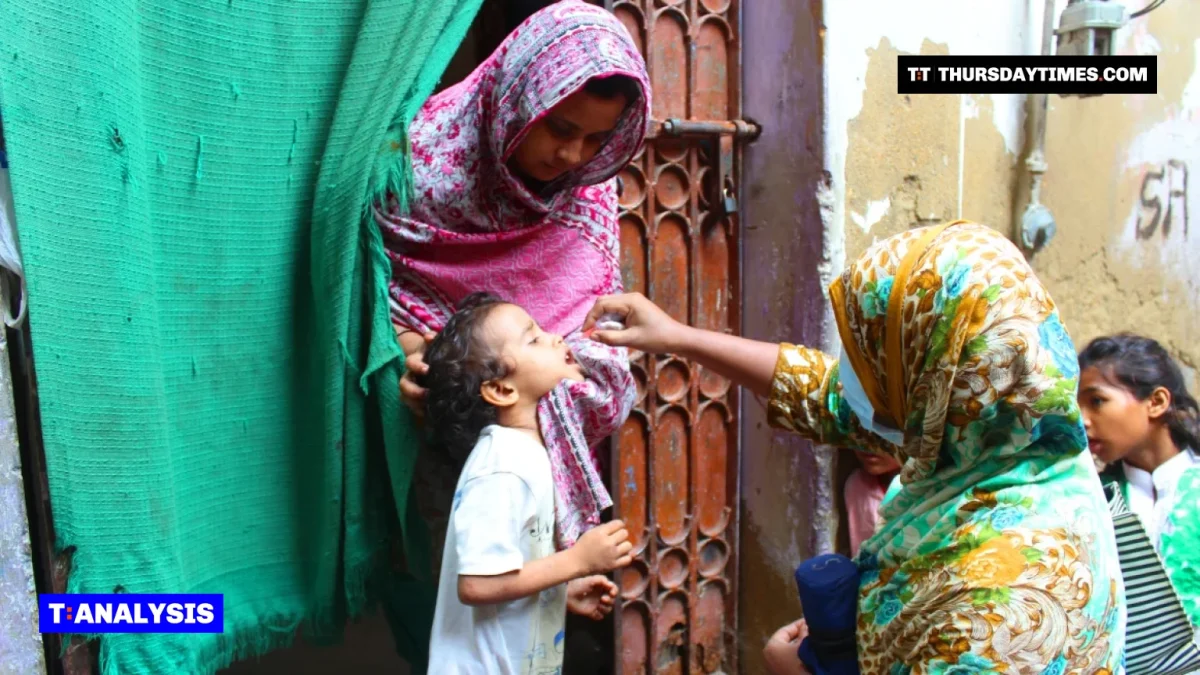
Karachi’s trouble is less about security than about doors. The February national campaign vaccinated more than 44.3 million children and missed about 0.95 million, 0.67 million of them because nobody was home when the team called. Household coverage was reported at 98 per cent. By programme standards these are good numbers, but they leave a tail of children that a virus can find.
Refusals, February 2026 campaign
Sources: National Emergency Operations Centre; Sindh health department. The two refusal figures cover different campaigns and periods and should not be added together.
Refusals are the stubborn part. Sindh’s health minister has attributed the 2025 refusals to vaccination fatigueThe weariness some parents feel after being offered the same polio drops many times, often without any other health service on the same visit.. A member of the global Technical Advisory Group for polio eradication cautioned against assuming that families turn teams away because there have been too many rounds, saying many refusals stem from a lack of knowledge. Both can be true. A parent offered drops at the door round after round, with no clinic or answer to a question on the same visit, has a case for being tired.
The April national campaign missed about 300,000 children, fewer than a typical nationwide round has missed. Karachi still needs particular attention, because its refusals are concentrated, and a concentrated problem in a city the programme can reach is solvable in a way that remote valleys are not.
“A concentrated problem in a city the programme can reach is a solvable one.”
Security, and where it matters
The security picture is mostly outside Karachi, so the plan is not a security plan. But a gap anywhere is a gap everywhere. Each national drive targets more than 45 million children under five and relies on more than 400,000 frontline workers. They and the police who guard them remain targets. In the first days of the November sub-national drive, gunmen abducted four polio workers in Tank, and terrorists killed two policemen on polio duty in Mohmand.
The February campaign left 233,000 children unreached because of security, boycotts, and snow. Of those, 184,000 were in Khyber Pakhtunkhwa, 113,000 of them in the south. Insecurity and poor access in southern Khyber Pakhtunkhwa are the main reason the remaining cases are clustered there. Protecting vaccinators there decides the difference between a case and a clean year.
A plan that closes Karachi while the south stays open buys time, not an end.
The corridor with Afghanistan
The WHO committee treats Pakistan and Afghanistan as a single epidemiological blocTwo or more areas where the virus moves back and forth freely enough that they must be handled as one disease zone., and documented shared cross-border transmission as recently as mid-2026. It said that house-to-house vaccination has not taken place in Afghanistan since October 2024 because of security concerns, that campaigns now run on a site-to-siteFamilies bring children to fixed vaccination points instead of teams visiting homes. It tends to miss the youngest children and those whose mothers cannot travel. model, and that few women work as vaccinators, particularly in the south.
The committee called for vaccination of people of all ages at border crossings to continue, and for both programmes to reach families on the move, including undocumented migrants returning from Pakistan to Afghanistan. Here Pakistan’s interests and Kabul’s overlap. Pakistan can do its half, with vaccination at crossings and transit points, and use every channel to press the case for house-to-house campaigns on the other side.
One bloc, two programmes
Source: WHO polio emergency committee statement, November 2026.
What the Karachi plan has to fix
The 17 November consultation reviewed progress under the Karachi Action Plan and set priorities for the next six months. Ms Farooq called for better campaign quality, stronger community engagement, wider routine immunisation, more accountability at field level, and a coordinated effort to reach every missed child. National EOC Coordinator Muhammad Anwar ul Haq and Sindh EOC Coordinator Shehryar Gul Memon attended. The detailed plan has not been published, so what follows is a test of the stated priorities against the evidence, not a description of its contents.
First, campaign quality. The external audit and the retraining of Karachi teams were the right response to a weak spot. The next step is to publish what the audits find, union council by union council, so the city can see which neighbourhoods are being reached and which are not.
Second, community engagement. Because refusals are concentrated in particular neighbourhoods, local clerics, doctors, teachers, and women health workers who live in those lanes will do more than a billboard.
Third, routine immunisation. The reservoir exists in part because children in the city’s poorest areas miss ordinary shots. Drops offered alongside other services answer the “why only polio” question, and reach the malnourished infant who is the likeliest next case.
Fourth, accountability. Supervisors need to be able to tell when a team has marked a house absent that it never visited. In February about 70 per cent of missed children were recorded as not at home, so those records deserve checking, and same-day evening revisits, when working parents are back, are cheap.
Fifth, the horizon. The government’s National Emergency Action Plan for 2026–27 aims to stop transmission by the end of 2027, and Japan has just given $4.3 million for more than 28 million vaccine doses for the 2027 campaigns. The scarcer resource is attention, and the low-transmission season is when it pays most. The WHO committee called it a chance to lock in the gains, and a six-month plan that starts in November covers that window.
“Karachi can be closed, and closing it would take away the virus’s best hiding place.”
The measure of success
The test is not a meeting or a plan. It is a short list anyone can check. Do sewage samples from Karachi’s six districts stay clean through the winter? Does the city report no case after the boy in Jamali Colony? Do refusals in the next national campaign fall well below the roughly 31,000 recorded in February? Does the share of children marked absent fall once teams return in the evening?
Pakistan has earned the right to be optimistic. Cases are down by two thirds in a year, the sewage is cleaner, and the prime minister’s office and donors are engaged. The work left is also the hardest: the doors in Karachi, the insecure roads in the south, and a border that neither virus nor child respects. Karachi is where the programme can show it knows how to finish.