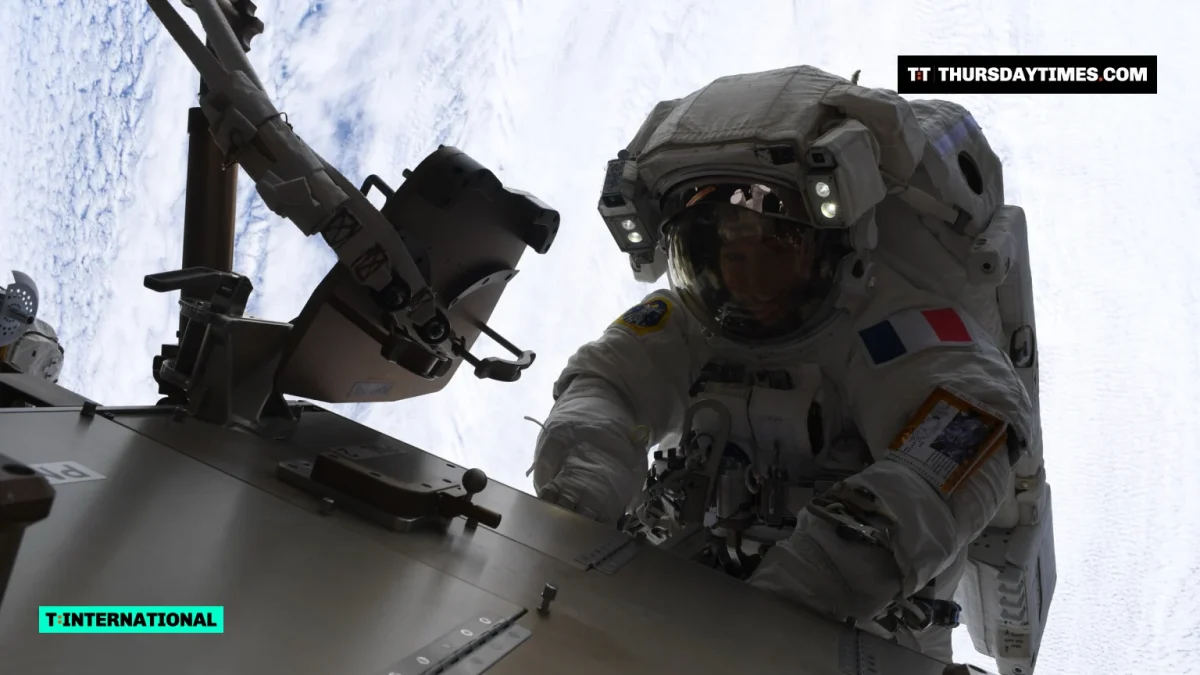
PARIS (The Thursday Times) — European ministers will meet in Rome on 15 December to decide whether to begin preparing the continent’s first home-grown human spaceflight programme, which the European Space Agency (ESA) puts at about 10 billion euros over a decade.
The gathering is ESA’s Intermediate Ministerial Meeting. According to the agency, ministers from its member states will set a common direction for Europe’s future in space exploration and start the preparatory activities needed to bring concrete proposals to the agency’s Council at ministerial level in 2028. The agenda covers Europe’s future human access to and presence in low Earth orbit, stronger scientific and robotic capabilities on and around the Moon, and the foundations for more ambitious exploration of Mars.
What Europe would build
ESA Director General Josef Aschbacher has proposed a European system able to launch astronauts and bring them home safely. The agency’s own estimate is about 10 billion euros over ten years, set against roughly 5 billion euros that Europe could spend over the same period if it keeps buying foreign services. Both figures are projections rather than allocated money, and the member states make the decision.
“If the decision is positive, that would be quite a historic moment for Europe,” Aschbacher said in an interview published on Sunday. Europe has not tried to run its own human spaceflight programme since the Hermes space plane was abandoned in 1992.
Why now
Aschbacher pointed to a changing geopolitical picture and said there are “uncertainties right now” over how human spaceflight will continue in the United States. Relations with NASA were “good and strong”, he said, but things “could change”, and Europe had to be ready for every eventuality. The plan, he said, is to supplement NASA rather than stop working with it.
He noted that Europe had no say when NASA paused two projects, the lunar Gateway and the Mars sample return mission. If the member states agree in December, he said, ESA would begin preparatory work using 280 million euros freed up by those pauses, with a full funding call at the next ministerial budget session in 2028.
The talks come days after US regulators approved SpaceX’s plan for a million data-centre satellites, and after NATO vowed to defend space following reports about a Russian nuclear satellite.