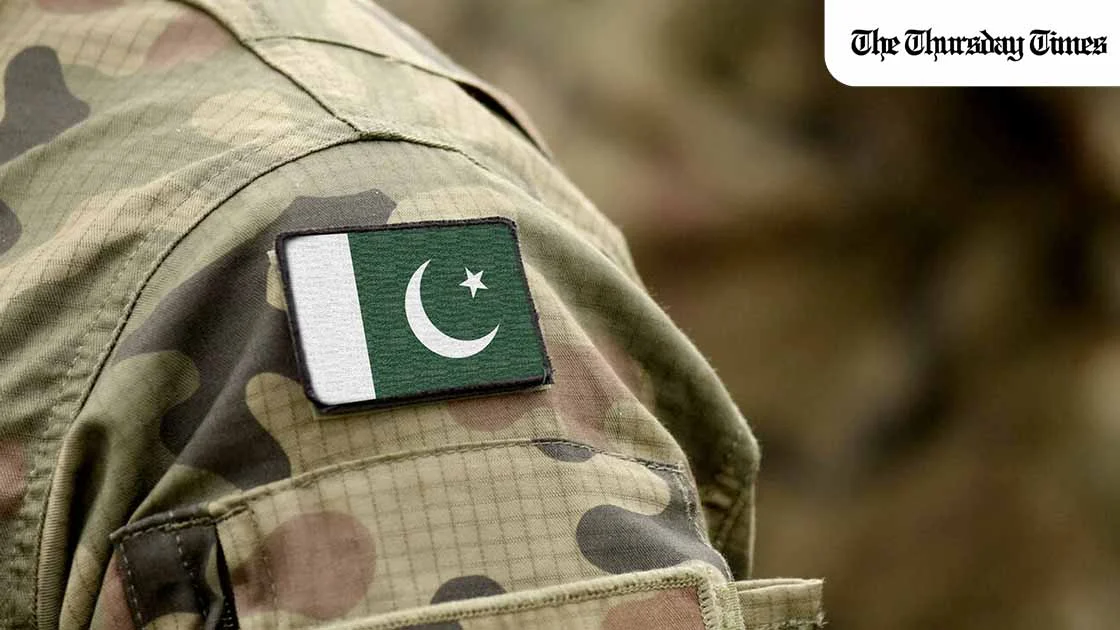
BAJAUR (The Thursday Times) — A major joint counter-terrorism operation is underway in Pakistan’s Bajaur district, with the Pakistan Army leading a coordinated sweep in collaboration with the elite Special Services Group (SSG), the Counter Terrorism Department (CTD), and local police. The offensive targets Tehrik-i-Taliban Pakistan (TTP) elements believed to be embedded across strategic urban and rural corridors of the region.
This operation in Bajaur marks a renewed emphasis by Pakistani security forces on reclaiming physical and psychological space from TTP actors. The military campaign also underscores Islamabad’s commitment to preventing the reconstitution of militant sanctuaries in the tribal belt, especially amid regional instability and potential spillover effects from the Afghan frontier.
The operation was launched at first light, with twin northern and southern thrusts intended to root out entrenched TTP elements and neutralise their support networks.
On the northern axis, early morning manoeuvres resulted in the successful clearing of two key militant targets by combined forces. The SSG assumed full control of the northern approach, securing the Main Supply Route through a series of forward-deployed roadblocks established by Frontier Corps units.
In Barwasti, a densely populated settlement, joint SSG and CTD teams initiated a complex urban sanitisation effort, reportedly identifying and neutralising a concealed terrorist hideout. According to ground reports, the site was initially identified by Quick Reaction units of the SSG and swiftly engaged by an Infantry Battalion Group.
A notable success occurred near the Marwat Canal, where a Frontier Corps wing intercepted a casualty evacuation vehicle used by TTP operatives. The vehicle, which reportedly contained significant operational assets, has been transferred to Bannu for forensic examination.
The southern axis has seen methodical progress, with bomb disposal teams conducting a high-risk clearance of suspected improvised explosive device (IED) zones along the route connecting Nurrar and Sardi Khel. The presence of IEDs has long posed a challenge to military mobility and civilian safety in the region.
The CTD and Police have played a vital role in parallel operations, executing search and destroy missions across known TTP hideouts. Two confirmed safehouses were razed and three others were set ablaze during clearance efforts. Of particular strategic value is the ongoing demolition of the residence of Qari Niaz, a local commander associated with Fidayeen and Kidnap (FAK) cells. Intelligence suggests the presence of a reinforced underground bunker at the site, possibly used as a staging ground for militant logistics or command operations.
Simultaneously, five individuals suspected of affiliation with TTP networks have been taken into custody. CTD sources confirm that preliminary interrogations are underway, aimed at mapping the local support infrastructure and potential escape routes used by militants.
Military officials report that at least 17 TTP militants have been confirmed killed in combined ground and aerial engagements across both axes of the operation. An additional 11 are believed to be wounded, with some potentially having escaped through informal village routes or tunnel systems—an established tactic in previous operations in Swat and North Waziristan.
The operation has yielded the recovery and destruction of a substantial volume of militant materiel, including IEDs, assault rifles, tactical vests, and encrypted communication devices. Forensic teams are expected to process recovered items for any linkages to cross-border supply routes or external sponsors.
Military sources indicate that the operational tempo is being maintained with high morale across all units. Additional SSG and CTD contingents are being held in reserve in Miran, positioned for rapid deployment should fresh intelligence or battlefield contingencies necessitate reinforcement.
Cordon-and-search operations continue across semi-urban pockets, as forces work to fully eliminate militant remnants from Bajaur. The local civilian population, long caught in the crossfire of insurgency, is said to be actively cooperating with security personnel, offering vital human intelligence that has already informed several tactical decisions in the field.
The outcome of this operation is likely to have long-term implications not only for local stability in Khyber Pakhtunkhwa but also for Pakistan’s broader counter-terrorism strategy in the northwest frontier.