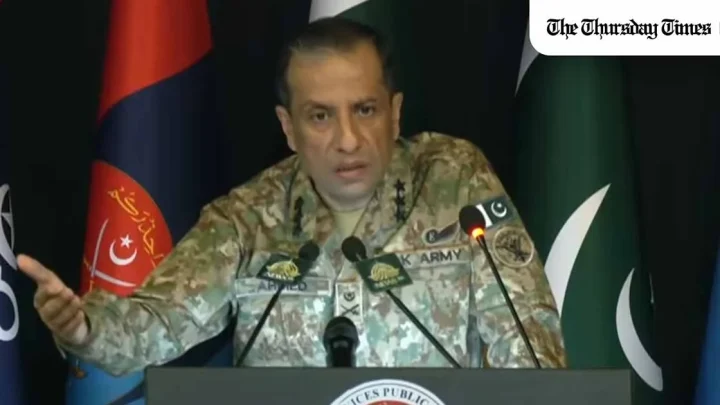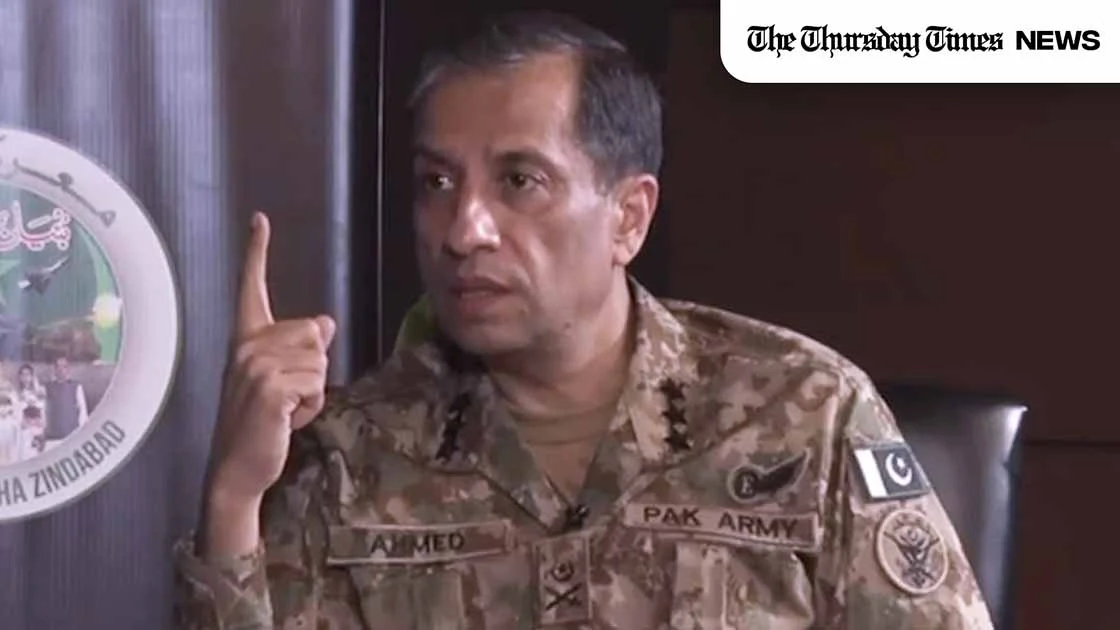
RAWALPINDI (THE THURSDAY TIMES) — Pakistan’s top military spokesperson, Lieutenant General Ahmed Sharif Chaudhry, has said that the country’s war on terror faces its greatest challenge from a nexus of political elements, criminal networks and terrorist groups that undermine state efforts to restore stability. Speaking to journalists in Rawalpindi, he said security forces had already dismantled much of the smuggling-terrorism linkage through coordinated operations but warned that total eradication would only be possible through full and honest implementation of the National Action Plan.
He urged all state institutions and stakeholders to play their part in strengthening the national framework against terrorism, emphasising that “collective responsibility and unity of purpose” were essential for long-term peace.
General Sharif also called for urgent reforms in Pakistan’s criminal justice system, noting that “dangerous militants often walk free due to systemic loopholes.” He added that effective, transparent judicial processes were vital to ensure that convicted terrorists could not exploit weaknesses in prosecution and legal procedure.
Turning to regional issues, the Director General of Inter-Services Public Relations (ISPR) said that while the people of Afghanistan share deep historical and cultural ties with Pakistan, certain elements within Afghanistan’s interim government were fuelling instability across the border. He described a network in which extremist factions collect “taxes” from poppy cultivators in exchange for protection, with the proceeds funding organised drug and terror operations that sustain militant activity on both sides of the frontier.
According to him, these groups “thrive on chaos” and seek to perpetuate border tensions between Pakistan and Afghanistan, frequently targeting Pakistani border posts and logistical convoys.
Responding to a question, General Sharif clarified that those currently based in Afghanistan were not Pakistani refugees but militants who fled after counterterrorism operations inside Pakistan. “If they were refugees, they would return through legal crossings such as Torkham or Chaman, not by attacking border posts or sneaking in through illegal routes,” he said.
The military spokesperson reaffirmed that Pakistan remains committed to ensuring lasting peace within its borders. He said security forces would continue their operations until terrorism, smuggling and organised crime are completely eliminated, pledging that the state’s resolve in protecting its citizens “remains unshakable.”∎