Pakistan’s peace efforts and growing diplomatic importance: mediation in Iran war a diplomatic setback for India, says Foreign Policy

As tensions between the United States and Iran rise, Pakistan is emerging as a key go-between, bringing its diplomatic importance in the region into sharper relief. The development is not only a challenge to India's narrative but is also giving Pakistan a prominent place in global politics once again.

Join the conversation

Translated from the Urdu by Thursday AI. The original is the record. Read the original

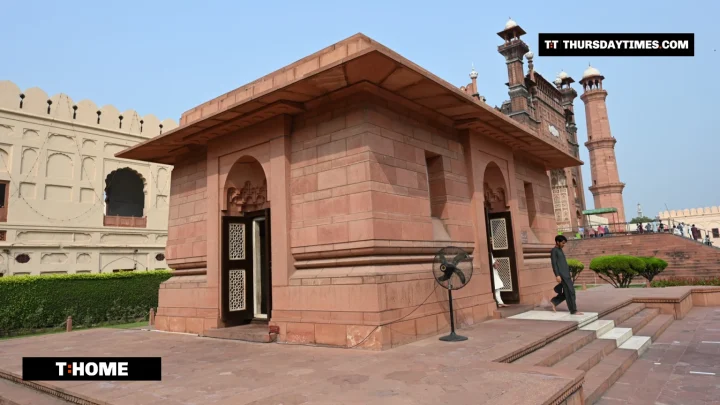
Pakistan’s emerging role as a mediator in the US-Iran crisis has increased its diplomatic relevance, challenged India’s effort to sideline it, and reshaped regional perceptions of power and utility. — FILE/THE THURSDAY TIMES
Listen to this articlePakistan’s peace efforts and growing diplomatic importance: mediation in Iran war a diplomatic setback for India, says Foreign Policy11 min · device voice0:00 / 11:00

WASHINGTON (The Thursday Times) — When India's External Affairs Minister S Jaishankar called Pakistan a "broker" or "fixer" for passing messages between the United States and Iran, it was not merely a harsh phrase but one that concealed a deep diplomatic unease. In fact, the reaction was also an involuntary admission that, in the changing regional landscape, it is no longer easy to ignore Pakistan once again. According to Foreign Policy magazine, the role that New Delhi wishes to view with contempt is the very one that is now giving Pakistan a new practical importance in Washington, Tehran and other capitals of the region.

Donald Trump's politics have always revolved around transactions, quick results and relationships that can be put to personal use. So if he sees in Pakistan an intermediary who understands the language of power, has access to sensitive matters, and can also present himself as a useful mediator, then for Washington that becomes a role not of insult but of utility. According to Foreign Policy magazine, this is where Pakistan, despite its internal weaknesses, has carved out a place that India had wanted to close off through years of effort.

Foreign Policy magazine writes that in recent weeks Pakistan has presented itself as a workable, cautious and relatively neutral intermediary between the United States and Iran. Whether it is the talks held in Islamabad on 29 March between Egypt, Turkey, Saudi Arabia and Pakistan, or the five-point peace outline that emerged immediately afterwards in Beijing at the level of Pakistan and China, all these developments have strengthened the impression that Pakistan is not merely issuing statements but trying to support a diplomatic process that could turn direct hostility into dialogue. From the Pakistani point of view, this is not a passing activity but a continuation of a foreign policy that seeks to establish itself as the centre of connectivity, balance and crisis management in the region.

According to Foreign Policy magazine, Pakistan's real achievement here is that it has made itself diplomatically relevant at a time when its economy is weak, its political structure is far from fully stable, and many quarters of the world have long regarded it as a troubled state. Even so, if Islamabad can keep in contact with Tehran on one side, keep a channel open to Washington on the other, maintain its strategic understanding with China, and also hold practical consultations with the Arab powers, this is no small development for Pakistan. According to Foreign Policy magazine, the current crisis has made clear the limits of India's efforts over the years to isolate Pakistan diplomatically.

Pakistan's greatest strength at present, alongside its geographical importance, is its multi-directional diplomacy. Foreign Policy magazine writes that its relations with China have grown steadily stronger, that its strategic partnership with Saudi Arabia has emerged in a more structured form, and that shared interests have also developed with Iran in areas where border security and concerns relating to Balochistan are important. In this wider context, rather than making itself the blind partner of any one bloc, Pakistan has presented itself as a country able to maintain contact with various centres of power at the same time. Foreign Policy magazine writes that Pakistan's real value lies not in its slogans but in its availability, its access and its capacity for coordination.

According to Foreign Policy magazine, India's unease in this whole picture is understandable. A central aim of Narendra Modi's foreign policy has been to render Pakistan irrelevant on the world stage, while India establishes itself as an indispensable emerging power. But the present crisis has, at least temporarily, shaken that narrative. If, at a time when tensions between the United States and Iran are rising, the Middle East is moving towards new alignments, and Washington is making decisions on the basis of immediate practical and strategic needs, Pakistan emerges as an active intermediary, that is certainly an unwelcome reality for New Delhi. Seen from the Pakistani perspective, this is not merely India's failure; it is also proof of Islamabad's ability to convert its usefulness into diplomatic weight at a moment of crisis.

Both the military and the political leadership appear to play an important part in Pakistan's effort. What has been said about Prime Minister Shehbaz Sharif's active presence at the diplomatic level and Field Marshal Asim Munir's behind-the-scenes contacts has strengthened the impression that Pakistan is, this time, not merely a spectator but is inside the matter. The Foreign Policy article also suggests that Pakistan's present diplomatic rise is largely tied to the fact that it has access to the real centres of power and can become, for those forces, an intermediary that goes beyond formal statements and makes practical contact possible.

According to Foreign Policy magazine, the consultations in Islamabad among Egypt, Turkey, Saudi Arabia and Pakistan in support of a ceasefire, together with progress on the passage of Pakistani ships with Iran in the context of the Strait of Hormuz, are a sign that Pakistan has not let diplomacy remain merely a political slogan, but has tied it to trade, maritime and security matters and made it part of a larger regional picture. This is the point at which Pakistan's role becomes not merely that of a messenger but of a facilitator. And this is the distinction that the Foreign Policy analysis also highlighted: that Pakistan is at present not merely talking but trying to create room for practical manoeuvre among the various powers.

For all this, the risks for Pakistan are very real. Taking on the role of mediator in any hostile environment is never easy. If talks do not succeed, the mediator may come to be distrusted, may be blamed, and at times both sides may use it for their own interest and then abandon it. When the dealings are with a leader of Trump's transactional style, this risk grows still greater, because there the distance between a favoured intermediary and an unneeded asset is very small. From the Pakistani point of view, it is necessary to understand that the present diplomatic activity, however great a success it feels, is equally fragile. This role can bring Pakistan respect, and in the event of failure can also put it in a difficult position.

But these risks do not diminish the fact that Pakistan has shown once again that it cannot be wholly ignored in the region. The role Pakistan played in 1971 in opening a secret diplomatic channel between the United States and China echoes in today's scene as well. The only difference is that today there is no Cold War atmosphere but a fragmented global order divided on many levels, in which even states considered weak can become important if they stand in the right place at the right time. Pakistan is trying once again to establish its importance on this principle.

It is also worth noting that the romantic notion of India–US relations, which was projected in New Delhi for years, has been considerably weakened by present circumstances. If Washington regarded India as a permanent strategic support, New Delhi would in such a situation have had a more central position in this interlinked crisis of South Asia and the Middle East. On the contrary, the impression that is emerging is that America is ready to change its priorities according to immediate practical needs. If Pakistan proves useful at this stage, Washington will use it. The central weight of the Foreign Policy argument also rests on this point: that in the current politics of power, more important than ideological closeness is the party that can deliver a practical result.

In the Pakistani context, this moment is also important because it has challenged India's claim that Pakistan is merely a problem in the region, not part of the solution. In this crisis Pakistan has succeeded in proving at least this much: that it is not merely a

TT Monitoring Desk

Reports from The Thursday Times' in-house monitoring desk.

More from this desk

The Thursday Times, every morning

The day’s stories that matter, the argument, and what readers read most, in one email before work.

Free. One click to stop, any time.

The conversation

Comments are open on this story. An editor reads every one before it appears.

No one has said anything yet. Be the first.

Published by Thursday Media International thursday.media