Within hours of the American vote, a familiar claim began circulating on Pakistani social media: Washington has turned, and relief for Imran Khan is on the way. The record of the past 79 years suggests otherwise. Congress has changed hands. The reasons the two countries deal with each other have not.
Who actually runs this relationship
Tuesday’s result was a verdict by Americans on American concerns: prices, tariffs, corruption and an unpopular war. It reshapes Washington’s domestic politics, and it will make Donald Trump’s last two years far less comfortable. It does not put a new person in the Oval Office.
The president still directs diplomacy, commands the military and sets the tone with foreign leaders. He also keeps his veto, and overturning it takes a two-thirds majorityA veto can be overridden only if two-thirds of both the House and the Senate vote to do so. in both chambers, which Democrats do not have. What they gain from January is the power to hold hearings, summon officials, write spending bills and, in the Senate, slow down nominations. Those are real tools, and Pakistan will feel some of them at the margins. None of them hands Congress the Pakistan file.
Democrats are short of a veto override
Seats called by the morning of November 4. Counting continues. Override figures assume all members vote.
Parties have never been the dividing line
Anyone who believes the relationship follows party colours should look at its history. Jimmy Carter, a Democrat, cut off aid in 1979 over the nuclear programme, and Ronald Reagan, a Republican, restored it when Afghanistan made Pakistan indispensable. The Pressler sanctions of 1990 came under a Republican president, using a law written by a Republican senator. A Democratic Congress passed the Kerry-Lugar-Berman act in 2009, promising $7.5 billion in civilian aid. Mr Trump himself froze security assistance in 2018, in his first term, before becoming the warmest American president Islamabad has dealt with in years.
What moved policy each time was the same thing: what Washington needed in the region, and whether Pakistan could help provide it. That is an unsentimental basis for a friendship, and it is also a durable one. It has outlasted every leader on both sides.
Up and down, under both parties
1979: Carter (Democrat)
Aid cut off over the nuclear programme.
1981: Reagan (Republican)
Aid restored as the Soviet war in Afghanistan makes Pakistan essential.
1990: Bush (Republican)
Pressler sanctions cut off aid and stop F-16 deliveries.
2009: Obama (Democrat)
$7.5 billion in civilian aid approved under the Kerry-Lugar-Berman act.
2018: Trump (Republican)
Security assistance frozen.
2025: Trump (Republican)
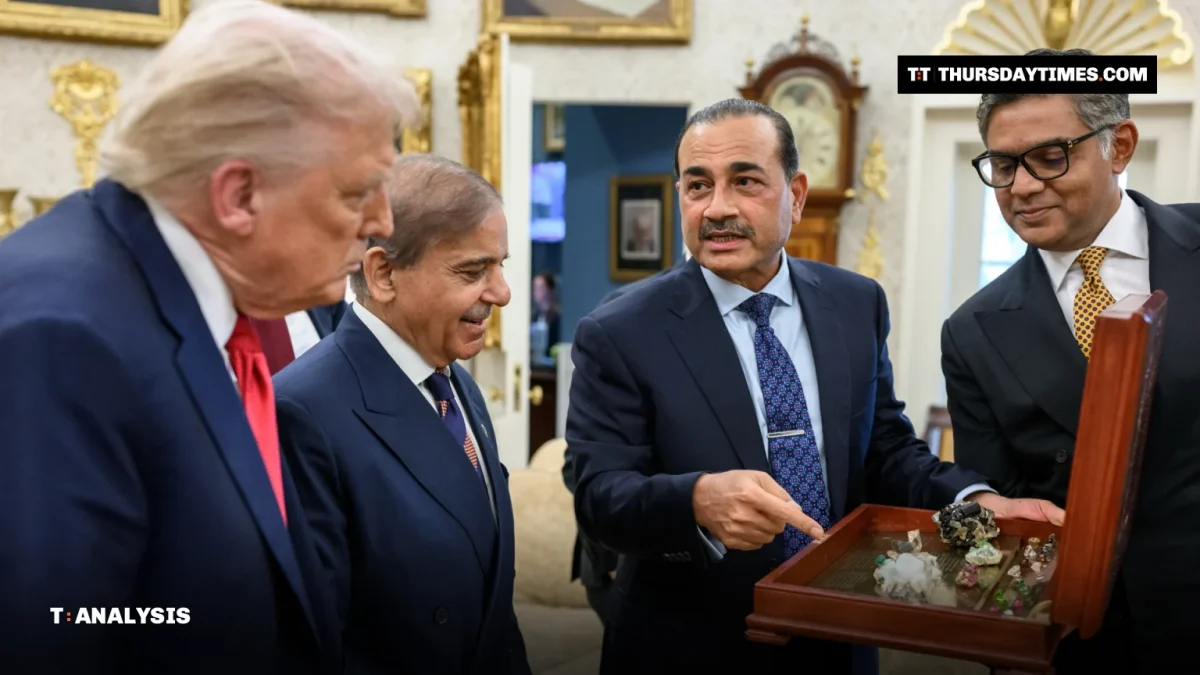
Prime Minister and Field Marshal welcomed to the Oval Office.
In each case, the decision followed American interests in the region and not party loyalty.
“What moved policy each time was what Washington needed in the region, and whether Pakistan could help provide it.”
What Congress has already shown
Congress has already tried its hand at Pakistani politics. In June 2024, the House voted 368 to 7 for a resolution calling for an investigation into claims of irregularities in Pakistan’s election. It drew excited coverage and was shared endlessly online. American policy towards Pakistan did not change as a result, and that was with a large bipartisan majority behind it.
Expect more of the same from a Democratic House. A committee chair may hold a hearing, and some members will make statements about Mr Khan, encouraged by an organised diaspora lobby. Islamabad should engage those members and not ignore them. But noise on Capitol Hill is a different thing from a change in American interests, and the PTI case does not figure in the calculations that drive this relationship.
House vote on Pakistan’s election, June 2024
An overwhelming vote, and no change in US policy towards Pakistan.
The same sales pitch, a second time
Why, then, the excitement? Partly because the PTI’s overseas online campaign has had little else to celebrate. The party’s government in Khyber Pakhtunkhwa has ended in governor’s rule, its street campaigns have not delivered, and the understanding with the establishment it has long sought has not come. For accounts that live on attention, a Democratic victory is fresh material.
We have seen this story before. In the run-up to Mr Trump taking office, the same networks told followers that his return meant relief for Mr Khan and a revival for the party. That narrative was false. When neither arrived, they turned on the man they had been promoting and began attacking him.
The same pattern is now taking shape around the Democrats, and it will end the same way, because the premise has not changed. Mr Khan and the PTI are non-issues in US foreign policy. That policy is built on common geopolitical interests, and those interests currently converge on key issues between Washington and Islamabad. Supporters of the party deserve more honesty about this from those who claim to speak for them.
The pattern
Before Trump took office
The promise: his return means relief for Mr Khan and a revival for the PTI.
After he took office
The result: no relief and no revival. The same voices begin attacking him.
November 2026
The promise again: a Democratic Congress will deliver what Mr Trump did not.
What has not changed
US policy still rests on shared geopolitical interests, and the PTI is not among them.
“Mr Khan and the PTI are non-issues in US foreign policy.”
Where the real business lies
The agenda between the two capitals is crowded, and it has little to do with any of this. There is the war with Iran on Pakistan’s border, in which Islamabad has been a central go-between. There is Afghanistan and the terrorism launched from its soil. There is energy, including a US-backed consortium that wants to build an LNG terminal at Port Qasim. Secretary of State Marco Rubio put the matter plainly last month, saying the United States “has to have a relationship” with nuclear-armed Pakistan.
It is on these questions that President Trump, Prime Minister Shehbaz Sharif and Field Marshal Asim Munir have built their working understanding. Pakistan’s civil and military leadership has handled a dangerous period with skill, and that has been noticed in Washington and in capitals across the region. A change of committee chairs does not undo it.
What Islamabad should do
None of this is a reason for complacency. Pakistan has relied heavily on the White House, and it now has a new audience on Capitol Hill that will write budgets and ask questions. Diplomats should be meeting incoming committee chairs and their staff early, and making the case on Iran, Afghanistan and trade before others make a different one for them.
But that is routine statecraft, not a crisis. On social media, this week’s vote may look like a turning point for Pakistan. In the offices where the relationship is actually managed, the work carries on much as it did last week.