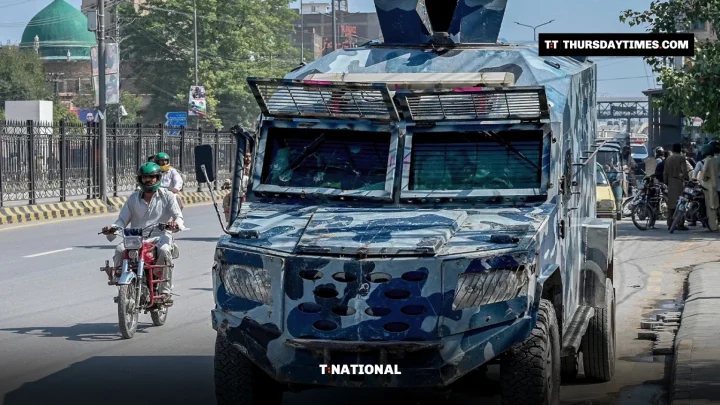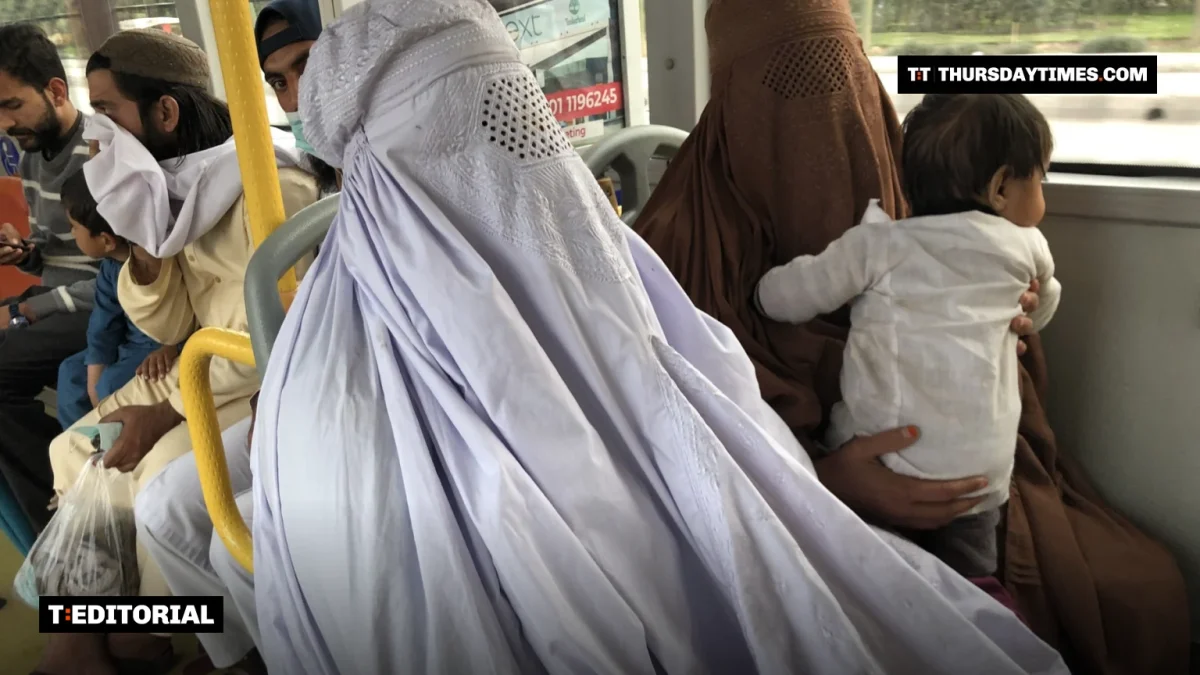
The Capital Development Authority wants to put 30 pink electric buses on Islamabad’s roads, for women only, within the next few months. It should do so, and quickly. Women and girls in the capital are being squeezed off the city’s popular electric buses at rush hour, and a separate service is the fastest way to give them a seat. But a pink bus is a remedy for a symptom. The disease is that too many women in Pakistan do not feel safe on ordinary public transport, and a city that answers that only with a separate fleet risks telling half its population that the rest of the network is not for them.
What Islamabad is planning
The proposal is modest and sensible. A senior CDA official has said the authority decided to introduce the women-only service after seeing how hard it had become for women and girls to find space on the existing electric buses, especially during peak hours. The authority already runs more than 160 electric buses on over 20 routes through a contractor, a service residents have taken to with enthusiasm. The new pink buses would run on those same routes at first, with more added if demand justifies it. A summary is being prepared for the CDA Board, and Heavy Industries Taxila is expected to handle procurement, with the buses imported from China in the same way as the current fleet. The plan follows directions from the federal government and the interior ministry.
Islamabad is not starting from nothing. The Ministry of Federal Education and Professional Training already runs a free Pink Bus Service for working women and girl students. When the ministry last described it, in October 2025, it had 22 buses serving five rural sectors of the capital territory during morning and early-afternoon peaks, carrying more than 4,000 women and girls a day. A third-party review found it had made their journeys safer and easier, and the ministry said it wanted to extend it to more rural and peri-urban areas, with trained female staff and security on board, if money allowed.
Islamabad’s buses, and the women’s share
Sources: Capital Development Authority, November 2026; Ministry of Federal Education and Professional Training, October 2025.
Two services for women, run by two different arms of the state, in one small city, is a sign of good intentions. It is also a warning. If the CDA’s pink buses and the ministry’s pink buses are planned separately, with separate routes, timetables, fares and complaint lines, women will pay for the confusion. The first decision the CDA Board should take is to fold both into a single network with one map, one card and one helpline.
Why the bus matters so much
For many Pakistani women, the bus is not one option among several. It is the only one. Men are far more likely to own or borrow a car or a motorcycle. Women rarely ride either, and many families consider rickshaws and the crowded paratransitInformal, privately run minibuses, vans and wagons that fill the gaps left by formal bus services in most Pakistani cities. vans unsafe for their daughters. When the bus is crowded, hostile or simply absent, the cost is not a longer journey. It is a lost job, a missed class or a girl kept at home.
The World Bank counts only about 21 per cent of Pakistani women in the workforce, the lowest share in South Asia. Safe transport is far from the only reason, but it is one of the easiest to fix. In one study the bank cites from Lahore, three in four women said they would be willing to work if safe transport were available. In Karachi, it cites a figure of 80 per cent of women having experienced harassment on public transport.
The missing workers
Source: World Bank, citing national labour data and city studies.
“When the bus is crowded, hostile or simply absent, the cost is not a longer journey. It is a lost job, a missed class or a girl kept at home.”
Every one of those numbers is an economic argument as much as a moral one. A country that keeps most of its educated women out of paid work because they cannot get there safely is choosing to be poorer than it needs to be.
What Pakistan has already learned
The good news is that Pakistan does not need to guess what works. Its own cities have run the experiment.
Peshawar’s BRTBus Rapid Transit: buses that run on dedicated lanes with metro-style stations, so they are faster and more reliable than ordinary buses. is the clearest lesson. A survey in 2016 found that 90 per cent of women in the city felt unsafe on public transport. Peshawar did not respond mainly with separate buses. It reserved about a quarter of the seats on every bus for women, fitted the fleet with CCTV, put guards on board and lit the stations properly. It hired women, who made up about 15 per cent of the system’s 2,000 staff by 2022. Fares were kept low, at about 30 rupees for the longest trip. By 2022 the operator said women accounted for roughly 30 per cent of passengers, up from 2 per cent two years earlier.
Women’s share of Peshawar BRT passengers
Source: TransPeshawar, the government company that runs the BRT, in 2022. Bars are scaled to the larger figure.
Karachi chose the other route first. The Sindh government launched its People’s Pink Bus Service in February 2023 with about 10 buses, starting on a single route from Model Colony to Tower, and has since extended it. Lahore followed in October 2024 with pink buses on 16 routes, though with only one or two buses on each at the start. Mardan had pink buses as far back as 2018, and Gilgit-Baltistan opened a free women-only service in 2022.
The difference between these approaches is instructive. Separate buses help most where they are frequent and dependable. One or two buses on a route, arriving when they arrive, are a gesture rather than a service. A woman who has to be at work at nine cannot plan her day around a bus that comes twice a morning. That is why Peshawar’s approach of making every bus safe has done more for women’s ridership than a handful of pink buses have done anywhere else.
“One or two buses on a route, arriving when they arrive, are a gesture rather than a service.”
What every bus needs
The CDA should launch its pink buses, but as one half of a plan whose other half covers the entire fleet. Karachi’s Yellow Line BRT, now being built with World Bank support, offers a useful template. Its stations were designed after consulting women and transgender people, with good lighting, alarm buttons, CCTV on buses and at stations, visible reporting desks, helpline numbers in local languages and properly placed washrooms. Under its gender action planA set of targets and measures attached to a development project to make sure women benefit from it, for example as passengers, employees or drivers., the project aims for at least 30 per cent of its bus drivers to be women. Sindh began training women as bus drivers in a pilot in 2023.
Islamabad can adopt the same standards across its electric fleet without waiting for new buses. A reserved section for women on every bus, clearly marked and actually enforced. Women drivers and conductors, recruited and trained on purpose rather than by accident. Cameras that work and are watched, and a panic button that summons a real response. A single helpline whose number is painted on every bus and stop, with complaints logged, answered and counted. Stops that are lit, shaded and visible from the road.
The journey does not end at the bus door. In Peshawar, commuters and researchers have pointed to the walk between home and the stop as the weak link in an otherwise safer journey. Poor street lighting, empty pavements and the absence of public toilets make that last mileThe stretch between a passenger’s home or workplace and the nearest stop, which public transport itself does not cover. a barrier in its own right. The CDA controls street lighting, footpaths and land use in the capital. It is better placed than any transport authority in the country to fix the whole journey, not just the ride.
Fares matter too. The education ministry’s pink buses are free, and the CDA’s electric buses are cheap. The new service should not price out the low-income women who need it most. Free travel for girl students would be a sound use of public money.
Count what happens
The authority should also publish what it learns. How many women ride, on which routes and at what times. How many complaints of harassment are made, how quickly they are answered and what happens to the offenders. Whether women’s share of passengers on the ordinary electric buses rises or falls after the pink buses arrive. Without that data, nobody will know whether the scheme is working, and the next city to copy it will copy its mistakes along with its successes.
Separate buses entrench segregation
The money would be better spent on more ordinary buses
Harassment is a matter of culture, not transport
A good start, if it is only a start
The CDA deserves credit for noticing that women were being crowded off its buses and for deciding to act rather than commission another study. The pink buses should arrive on time, in good numbers and with women at the wheel. But the measure of success will not be how many pink buses run in Islamabad a year from now. It will be whether a young woman can board any bus in the capital, at any hour, and expect to arrive without being stared at, touched or followed. A pink bus can carry her to that day. It cannot be allowed to stand in for it.