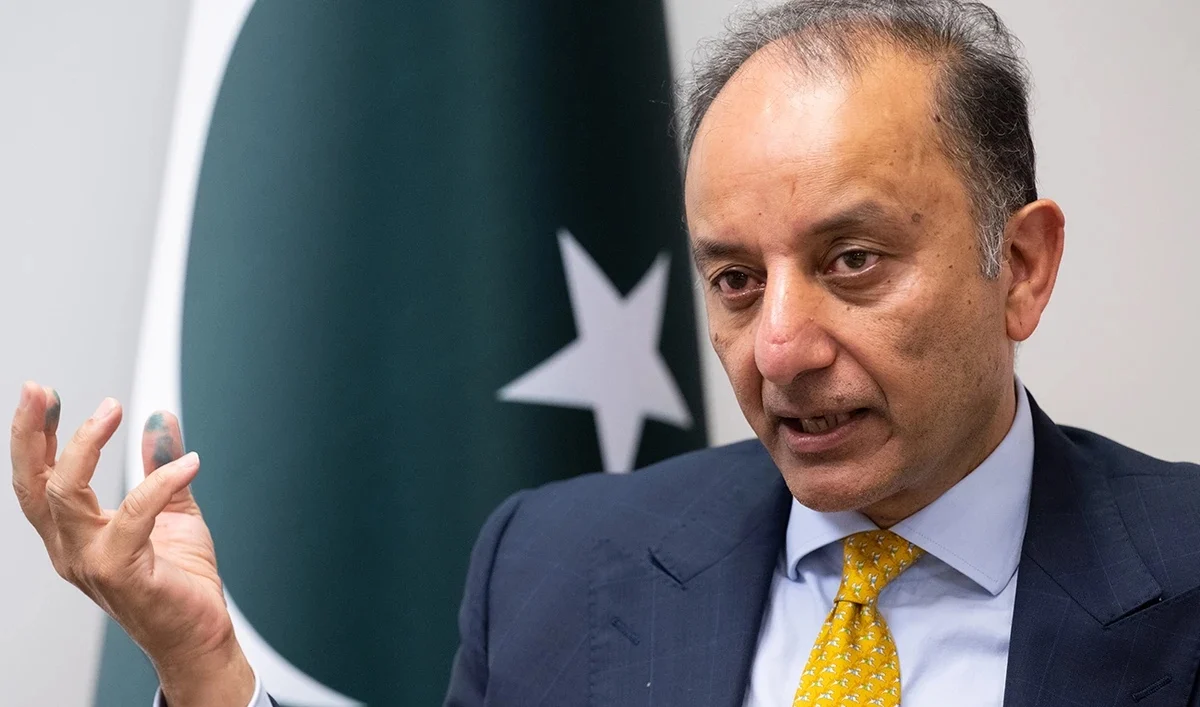
ANTALYA (The Thursday Times) — Pakistan’s Climate Change Minister Musadik Malik has urged international partners to send climate finance directly to households that are switching to renewable energy, saying ordinary Pakistanis have driven the country’s rooftop solar boom largely on their own.
Speaking at a ministerial panel on the energy transition hosted by the Global Renewables Hub at the COP31 climate summit in Antalya, Türkiye, Malik said households had bought rooftop solar panels, often without help from the government or international lenders, to secure affordable electricity.
Panels are not enough
Solar panels alone would not complete the transition, the minister told the panel. He called on partners to help pay for battery storage and better grid connections so that poorer communities could benefit. “Wire them,” he said of the households that had already installed panels.
He illustrated the shift with the story of a villager, Karamat Ali, who he said had sold 12 buffaloes and cows to buy rooftop panels because he saw solar as more reliable than grid power and unpredictable fuel prices.
Malik said Pakistan had saved about $12 billion on LNG and gas imports because of rooftop solar. He did not say over what period.
Money that has not arrived
Recalling the 2022 floods, when families waited on rooftops for rescue, the minister questioned the gap between climate finance pledges and the money that reaches affected communities. He cited figures of $40 billion in needs, $800 million in commitments, and $400 million collected for the Loss and Damage Fund, and said none of the money had yet reached people affected by disasters.
He called for climate finance to reach households directly rather than being absorbed by bureaucratic processes, for practical cooperation over lengthy declarations, and for consistent energy and climate policies.
His remarks follow a call by Pakistan Peoples Party leader Sherry Rehman for COP31 to deliver climate finance rather than empty pledges. Prime Minister Shehbaz Sharif told the summit earlier this week that Pakistan needs $138 billion for clean power by 2035.