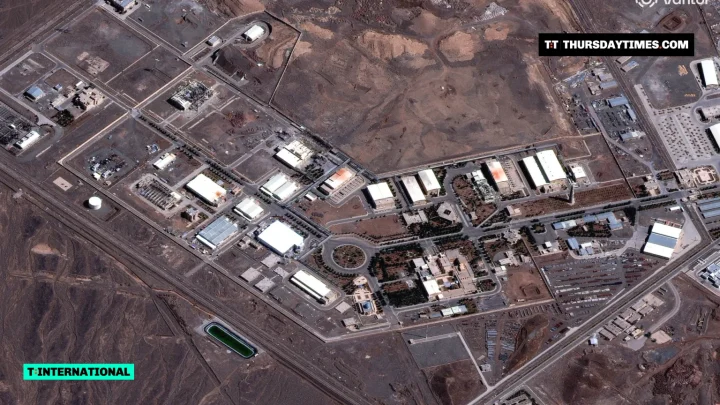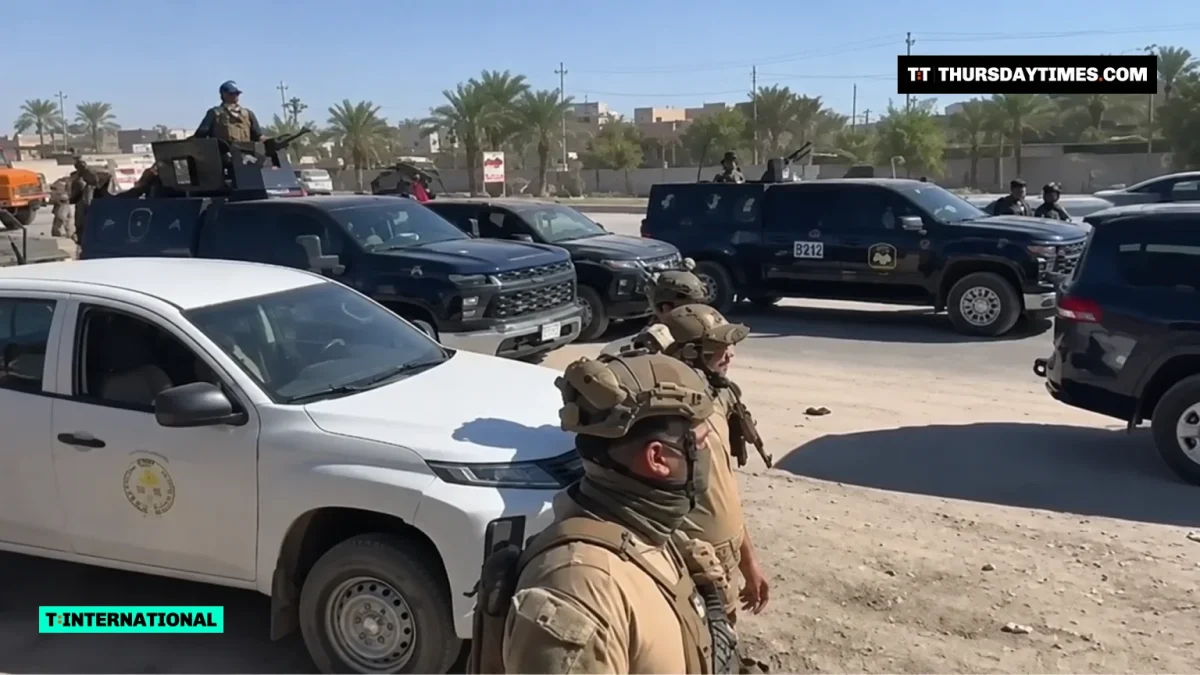
BAGHDAD (The Thursday Times) — Iraq’s government has given Kataib Hezbollah a deadline to leave Jurf al-Nasr, the Babil province town the armed group has controlled since 2014, and has ordered the army to move in as an investigation into suspected oil smuggling widens, a government spokesman said on Monday.
“There is a deadline for the armed faction to leave Jurf al-Nasr, and that deadline is not far off,” spokesman Haider al-Aboudi told the state Iraqi News Agency. He gave no date for the deadline or for troops to enter the town, which is also known as Jurf al-Sakhar.
Aboudi said Prime Minister Ali al-Zaidi’s orders followed an intelligence report that flagged suspected smuggling through an electronic monitoring programme. A high-level committee then inspected six locations named in the report and found clear tampering with pipelines passing through the area, as well as attempts to bury and hide the traces. Investigators also identified two refineries, a tanker, and storage tanks, he said.
Zaidi referred the case and those implicated to the judiciary and told the Commission of Integrity to take part in the investigation. Security agencies were instructed to stop tankers carrying oil or petroleum products from leaving the area.
Kataib Hezbollah denied the allegations on Sunday. It said the inspection had found no interference with pipelines and that facilities in the area supplied fuel for its military vehicles, and it accused Baghdad of building “fabricated files” against the group.
A wider inquiry
Aboudi said the investigation reaches beyond Jurf al-Nasr to other areas where smuggling is suspected, and that Baghdad was coordinating with the Kurdistan Regional Government. He said there was a possibility of army units entering areas of the Kurdish region, but he did not announce an order to do so. Anyone who obstructed the work of the security forces would face legal action, he warned.
The government had long treated Jurf al-Nasr as a closed file, Aboudi said, but was now acting under its legal powers and its constitutional duty to protect public money. He said the army’s entry would be the normal administration of security across Iraqi territory.
Zaidi ordered the investigative committee on 11 November. On Saturday he dismissed nine officials in Babil, among them the provincial police chief and the commander of the Popular Mobilisation Forces in the province. Iraq’s Energy Police also announced on Friday that it was forming a specialised force in the south to patrol the oil pipeline network.
The standoff comes as Baghdad pursues a plan to bring weapons held by armed factions under state control, a phased handover whose deadline Zaidi has extended to 30 June. Jurf al-Nasr, a mostly Sunni town linking Baghdad, Anbar, and the Shia holy cities of Najaf and Karbala, was overrun by the Islamic State group in 2014 and has been under Kataib Hezbollah’s control since the group was driven out that October.