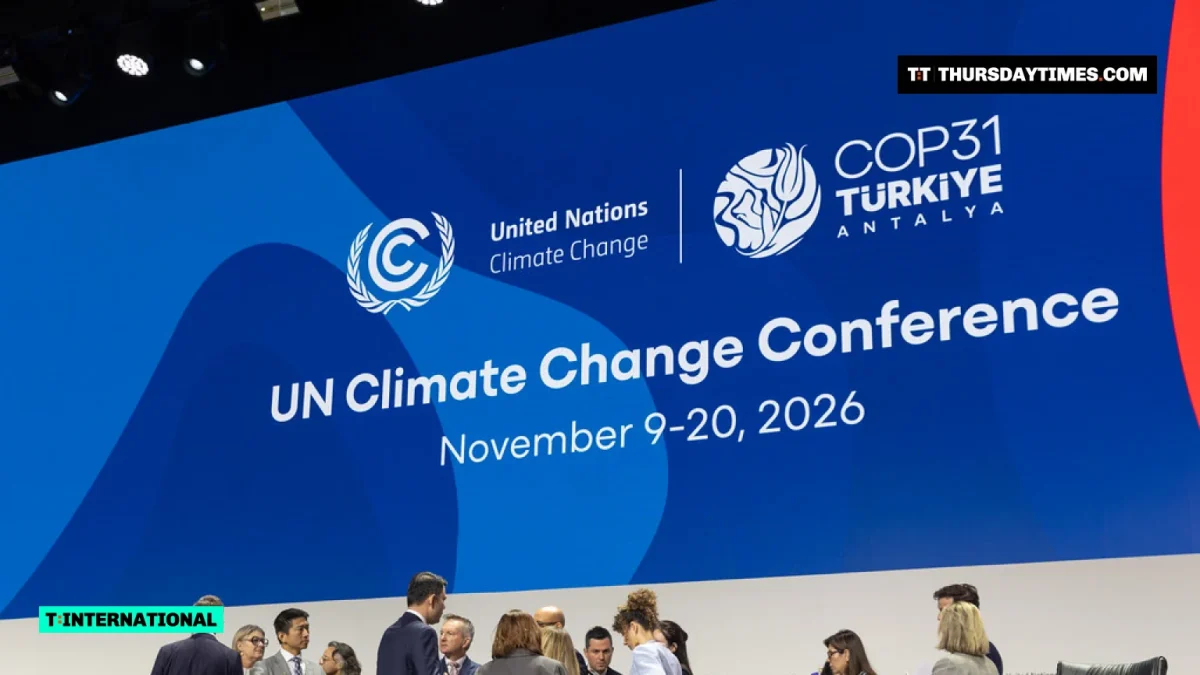
ANTALYA (The Thursday Times) — Co-hosts Türkiye and Australia tabled a fresh draft at the COP31 climate summit on Sunday, 22 November, two days after the talks were meant to end. The text still does not name fossil fuels, and the European Union and France have both pushed back.
The draft would acknowledge for the first time that global warming is on course to pass the 1.5C threshold countries had sought to protect. It calls for faster development of carbon-removal technology to eventually reverse the overshoot, and it keeps a goal of electrifying the global economy.
Dubai deal named, fossil fuels not
Instead of spelling out coal, oil, and gas, the text opens by recalling “the United Arab Emirates Consensus in its entirety”, the agreement reached in Dubai three years ago, when countries agreed to transition away from fossil fuels. Readers must look up what that deal said. The draft also carries no explicit endorsement of Brazil’s roadmap for moving away from them.
COP31 President Murat Kurum, who is also Türkiye’s environment minister, told the plenary: “We believe that we have put forward a text which all the parties can agree upon.” He said he believed concerns over fossil fuels and over climate finance for developing countries had been addressed.
EU and France push back
France’s Ecological Transition Minister, Monique Barbut, called the proposal a “backward” step and said: “Time is ticking and we are not there yet.”
Ireland’s climate minister, Darragh O’Brien, who is helping to lead EU negotiations during Ireland’s presidency of the Council, said member states would object to adopting the deal. “We will not endorse a cover decision … that does not even mention fossil fuels, which is the key driver of climate change,” he said. He put the number of countries backing recognition of the transition at about 130, and added that “no deal is better than a bad deal”.
Campaign group 350.org said it was disappointed that fossil fuels were still missing and criticised the encouragement of carbon capture. Observers in the closed-door talks said Saudi Arabia and other large oil producers had pushed to keep fossil fuels out of the text. A representative of the Saudi delegation declined to comment.
A record for the longest climate summit
The overtime has already made COP31 the longest UN climate conference on record, running about 44 hours past its scheduled close, according to the Earth Negotiations Bulletin, an independent service that tracks UN treaty talks. The previous mark belonged to COP25 in Madrid in 2019, which finished on a Sunday afternoon instead of Friday evening.
Any agreement needs consensus from nearly 200 countries. The closing plenary resumed on Sunday morning in Antalya, and the talks could still end without a deal on the main text. For the background, see our earlier report on the overtime.