TAIZ (The Thursday Times) — Health officials in Yemen’s besieged city of Taiz recorded 5,642 cases of acute watery diarrhoea, suspected dengue fever, and suspected cholera in their latest four-week reporting period, and say the true number is far higher because the siege is keeping the sick away from hospitals.
Figures from the Epidemiological Surveillance Department at Taiz’s Public Health and Population Office show 5,228 cases of acute watery diarrhoea, 232 suspected dengue cases, and 182 suspected cholera cases.
Diarrhoea cases fell compared with the previous period. The department’s director, Dr Yasin Abdulmalik, said that was likely because residents were finding it ever harder to reach clinics as roads between the city and the surrounding countryside were cut. “In reality, more than twice this number of cases were unable to reach [health facilities] because of the siege and its various consequences,” he said.
Fuel shortages have pushed up black-market prices and, with them, the fares people pay to get to hospital, he said. Taysir al-Samiei, a health communications official at the office, said patients’ ability to reach hospitals had fallen by 60 to 70 per cent by the end of the siege’s second week.
In a video circulated on 10 November, a woman from Jabal Sabir, the mountain overlooking the city, held the shrouded body of an infant from her family who died after relatives could not get her emergency care. “Our children are dying because of the siege,” she said. The Yemeni Network for Rights and Freedoms said the vehicle taking the baby to hospital was attacked by Houthi forces.
Water running out
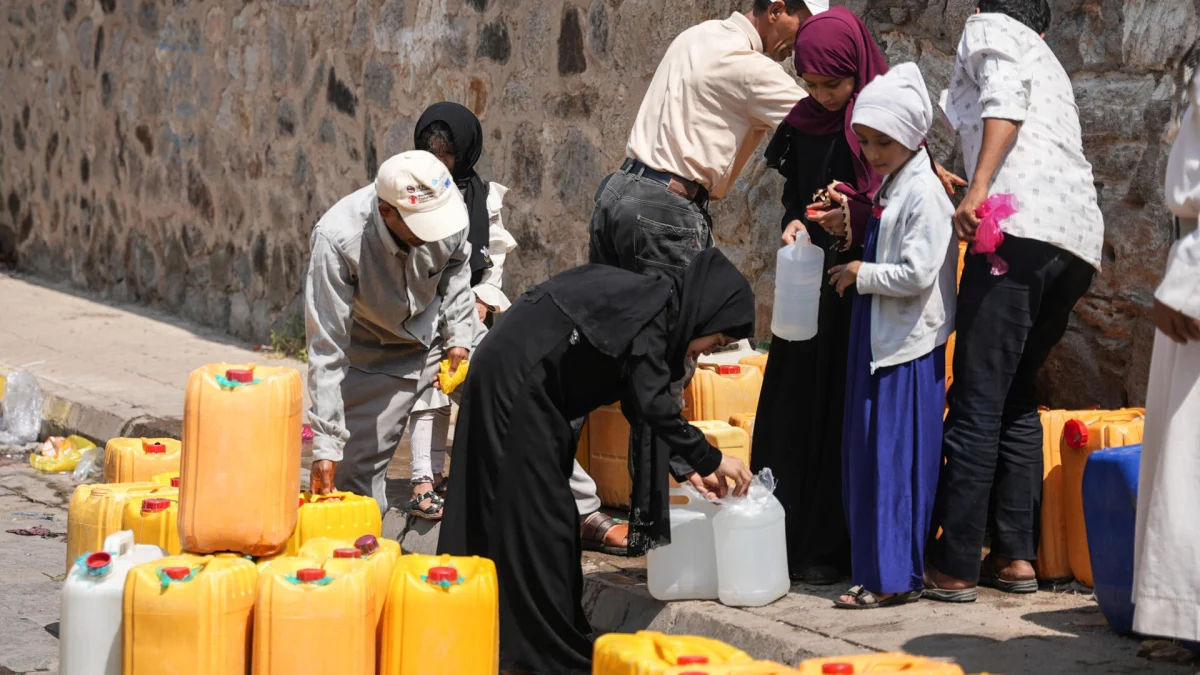
Dr Fares al-Absi, a consultant physician in the city, blamed the diarrhoea and cholera cases on unsafe water. He said the Houthis had stopped safe drinking water entering the city except in small amounts sold at high prices, and that access to the al-Dhabab water basin, a main source for water trucks, had been restricted.
“Only about 8 percent of Taiz’s water needs are currently being met, while most local wells are unfit for consumption,” he said.
Tonnes of rubbish have piled up in the streets because there is too little diesel to move it, al-Absi said, accusing the Houthis of stopping sanitation trucks from reaching the landfill west of the city. Stagnant water and rubbish help the mosquitoes that carry dengue to breed.
Nearly two million people cut off
The Houthis advanced around Taiz in early October and cut the last major supply route into government-held areas. Yemen’s government accuses them of blocking food, safe water, medicine, and fuel to nearly two million people. The Houthis deny responsibility for the road closures and blame government forces.
Human Rights Watch said on 29 October that the siege “may amount to the war crime of using starvation as a method of warfare”, citing residents, aid workers, and UN officials who said the Houthis were to blame. The World Food Programme said on 14 October that it could not reach more than 600,000 people in Taiz who depend on aid.
The UN’s humanitarian office, OCHA, says nearly 250,000 people have lost access to essential health care, including more than 186,000 children under five. It has recorded more than 1,400 cases of acute diarrhoea and suspected cholera in a single week, and says 12 hospitals are at risk of closing or have cut services for lack of fuel and supplies.
The siege has tightened as Yemen’s war widens. Government forces are fortifying Aden as the Houthis push towards it, the Houthis have claimed new attacks on Saudi Arabia, and the WHO says the war’s casualties are nearing 12,000.