TLDR:
• Shehbaz accountable for PML-N’s loss
• PTI criticised for neglecting public issues
• Imran seen as sole PTI leader
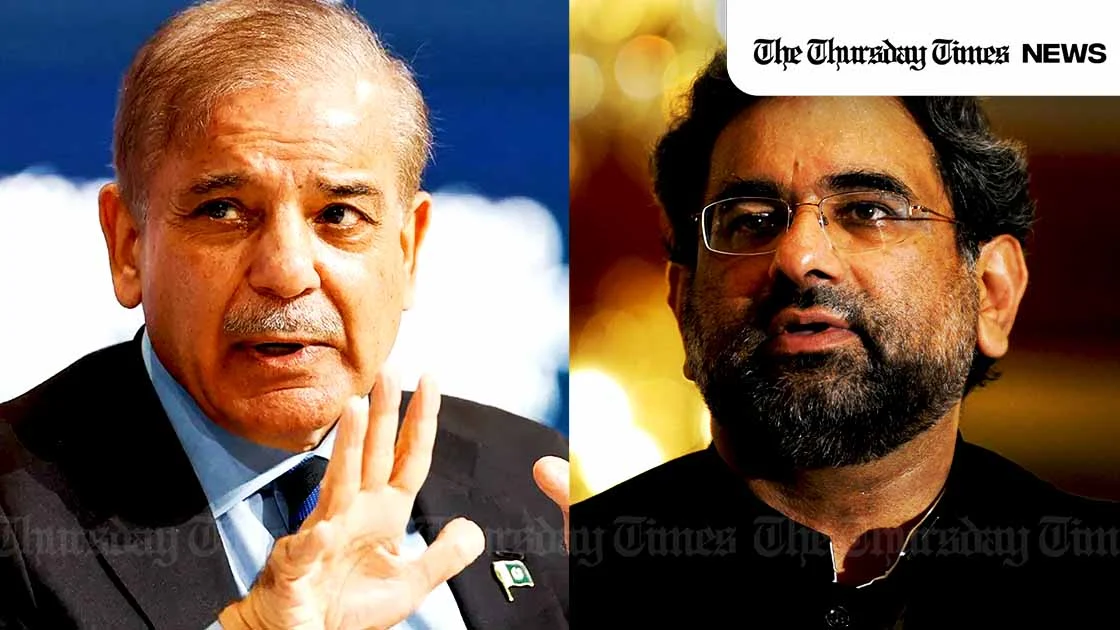
ISLAMABAD (The Thursday Times) — Former Prime Minister Shahid Khaqan Abbasi has placed the blame for Pakistan Muslim League (N)’s poor performance in the recent February elections squarely on Shehbaz Sharif, citing a lack of effective leadership. As both opposition leader and Prime Minister, Abbasi argued, Shehbaz bore primary responsibility for the party’s failures, calling for accountability in his role. This perceived lapse in leadership, he noted, has led Nawaz Sharif to once again assume party leadership, filling what he sees as a critical gap.
Shehbaz’s leadership under scrutiny
Shahid Khaqan Abbasi pointed to Shehbaz Sharif as the key figure behind Pakistan Muslim League (N)’s underwhelming performance in the latest elections. As both opposition leader and later Prime Minister, Shehbaz was positioned to guide the party, yet his approach failed to energise the party’s base or project a unifying vision. Abbasi suggested that Shehbaz’s lack of assertive leadership directly contributed to the decline in PML-N’s credibility, compelling Nawaz Sharif to step back into the spotlight to reclaim the party’s direction.
PTI’s priorities questioned
Abbasi’s remarks did not stop at PML-N; he strongly criticised Pakistan Tehreek-e-Insaf (PTI) for what he described as a narrow focus on Imran Khan’s release rather than the welfare of Pakistanis. With a mandate to govern in Khyber Pakhtunkhwa, PTI had an opportunity to demonstrate effective governance at the provincial level, yet Abbasi claimed they were neglecting this responsibility. According to Abbasi, PTI’s obsession with Imran’s release has overshadowed any potential contributions to regional development or addressing public grievances.
Imran’s position within PTI
Addressing PTI’s internal structure, Abbasi described a party overwhelmingly dependent on Imran Khan with no clear secondary leadership. The reliance on a single figure, he argued, has left the party’s supporters with little trust in any other leader. Abbasi’s criticism underscores a view that PTI lacks a coherent strategy and organisational depth, resulting in a party dynamic where, in his assessment, workers and voters place sole faith in Imran while overlooking structural weaknesses within PTI.