New York (The Thursday Times) — Pakistan is engaged in quiet but active diplomatic efforts to halt the US war against Iran and to pave the way for talks. According to Bloomberg, Pakistan's military and political leadership is in simultaneous contact with Washington, Tehran and the Gulf capitals, in order to prevent the rising tension from turning into a wider regional crisis.
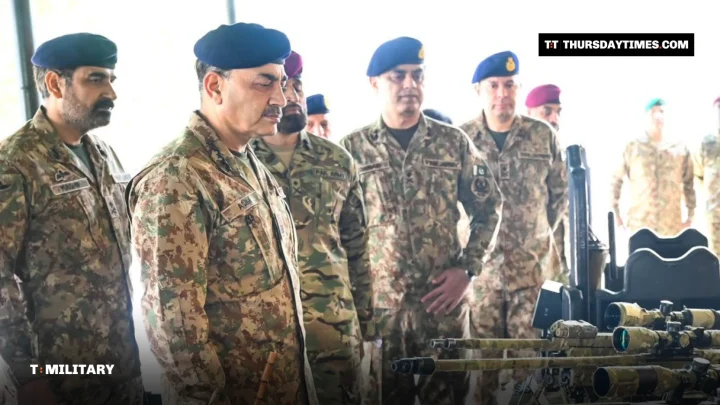
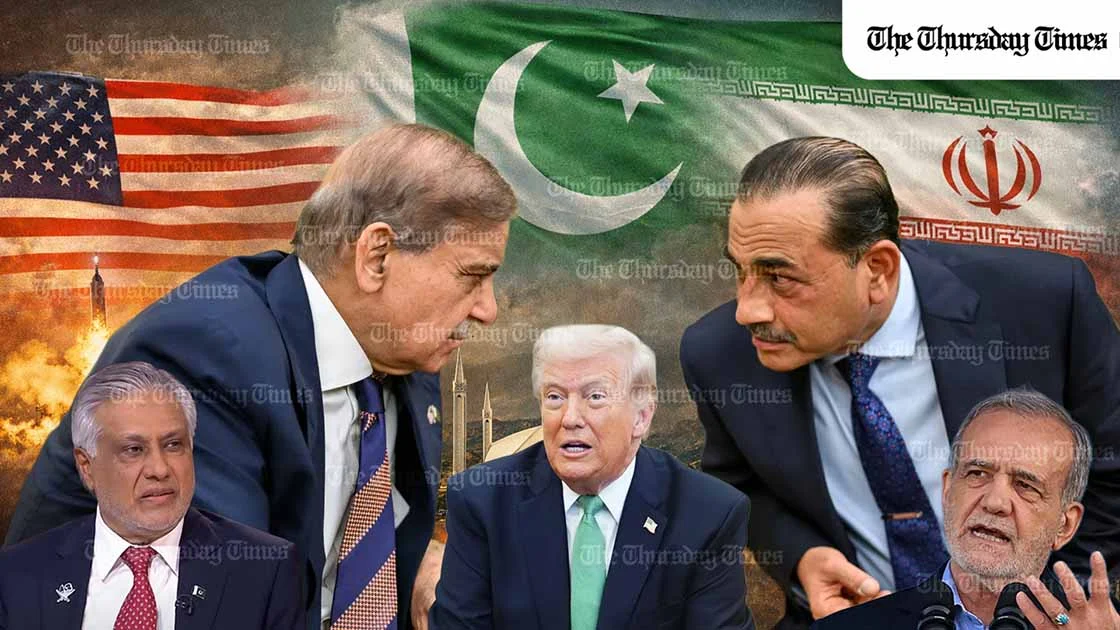
Citing sources familiar with the matter, Bloomberg reported that Field Marshal Syed Asim Munir contacted US President Donald Trump on Monday. According to the sources, the conversation took place as part of an effort to find a possible route to ending the war. The report also said that Pakistan is offering Islamabad as a possible venue for talks, while the US president's special envoy, Steve Witkoff, is also playing an important role in the diplomatic process.
US President Donald Trump said on Monday that he had postponed possible strikes on Iran's energy infrastructure after constructive talks. Iranian officials, for their part, have yet to confirm any formal negotiating process. However, the US broadcaster CBS, citing a senior Iranian official, reported that American messages sent through mediators were being reviewed in Tehran.
Taken together, the diplomatic activity is reinforcing the impression that Pakistan is presenting itself in this crisis as a country that wishes to keep the path of contact and reconciliation open rather than escalate tensions.
According to Bloomberg, Pakistan is at this stage drawing on its dual diplomatic advantage. On one side are its recent contacts with Donald Trump and American circles; on the other are its long-standing relations with Iran, Saudi Arabia and other regional countries. This balance is what makes Islamabad stand out as a possible bridge in the crisis.
Prime Minister Shehbaz Sharif expressed solidarity with Iran in a conversation with Iranian President Masoud Pezeshkian on Monday, while also stressing the need to reduce tensions. In his statement, Shehbaz Sharif said the Iranian president had been briefed on the diplomatic efforts of Pakistan's leadership, and Iran had been assured that Pakistan would continue to play a constructive role in promoting peace in the region.
In this context, the Financial Times also reported that Field Marshal Syed Asim Munir had spoken to Donald Trump on Sunday. Meanwhile, according to Axios, the countries involved in mediation are trying to arrange a possible meeting in Islamabad, in which the participation of Steve Witkoff, Jared Kushner and possibly US Vice-President JD Vance is also under consideration. Although there has been no official confirmation of these reports, it is clear that Islamabad's name has become prominent on the diplomatic map of this crisis.
As the war has spread, Pakistan has stepped up its diplomatic activity in the Gulf region. One major reason is the energy pressure that is directly affecting South Asia. The Strait of Hormuz, through which about a fifth of the world's oil and liquefied natural gas passes, has been under severe strain in practice since the war began. Since Pakistan depends largely on Gulf countries for crude oil, petroleum products and liquefied natural gas, the economic consequences of this crisis are also highly significant for Islamabad.
Foreign Minister Ishaq Dar attended a joint meeting of Arab and Muslim foreign ministers in Riyadh last week, where the ongoing conflict was discussed in detail. According to Bloomberg, Pakistan tried to prevent language that could have further increased tensions between Iran and the Gulf countries from being included in the meeting's joint statement. This conduct also appears to be part of the same broader strategy in which Pakistan is presenting itself as a party that maintains balance rather than one that provokes.
Field Marshal Syed Asim Munir has also been in contact with Saudi Arabia at several levels during the crisis. He and Prime Minister Shehbaz Sharif travelled to Jeddah on 12 March, where they met Crown Prince Mohammed bin Salman. The day before, Shehbaz Sharif had been in contact with the Iranian president. Field Marshal Munir's meeting with the Saudi defence minister at the start of March is also regarded as an important part of the same effort.
Last September, Saudi Arabia and Pakistan also concluded a defence agreement under which aggression against one country would be treated as aggression against both. In this context, Pakistan's diplomatic activity during the Iran crisis is not limited to regional sympathy; a number of larger factors lie behind it, including security, energy, the economy and geopolitics.
This Bloomberg report further strengthens the impression that Pakistan is not merely observing events but is quietly trying to secure a place among the decisions that may set the direction of the region in the coming days. If these diplomatic efforts advance, the way back from war may indeed pass through Islamabad.