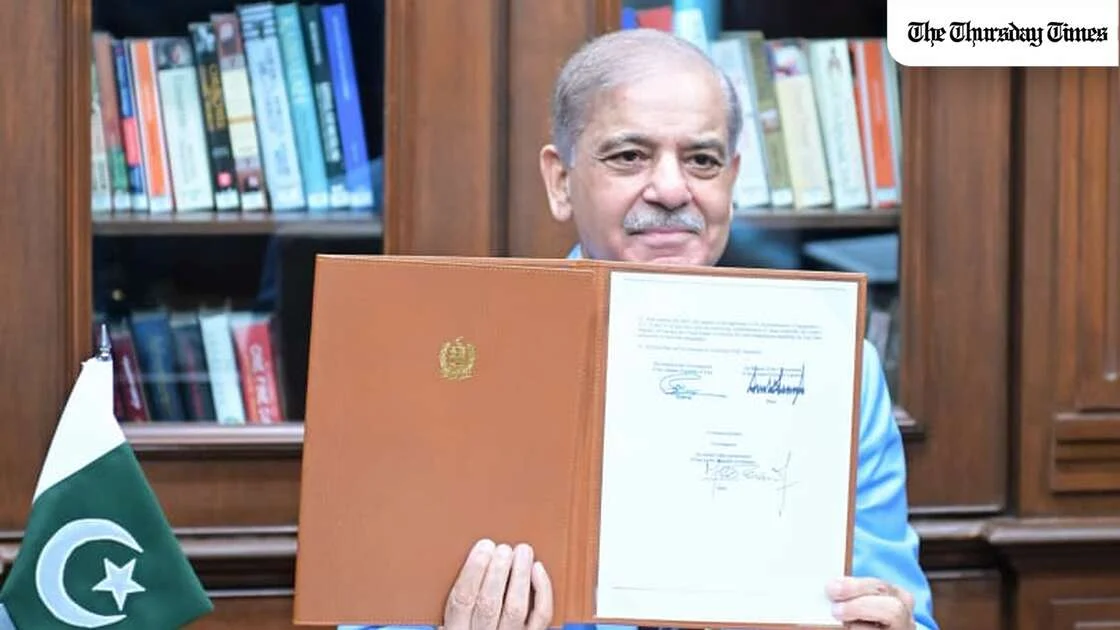
اسلام آباد (تھرسڈے ٹائمز) — وزیر اعظم پاکستان محمد شہباز شریف نے امریکی صدر ڈونلڈ جے ٹرمپ اور ایرانی صدر مسعود پزشکیان کی جانب سے معاہدے پر باضابطہ دستخط کے بعد بطور ثالث اسلام آباد مفاہمتی یادداشت پر دستخط کر دیے ہیں، جو اسلام آباد مفاہمتی یادداشت کے نام سے معروف ہے۔
اس دستخط کے ساتھ پاکستان سفارتی پیش رفت کے مرکز میں آ گیا ہے، جہاں اسلام آباد محض میزبان یا سہولت کار نہیں بلکہ واشنگٹن اور تہران کے درمیان تسلیم شدہ ثالث کے طور پر کردار ادا کر رہا ہے۔
اسلام آباد مفاہمتی یادداشت کو ایک عبوری ڈھانچے کے طور پر پیش کیا جا رہا ہے، جس کا مقصد جنگی کارروائیاں ختم کرنا، آبنائے ہرمز کو دوبارہ کھولنا اور امریکا و ایران کے درمیان حتمی تصفیے کی جانب ایک منظم عمل کا آغاز کرنا ہے۔
امریکی حکام کے حوالے سے سامنے آنے والی اطلاعات کے مطابق ٹرمپ اور پزشکیان نے دونوں جانب کے سینئر نمائندوں پر مشتمل ایک سابقہ ڈیجیٹل عمل کے بعد دستخط مکمل کیے۔ معاہدے کو ابتدا میں سوئٹزرلینڈ میں ایک تقریب میں حتمی شکل دیے جانے کی توقع تھی، تاہم تنازع اور دنیا کی اہم ترین بحری گزرگاہوں میں سے ایک کی بندش کے باعث سفارتی دباؤ بڑھنے پر دستخط کا عمل تیز کر دیا گیا۔
شریف کے کردار سے معاہدے کو ایک واضح پاکستانی چھاپ ملتی ہے۔ اسلام آباد مفاہمتی یادداشت کا نام ہی اس ثالثی راستے کی عکاسی کرتا ہے جس کے ذریعے پاکستان نے، قطر اور دیگر علاقائی فریقوں کی معاونت سے، امریکا اور ایران کو بالواسطہ رابطوں سے تحریری ڈھانچے کی طرف لانے میں مدد دی۔
سمجھا جاتا ہے کہ مفاہمتی یادداشت میں لبنان سمیت تمام محاذوں پر فوجی کارروائیوں کے فوری اور مستقل خاتمے کی شق شامل ہے، جبکہ دونوں فریقوں کو ایک دوسرے کے خلاف دھمکیوں یا طاقت کے استعمال سے گریز کا پابند بھی کیا گیا ہے۔ اسے حتمی امن معاہدے کے بجائے جنگ بندی اور مذاکرات کی دستاویز کے طور پر تیار کیا گیا ہے۔
A central provision concerns the Strait of Hormuz. Iran is expected to restore safe commercial shipping through the strait, while the United States is expected to begin lifting blockade-related measures. The reopening of the strait is one of the most urgent economic elements of the deal because of its importance to global energy supplies.
The agreement also creates a 60-day negotiating window for a final settlement. Those talks are expected to cover sanctions relief, nuclear guarantees, regional security arrangements and the verification mechanisms needed to turn the interim understanding into a binding diplomatic settlement.
On the nuclear issue, the framework reportedly includes Iran’s reaffirmation that it will not seek nuclear weapons, while leaving more detailed questions over enriched uranium and inspection procedures for technical talks. International Atomic Energy Agency supervision is expected to remain central to any credible implementation process.
US Vice President JD Vance has said Pakistani and Qatari negotiators who helped mediate the agreement asked Washington not to release the full text immediately. He said the text would be made public by Friday at the latest, while describing the framework as a deal that Washington wants to explain directly to the American public.
Pakistan’s mediation has also been linked to weeks of quiet diplomacy involving Sharif’s government, senior Pakistani officials and regional partners. Islamabad has presented the deal as a contribution to regional stability rather than a narrow bilateral intervention.
For Sharif, signing the document as mediator is politically significant. It places Pakistan’s civilian leadership in the formal record of the agreement and strengthens Islamabad’s claim that it helped prevent a wider regional escalation at a critical moment.
The accord has already drawn mixed international reaction. Supporters see it as a necessary pause in a dangerous conflict and a possible path back to diplomacy. Critics argue that the framework leaves several major questions unresolved, particularly over sanctions relief, Iranian compliance and the enforcement of nuclear commitments.
The next test will be implementation. The reopening of Hormuz, the lifting of blockade measures, the release of the full text and the start of technical negotiations will determine whether the Islamabad MoU becomes the foundation of a lasting settlement or remains a fragile interim document.
For Pakistan, however, the diplomatic symbolism is already clear. By signing as mediator after Trump and Pezeshkian endorsed the agreement, Shehbaz Sharif has placed Islamabad at the centre of one of the most consequential diplomatic developments between the United States and Iran in years.