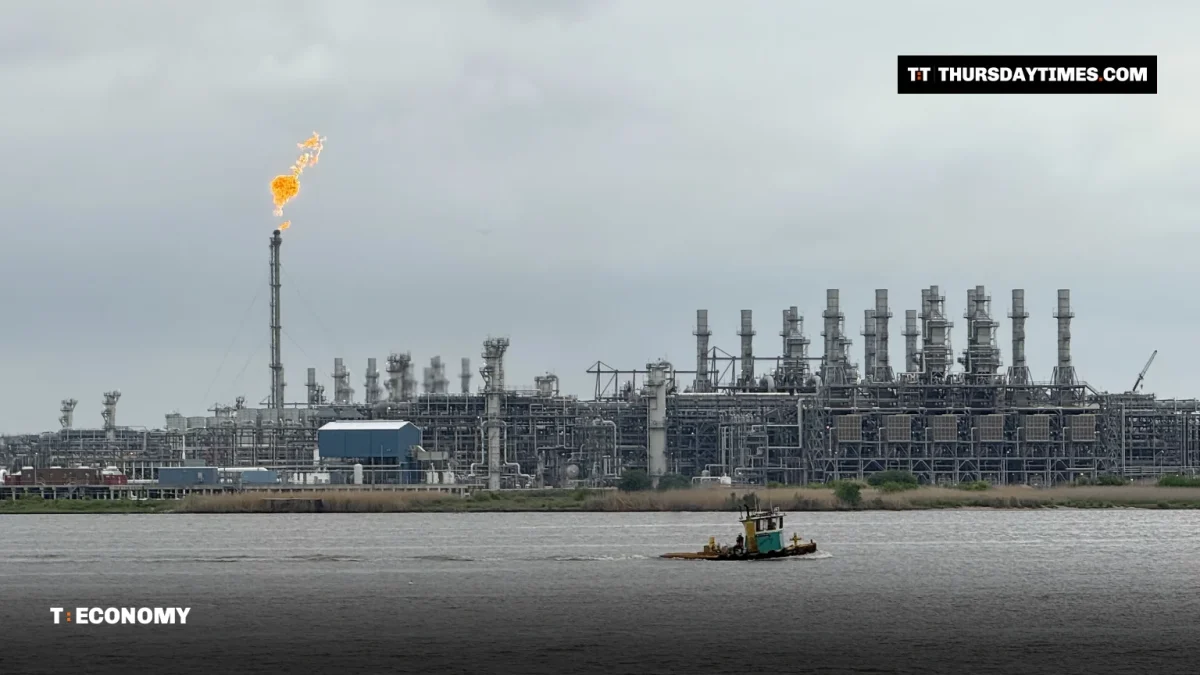
ISLAMABAD (The Thursday Times) — A private group of US companies backed by the Trump administration is seeking to invest up to $4.4 billion in an LNG project in Pakistan, combining an import and storage terminal at Port Qasim with a 1,100km gas pipeline upcountry, according to project documents.
The proposal follows the withdrawal of Energas, a venture of the Lucky Group and QatarEnergy that had been the frontrunner for a similar project. Energas pulled out citing changes in Pakistan’s energy policy and needs, along with unresolved policy and fiscal issues.
The new consortium is made up of Global Vision Energy Partners and Khanjee Holdings, which are related firms, along with General Mediterranean Holding, based in Luxembourg, and strategic co-investors from other countries. The sponsors have filed for a provisional licence with the Oil and Gas Regulatory Authority and have incorporated a special purpose company, and they are reported to have Port Qasim Authority’s consent for the site.
The first phase, costed at $1.7 billion, would build a terminal with four tanks holding 560,000 cubic metres in total, handling about 35 billion cubic feet a year. Pakistan has no LNG storage at present, which leaves its supplies entirely dependent on import schedules and world prices. The second phase would add a 42-48 inch pipeline able to carry about 1.2 billion cubic feet a day, a route Pakistan earlier explored with Russia.
Sponsors favour Port Qasim for its existing port infrastructure and its position outside the Strait of Hormuz, and they want the project to serve as a storage and trading hub for US and Middle Eastern suppliers. It would sell on a merchant basis to large consumers, rather than relying on a single government-backed buyer.
The proposed tariffs are $4.93 per mmBtu for the terminal and storage and $1.91 for transmission over the first 10 years, falling to $2.20 and $0.92 after that. Tariffs for the domestic market would need the regulator’s approval.
Financing would be 70 per cent debt and 30 per cent equity. The project has been approved for consideration under the US Trade and Development Agency’s project preparation programme and could receive partial financing from the US Development Finance Corporation, with export credit guarantees from the US Export-Import Bank. Local investors are being offered up to 10 per cent of the equity, starting at $50 million each.
The sponsors hope to attract funds such as KKR, Blackstone, Saudi Arabia’s Public Investment Fund and the Kuwait Investment Authority, but no binding equity commitments have been confirmed so far.