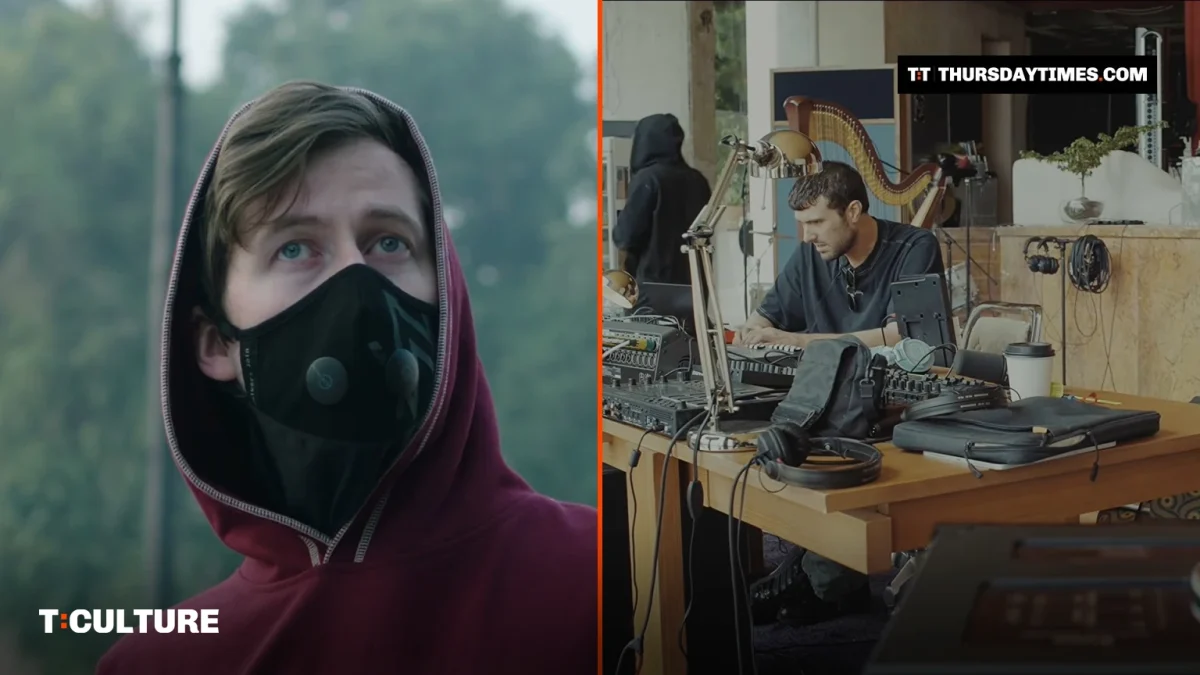
LAHORE (The Thursday Times) — The clip lasts less than a minute. A man in a black hood and a black face mask holds his phone at arm’s length in a small Lahore studio, grinning with his eyes, while three young Pakistani musicians crowd in behind him, laughing and pointing at the camera. The caption reads: “Just wrapped up the first version.”
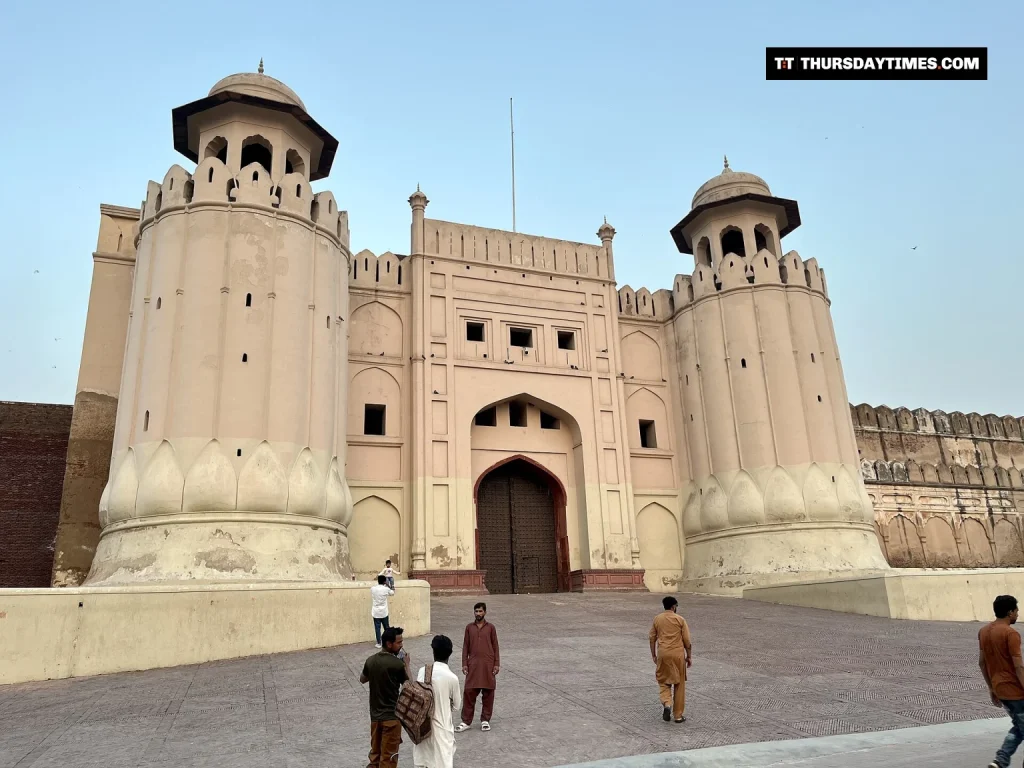
The man in the mask is Alan Walker, the Norwegian-British DJ whose song “Faded” has been streamed billions of times and whose hooded, masked look is one of the most recognisable images in dance music. The musicians behind him are Hamza Malik and the brothers Zain Ali and Zohaib Ali, the singers of “Alfaaz”, a Pakistani love song that has spent the autumn climbing charts from Mumbai to London. Walker posted the clip on his own channel this week, after a few days in the city that included a halwa puri breakfast, a teaser filmed outside the Alamgiri Gate of Lahore Fort, and a photograph of him wrapped in a shawl with the song’s name written across it in Urdu.
It would be a good story on its own. It is better as part of a pattern. In the space of a few months, three of the biggest names in electronic music have picked up Pakistani songs and made them their own: Walker with “Alfaaz”, the Grammy-winning British producer Fred again.. with “Pal Pal”, and the Belgian DJ Lost Frequencies with “Majboor”. None of the three songs came out of a major-label campaign. All three were made by young, independent artists, found their audience online, and were then discovered by producers who play to stadiums.
For a country whose music has usually travelled through films, diaspora weddings and the occasional television phenomenon, this is something new. Pakistani pop is not just being heard abroad. It is being remixed, reworked and played on the world’s biggest stages by people who have never set foot in a Pakistani recording studio, or who, in Walker’s case, decided they had to.
Pakistani music’s year in five numbers
A masked man in a music video
“Alfaaz”, which means “words”, was released in July on the Giraffe label and produced by Giraffe Studios. Within weeks it was everywhere. It topped Spotify’s daily charts in both Pakistan and India, reached No. 2 on the UK’s Official Asian Music Chart, broke into Spotify’s global top 50, and at one point sat at the top of Genius’s weekly lyrics chart, above songs by Tate McRae, Eminem and Radiohead. The studio called its success “unprecedented” for a Pakistani song.
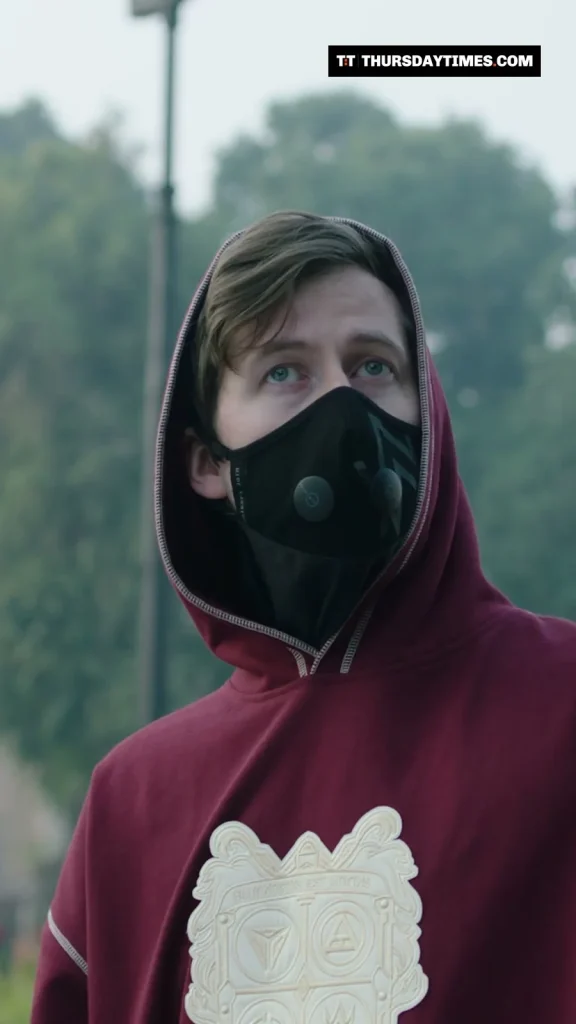
The song also travelled in ways no marketing budget could buy. A video of the Norwegian singer William Gamborg performing it with children from SurTaal, a music academy in Lahore, passed 10 million views on his Instagram. And in the official video, a masked, hooded figure wanders behind the singers in a look that anyone who follows dance music would recognise at once.
Walker noticed. “Why is there a Walker in the video. Beautiful video btw,” he wrote. Malik replied: “Hahaha, I appreciate it man! The Walker is a mystery for now… but maybe we can solve it together.” Days later Walker posted a video from an airport. “Hamza has responded to me. This song is everywhere. Let’s go to Lahore and finish this,” he said. On landing he told the studio’s camera: “I just got to Lahore and it’s beautiful here, and I’m about to go to the studio to work on some music.”
Neither side has announced a title or a release date, and fans are calling the project “Alfaaz 2.0” without any official word. Malik has hinted at “another surprise”. But a DJ who sells out arenas does not usually fly across the world to finish a remix in person. The trip itself is the statement.
“After our jobs, after birthdays”
“Pal Pal” took a different route to the same place. Made by the duo Afusic, whose real name is Affan Khan, and Ali Soomro, and recorded in a version with the Indian singer-songwriter Talwiinder, it was the second most-streamed song in Pakistan on Spotify in 2025, behind only “Jhol” by Maanu and Annural Khalid.
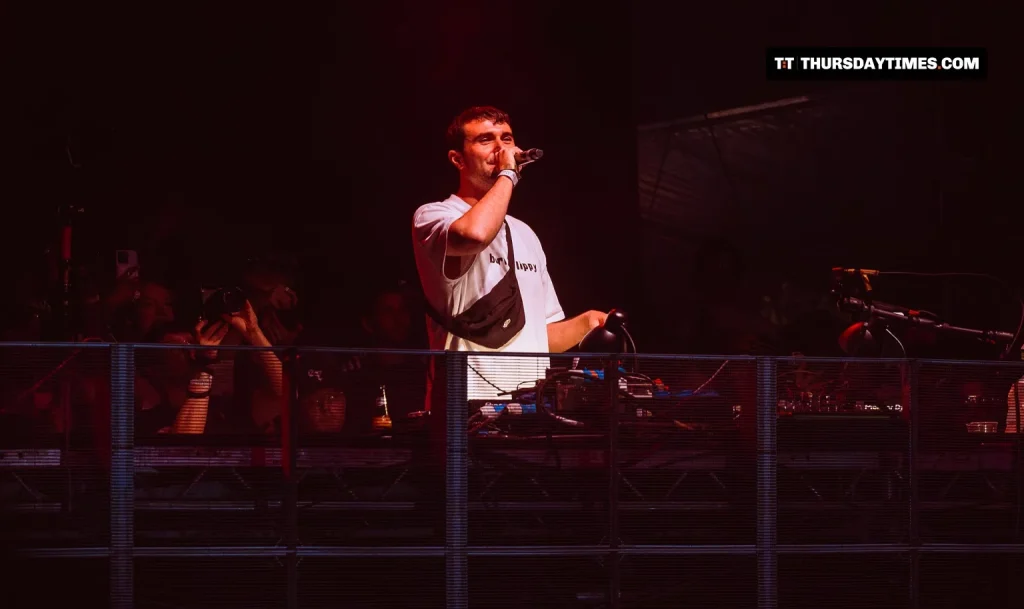
In late July, Fred again.., the London producer who has turned voice notes, phone videos and other people’s songs into some of the most loved dance records of the decade, played his own editA DJ’s own reworking of an existing song, usually re-cut for the dance floor and often played live without ever being officially released. of “Pal Pal” during a livestream with the Mexican band Latin Mafia. It has never been officially released. Clips of the stream still circulate online, labelled “unreleased”, which in dance music is its own badge of honour.
Soomro’s reaction said a great deal about how the song was made. “Seeing Fred put his own spin on the track made me realise how small the world really is. It’s funny how things come full circle,” he wrote. Before “Pal Pal”, he said, he and Afusic had “never earned a penny” from their music. They made the song “after our jobs, after birthdays, after whatever life threw at us”.
“Before Pal Pal, we had never earned a penny from our music.”
The DJ who played it first
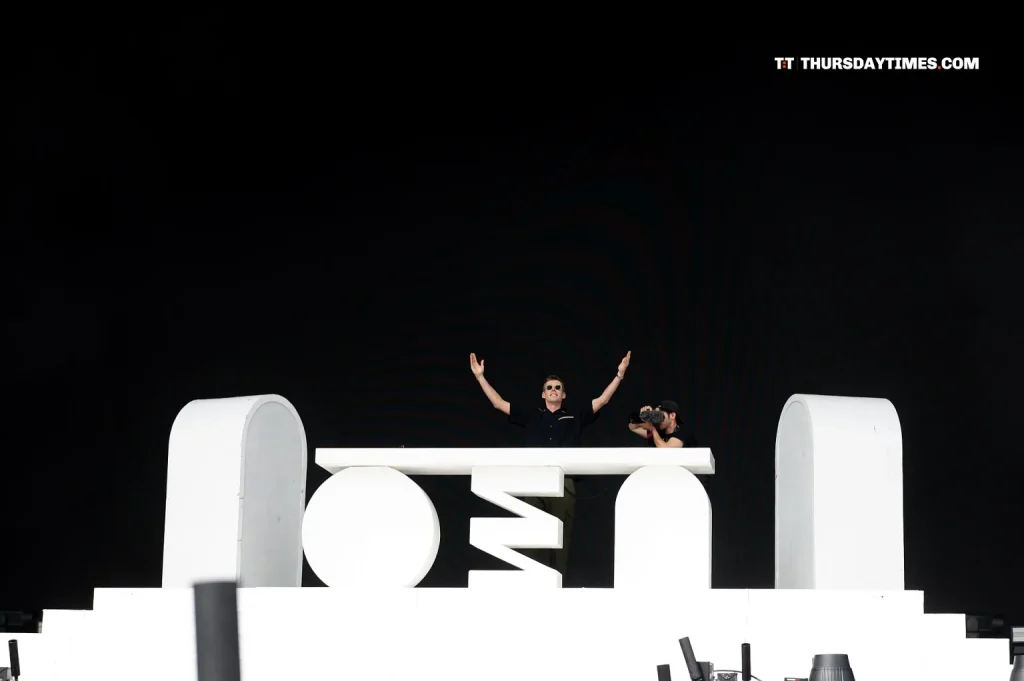
The third song arrived first. “Majboor”, written and composed by Sheheryar Rehan and sung with Zoha Waseem, leans on the ghazal, the classical Urdu love poem, in its phrasing and its longing. It caught on online in 2025. Then Lost Frequencies, the Belgian producer behind the global hit “Are You With Me”, began dropping his own version of it into his live sets. A remix followed, and in 2026 the song reached No. 1 on Spotify’s Global Viral chartA Spotify chart that ranks songs by how fast they are spreading, through shares and new listeners, rather than by total streams., as well as its Pakistan viral chart.
“Majboor” was also a Giraffe Studios production, which makes the Lahore studio responsible for two of the three songs on this list. That is not a coincidence. A handful of producers and small labels in Lahore and Karachi have learned to make records that sound finished to an international ear while keeping the melodies, vocal ornaments and languages that make them unmistakably Pakistani. That combination is exactly what a DJ looking for something new wants to hear.
Why now
Part of the answer is simply that more people are listening. Spotify says listening to Pakistani music on its platform rose by 70 per cent in 2025, and that hip-hop, led by the Karachi rapper Talha Anjum and the producer Umair, grew by 35 per cent. Hasan Raheem jumped from eighth to third among the country’s most-streamed artists. The most-streamed album by a homegrown act was “Safar” by the band Bayaan. Spotify’s editors picked 50 Pakistani songs as standouts in the first half of 2026 alone.
The other part is how songs now travel. A decade ago a Pakistani song usually needed a television show, a film soundtrack or a record company to cross a border. Now a track recorded after office hours can be uploaded the same night, clipped by short-video creators, lifted by playlists and heard by a producer on another continent within weeks. The three songs on this list did not need anyone’s permission to reach Walker, Fred again.. or Lost Frequencies. They reached them the way they reached everyone else: on a phone.
And there is the sound itself. Melodic dance music, the space Walker and Lost Frequencies work in, is built on big, aching melodies and voices that carry emotion over a beat. South Asian pop has never been short of either. What the new Pakistani producers have added is polish: mixes that sit comfortably next to anything coming out of Stockholm or Los Angeles, and songs short and sharp enough for the way people now listen.
The three songs did not need anyone’s permission to reach the world’s biggest DJs. They reached them the way they reached everyone else: on a phone.
We have been here before
Producers abroad falling for Pakistani music is not new. In 1990 the Bristol group Massive Attack remixed Nusrat Fateh Ali Khan’s “Mustt Mustt” at Peter Gabriel’s Real World Studios. It was their first remix, and it carried qawwaliThe devotional music of the Sufi shrines of South Asia, sung by a lead vocalist and chorus over harmonium and tabla, building to an ecstatic climax. on to dance floors and radio stations across Europe, opening a door that Nusrat walked through for the rest of the decade.
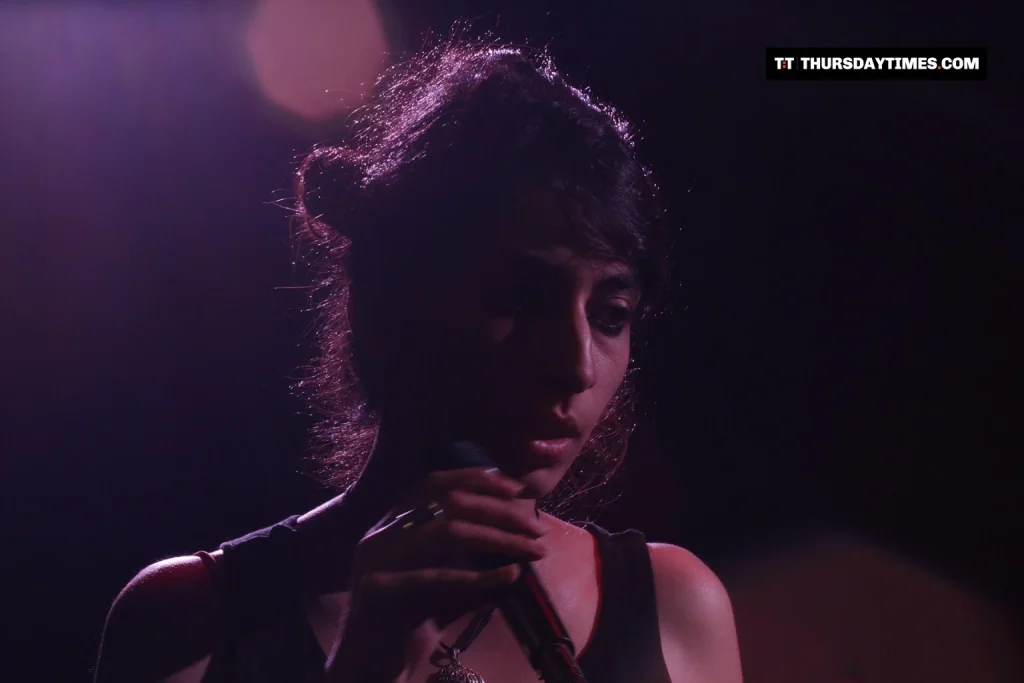
In 2022 “Pasoori”, by Ali Sethi and Shae Gill for Coke Studio, became the first Pakistani song to enter Spotify’s global chart, climbed to No. 3 on its Global Viral chart, became the most-streamed Pakistani song on the platform and went on to be the first music video made in Pakistan to pass a billion views on YouTube. The same year the New York-based singer Arooj Aftab became the first Pakistani artist to win a Grammy, for “Mohabbat”, her version of a ghazal by the poet Hafeez Hoshiarpuri.
What is different now is the speed and the number. Those were single breakthroughs, years apart. This year three different producers found three different Pakistani songs within months of each other, and one of them got on a plane. There is also a history here that makes Walker’s trip stand out. When Bryan Adams played a charity concert in Karachi in January 2006 for victims of the earthquake, it was the first big show by a Western star in Pakistan in decades. The singer Shehzad Roy, whose charity organised it, later wrote that he had hoped Karachi would become “the next Dubai”, a regular stop for international artists. It never happened, as security worsened in the years that followed.
The dance floor at home
There is an irony in all this. The DJs playing Pakistani songs abroad are playing pop. Pakistan’s own dance music scene, the people who actually spin house and techno for a crowd, remains small, informal and largely hidden.
There are no nightclubs in the Western sense. Parties happen at farmhouses on the edge of cities, in cafés and sports clubs, at events whose location is often revealed only on the day. One Karachi collective, Groove Into The Void, was founded in April 2021 and expected around 50 people at its first party. Between 250 and 300 came. Its organisers vet guests through Instagram, admit couples and mixed groups rather than all-male crowds, hire private security and keep a zero-tolerance policy on harassment. “There are no clubs, there are no bars,” one of its founders has said. Alcohol-free “sober raves”, built purely around music and dancing, have grown alongside them, and in Karachi and Lahore a new generation of women DJs is working in a field long dominated by men.
It is a scene that still mostly belongs to an urban, well-off few, and it operates with one eye on social disapproval. But it is where Pakistan’s next producers are learning how a dance floor moves. If the global attention lasts, the bridge between the bedroom-studio pop that DJs abroad love and the underground at home could be where the most interesting Pakistani music of the next decade is made.
Across the border
The biggest audience for the new Pakistani pop outside Pakistan is next door. “Alfaaz” has topped Spotify’s daily chart in India as well as at home, and reached No. 2 on Billboard’s India Songs chart. “Pal Pal” was built around an Indian voice. Talwiinder has worked with Pakistani artists again and again, on “Pal Pal”, on “Sachay Loki” with Meesha Shafi, and on “Wishes” with Hasan Raheem and Umair.
That has happened in the teeth of politics. In May 2025, after the Pahalgam attack, India’s information ministry told streaming platforms to remove content of Pakistani origin, and songs including “Jhol” and “Maand” disappeared from Indian music apps. This May, when Talwiinder joined Hasan Raheem on stage in Toronto to sing “Wishes” live for the first time, he faced a backlash at home. Raheem’s reply was simple. “Art is supposed to be borderless,” he said. “At the end, music and art will win.”
Listeners seem to agree. Indian fans have kept finding Pakistani songs, and Pakistani fans Indian ones, whatever their governments decide. Walker himself is a neat illustration of how porous the border is to music: the same channel that carried his Lahore studio clips is promoting his India tour for 2027.
“Art is supposed to be borderless. At the end, music and art will win.” — Hasan Raheem
What it will take
None of this is a business yet, at least not for most of the artists involved. Soomro’s line about never having earned a penny before “Pal Pal” is the reality for most Pakistani musicians, who rely on brand deals, weddings and the occasional concert rather than streaming income. Venues are few. International touring is expensive and visas are hard. And for all the excitement, Walker came to Lahore to work in a studio, not to play a show.
Nor has anything been formally released. “Alfaaz 2.0” is a fan name for a project nobody has announced. Fred again..’s “Pal Pal” edit lives on in livestream clips. Only Lost Frequencies’ “Majboor” remix is out in the world. Moments like these can fade as quickly as they arrive.
But something has shifted. A generation of Pakistani musicians who learned their craft on laptops and phones now knows that a song made in Lahore or Karachi can sit in a festival set in Europe without being translated or explained, and that the people they grew up listening to are listening back. “This song is everywhere,” Walker said before he boarded his flight. This year, for once, a Pakistani song was.