BRUSSELS (The Thursday Times) — European Union foreign ministers met on Monday to discuss raising the bloc’s relationship with Syria to a new level, with proposals covering investment, security sector reform and a long-frozen trade agreement, the EU’s top diplomat said.
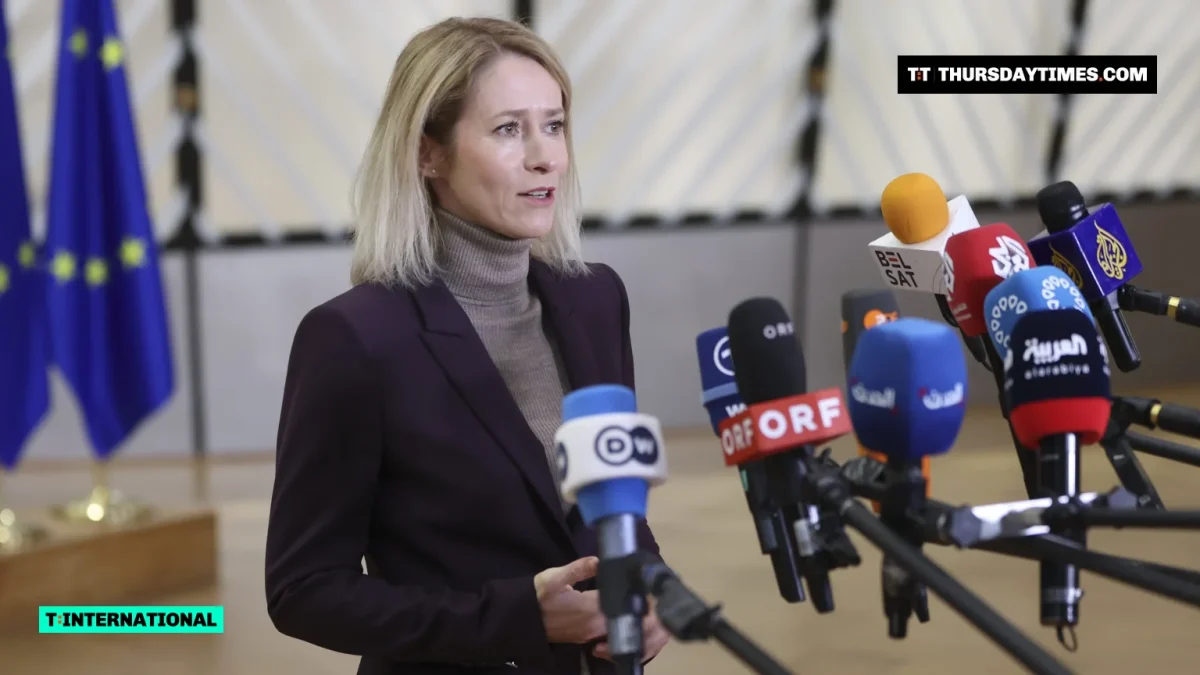
“We have proposed elevating our relationship with Syria to another level, and that is because we really see that Syria needs a lot of investments,” EU High Representative Kaja Kallas told reporters on arrival at the Foreign Affairs Council. “Syria needs support to build up their institutions, to do their reforms.” She said she had visited Syria a month ago and seen the destruction there.
Kallas said the EU wants Syrian refugees to return, but that they need conditions that make going home possible. “There’s a lot we can do together because the stability of Syria is in our interest and the interest of the region,” she said.
What the discussion paper proposes
A discussion paper prepared by the EU’s diplomatic service ahead of the meeting sets out one of Brussels’ most ambitious efforts yet to normalise ties with Damascus, less than two years after Bashar al-Assad was overthrown. It says Syria’s transition is moving forward but that “challenges remain high and accelerated progress is needed” on economic recovery, national reconciliation and the return of displaced people and refugees.
Central to the plan is a revival of an association agreement that was initialled in 2008 but never concluded. It would give the two sides a framework for free trade, political dialogue and wider cooperation. EU diplomats would ask member states for a fresh mandate to negotiate revisions to the text, which the paper says could be a basis for deepening relations quickly.
The paper also backs support for security sector reform, including training of Syrian police recruits in cooperation with Jordan. It says stepping up European engagement would help limit what it calls the “malign influence of Russian and other foreign actors” in Syria. Moscow’s influence has diminished since Assad fell, it says, but its military presence and economic leverage remain a concern.
Money and the next steps
On the economy, the EU wants Syria brought back into Euro-Mediterranean cooperation and global trade networks, with a focus on transport, energy and digital links. It is encouraging the European Investment Bank to resume work in the country and supporting Damascus’ bid to become a shareholder in the European Bank for Reconstruction and Development, a step towards reconstruction financing.
An EU-led coordination forum is due in Damascus on Tuesday, 17 November, focusing on investment and the private sector. The paper says it would lay the groundwork for a possible EU-Syria investment conference in 2027. The proposals follow the resumption of the EU’s 1978 cooperation agreement with Syria and the first high-level political dialogue between Brussels and Damascus in May. The bloc has committed 620 million euros ($718 million) in support for Syria in 2026 and 2027, covering humanitarian aid and socio-economic recovery.