The Benazir Income Support Programme has decided that a never-married woman aged 45 or above can qualify for its cash support. It is a short sentence with large consequences, because it recognises a woman the safety net has long passed over: the one with no husband’s household to count her within, who may be keeping house for her brothers, caring for ageing parents, or living alone on whatever work she can find. The decision is right. Whether it matters will turn on six unglamorous tasks: finding these women, paying them in full, giving them access to digital money, linking the cash to health and skills, building a path out of dependence, and publishing the numbers.
What was decided
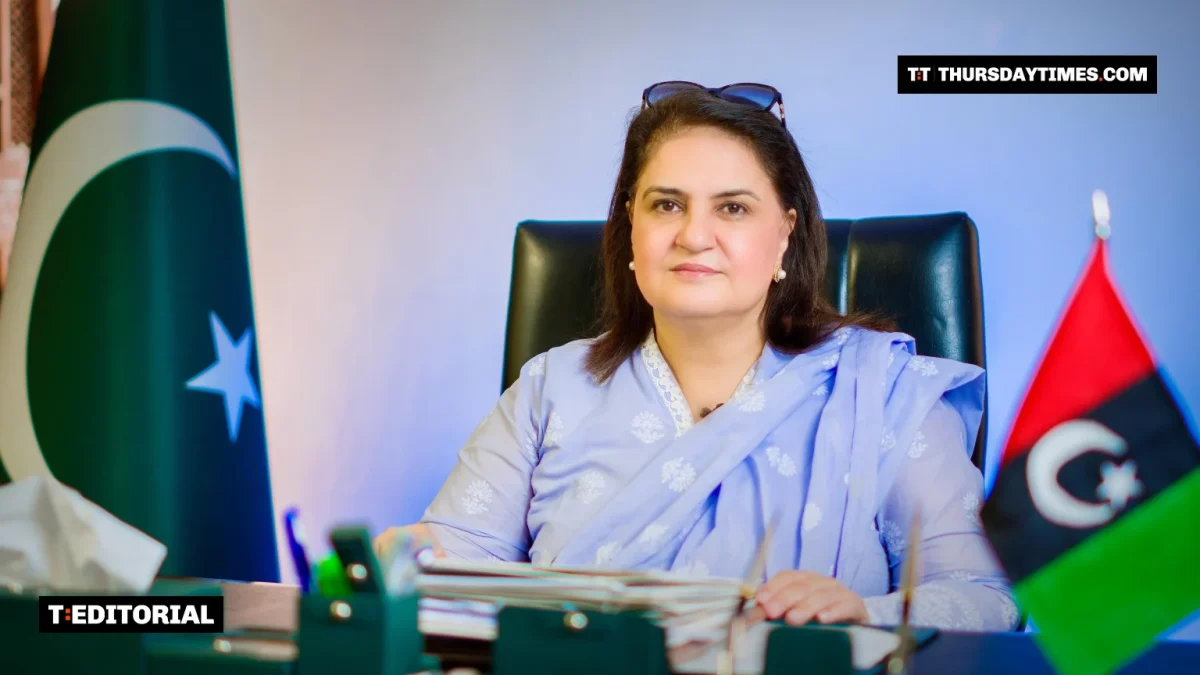
Senator Rubina Khalid, the programme’s chairperson, announced on Monday, 16 November, that its board had approved including never-married women aged 45 or above. At a press conference in Lahore she said they would be eligible for financial assistance if they meet the prescribed criteria. She also said the programme supports more than 10 million beneficiary families, about 5 million of them in Punjab, and that payments are the women’s rightful entitlement. The announcement did not say how many women are expected to qualify, when payments will begin, or what extra step, if any, a never-married applicant must take.
Those gaps are normal on the day of a board decision. The programme’s cash has historically gone to ever-married women, with the woman’s identity card as the key to payment. Extending it to women outside that definition is a change of principle, and a welcome one. A change of principle only becomes a change in lives when the machinery behind it is ready.
A group the system missed
Most Pakistani women marry, and most of those who do not are young. That is why a woman who reaches her mid-forties unmarried is easy to overlook. An analysis of the 2023 census by Gallup Pakistan found that about 2 million people aged 35 and above have never married, around 3.14 per cent of that age group, and that men outnumber women among the never-married in nearly every age band, especially between 35 and 49. The group is small as a share of the population. It is not small as a number of people, and no figure we could find says how many of them are women over 45, or how many of those are poor.
Her circumstances are different from those of a married woman in a poor household. She may be a daughter who stayed to nurse a parent or a sister who depends on a brother’s household. She may work, but usually in the least secure jobs: stitching at home, cleaning other people’s houses, tutoring. When the parent dies or the brother’s family grows, she can be left with no income and no claim on anyone. A cash transfer in her own name changes that.
A safety net that cannot find a woman cannot catch her.
The evidence on what such transfers do is encouraging. The Oxford Policy Management evaluation of the programme, completed in 2016 and covering its first five years, found that cash in a woman’s hands narrowed the poverty gap in beneficiary households and strengthened her say in household decisions and her freedom to move about in her community. The cash helps, and it helps more when it is not asked to do everything alone.
Finding her
The first test is registration. The programme chooses families through the NSERThe National Socio-Economic Registry, BISP’s database of household surveys. It records each household’s members, assets, and living conditions, and a poverty score is worked out from it., which scores each household on a proxy means testA score from 0 to 100 worked out from a household’s living conditions and assets, not from its reported income. A lower score means a poorer household. The cut-off for BISP’s core cash programme is 32. and sets a cut-off. A household is surveyed together. A never-married woman living with her brother’s family may be counted as one member of a household that is not poor enough to qualify, while she herself has nothing. A woman who lives alone may never have been surveyed at all.
Three practical steps follow. The programme should say plainly how a never-married woman is assessed: on her own circumstances, as a one-person household where she lives alone, and on her own entitlement where she shares a roof with relatives. It should take NSER updating to her, through tehsil registration centres, mobile teams, and female enumerators, in rural areas first, because a woman who has to travel to a district town to register will often not go. And it should check and publish the rules for proving that she has never married, so that a clerk’s discretion does not decide who is believed. An identity card record and a local verification should be enough.
Awareness matters as much as procedure. The programme already runs an 8171 text service for checking eligibility. The service should be used to send the new rule to every woman in the registry who fits it.
Paying her in full
The second test is the payment itself. The current quarterly Kafaalat stipend is Rs14,500, after a rise of Rs1,000 from the start of Ramazan this year, and the government has committed under its IMF programme to raise it to Rs18,000 from January 2027. The KafaalatBISP’s main unconditional cash transfer, paid every quarter to women in eligible households. The word means support or guarantee. amount is not trivial for a woman with no income. On simple arithmetic, Rs14,500 a quarter is about Rs4,800 a month, and Rs18,000 is Rs6,000.
Kafaalat stipend per quarter, in rupees
Both bars share one scale. Source: BISP’s announced stipend from Ramazan 2026; the Rs18,000 figure is the commitment under Pakistan’s IMF programme. Monthly equivalents of about Rs4,800 and Rs6,000 are simple division by three, not separate data.
The amount only works if it arrives intact. Khalid herself raised the problem at her press conference, warning beneficiaries to keep their phones, SIMs, and bank messages secure, saying that strict action would be taken over unauthorised deductions, and that banks would be held accountable. That is the right promise. The new system lets women collect from any authorised agent or retailer of six partners linked through 1LINK, the interoperable payment network, rather than being tied to one payment centre, and beneficiaries get free SIMs, wallets in their own names, and a text message when money moves. These are real improvements. What the public cannot yet see is the result: how often a woman receives the full amount, how many complaints about deductions are filed, and how many are resolved.
A woman in her late forties who has never used a smartphone, or who cannot read the message that arrives on it, is exactly the person an agent may short-change. The programme should publish a simple rule at every payment point, in Urdu and the local language, that the amount is the whole amount; offer complaints by phone and in person; and measure agent behaviour by sampling payments and tracing them. Where a woman has no phone of her own, an assisted payment point with a woman officer should stay open until she is confident.
Paying a woman in full, on time, in her own name is the policy. The rest is paperwork.
More than a transfer
The third task is to treat the cash as the start of a relationship, not the end. The programme already runs the Benazir Nashonuma Programme on nutrition and health, and Khalid briefed doctors and women representatives of civil society on it at the same visit to Lahore. A woman who comes to a payment point once every three months is a woman the health system can reach. Offering a blood pressure and diabetes check, a screening for the illnesses that arrive after forty-five, and a referral to a public hospital costs little and could matter more than the stipend itself.
Skills come next, and they should suit the learner. A woman of 45 is not a school leaver, and a generic course will not serve her. Training should be short and tied to a buyer: home-based stitching orders, tailoring for local shops, food preparation, and village-level health work. Where the province or district runs a skills authority, the BISP registry gives it something it rarely has, a list of women who want work and are known to be poor.
This is also where graduationIn social protection, a household’s planned move off a cash programme once it can earn enough to manage. Good programmes pair the cash with training, a small asset grant, and coaching, and watch what happens for several years. needs a careful definition. For a woman of 45 or more, with limited schooling and a limited chance of formal work, graduation cannot mean losing the stipend after a fixed number of years. For some it will mean a small business, and for others a better-paid job, but for many it will mean stable support through old age. The programme should be clear which women it expects to leave and which it expects to keep, and should not threaten the second group with a policy designed for the first. A promise of security that can be taken away is not security.
Count what you do
The last task is the cheapest and perhaps the most important: publish the data. BISP is large, and its budget is rising. The federal budget for the current year allocates Rs838 billion to the programme, up from Rs716 billion in the original budget for last year. That is a big sum, and the public is entitled to see what it buys.
BISP federal allocation, in billions of rupees
Both bars share one scale. Source: federal budget documents. The FY26 figure is the original allocation, which was later revised.
For the new category of women, the data should be specific. How many women applied, how many were found eligible, how many were paid, and in which districts? How long did an application take? How many were turned away, and why? What share of payments reached women in full? The programme should publish a monthly table for this group, by province and district, and keep it up for a year. If the numbers are good, they are the best argument for the reform. If they are poor, they show where to fix it, which is the reason to publish them.
Independent evaluation should follow. A study of the first cohort of never-married beneficiaries would tell the country whether the money reached those it was meant for and what it did when it arrived.
The test of the reform
It is easy to praise a welfare decision on the day it is announced, and just as easy to forget it a year later. The programme’s board has done something that deserves credit: it has seen a woman who was not on the list. The government should now do the dull work that makes the decision real. Survey her, with a clear rule and a female enumerator. Pay her in full, into a wallet she can use and trust. Meet her at the health centre. Give her a skill that matches a buyer. Be honest about who will stay on support. Tell the country, month by month, how many such women have been reached.
The inclusion of never-married women aged 45 and above shows that the programme is still learning. The women it has just recognised have waited a long time for an entry in the registry, and the next test is how soon the first payment reaches them.