WASHINGTON (The Thursday Times) — AIK KHUSHK US REPORT KI SIRF AIK satr ne 2025 mein janoobi Asia ke barson purane hikmat-e-amli ke afsanon ko cheer diya. Us mein "India par Pakistan ki fauji kamyabi apni char roza jharap mein" ka zikr kiya gaya aur mazeed kaha gaya ke yeh kamyabi "Chini asliha ka muzahira" thi. Aise mulk ke liye jise taweel arse se chhota, hamesha ghire hue parosi ke taur par pesh kiya jata raha, United States ki Congress ki aik dastawez mein yeh faisla dekhna mehz aik takneeki mushahida nahin tha. Yeh is baat ka iqrar tha ke char din tak un aasmanon aur circuits mein, jahan sab se zyada ahmiyat thi, pehal Pakistan ke haath mein rahi.

Is jharap ka aaghaz khud aik jaane pehchane sanihe se hua. Jammu and Kashmir ki mutanaza wadiyon mein aik jaan lewa baghiyana hamle ne 26 shehriyon ko halak kar diya. India ne taqat se jawab diya, jaisa ke woh aksar jawab dene ka wada karta raha hai. Is ke baad jo kuch hua woh topkhane ki golabari ka mehz alamati tabadla nahin tha. Donon fawjon ne pichhli aadhi sadi mein kisi bhi waqt se zyada gehrai tak aik doosre ke ilaqe mein hamle kiye, aur sarhadi shikayat ko jadeed jang ke aise imtihan mein badal diya jo poore maidan-e-jang mein phaila hua tha. Pakistan ki pehli kamyabi be-rehmi ki hadd tak saada thi. Us ne is kahani ko India ki aik aur saza dene wali karwai ke taur par daftar mein daal diye jane se inkar kar diya.
Barson se New Delhi aur kai mughribi dar-ul-hukumaton mein hone wali hikmat-e-amli ki guftagu India ki rawayati bartari ko qudrati qanoon jaisa samajhti rahi hai. India bara, ameer aur technology ke lihaz se zyada jura hua tha. Is nazariye ke mutabiq Pakistan quwwat-e-irada, zameen ki sakht aur jawhari saye ke sahare bacha raha. Chaar din tak jari rehne wali jharap ne is hisab ke har hisse ko ulta nahin kiya, lekin us ke bilkul beech mein daraar daal di. India koi wazeh fatah le kar saamne nahin aaya. Pakistan dabao ke aage dher nahin hua. Mukhtasar aur nihayat shiddat wale tabadle mein jin paimanon ki ahmiyat hoti hai, un par chhoti riyasat ne dikha diya ke woh war ke badle war kar sakti hai aur raftar ko apne mutabiq dhal bhi sakti hai.
Behind that performance sat a relationship that is often discussed in slogans but rarely detailed. Between 2019 and 2023, about four fifths of Pakistan’s arms imports came from China. That figure is not just an accounting curiosity. It describes a full spectrum partnership, built through multi week counterterrorism drills like Warrior VIII and multinational naval exercises such as AMAN. By 2025, Pakistani pilots, air defenders and planners were not simply buyers of Chinese systems. They were fluent users, integrating Chinese hardware into a distinctly Pakistani doctrine. When the crisis arrived, the learning curve had already been climbed.

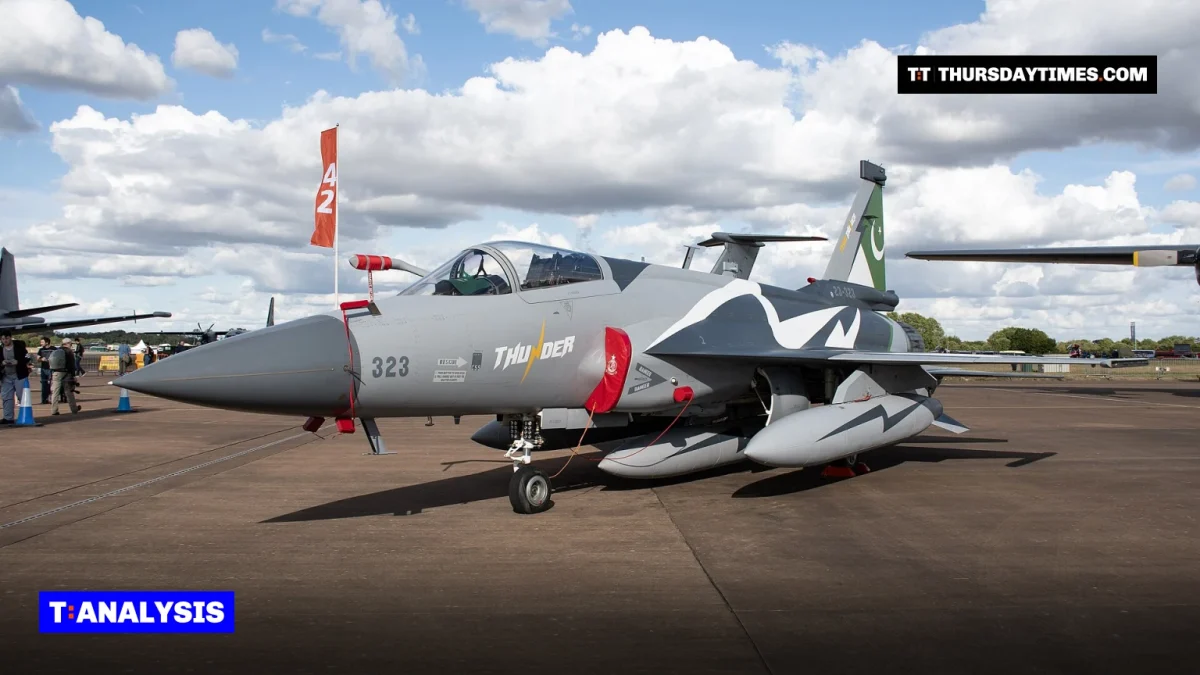
Those four days became the combat debut of several headline Chinese systems in Pakistani hands. The HQ 9 long range air defence network, PL 15 beyond visual range air to air missiles and J 10 fighters all moved from glossy brochures into live, contested airspace. For Pakistan, these were not trophies. They were tools that allowed its air force to deny India an uncontested sky, to hold high value platforms at risk and to push back against the narrative that Rafales and Western partnerships had locked in Indian dominance. For Beijing, the same sorties doubled as a live laboratory. Every engagement, every intercept and every radar track turned into data about how its systems behave when the sky is full of friction.
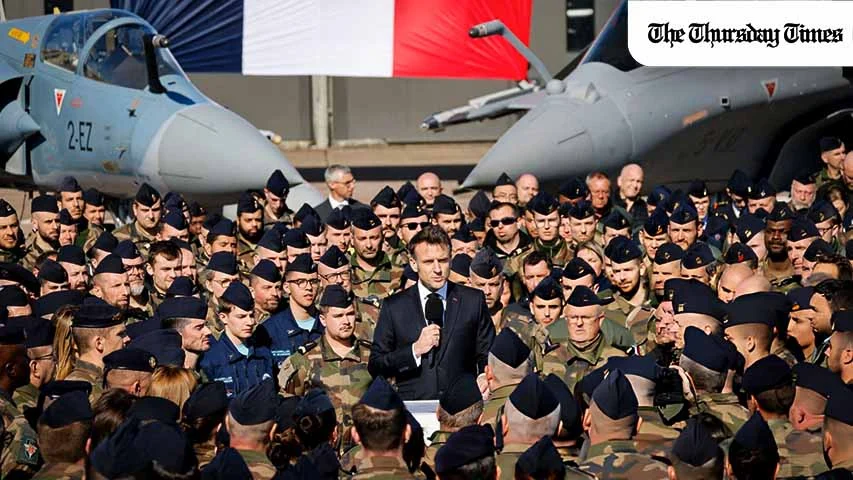
Much of the post war noise has revolved around the Rafale question. Reports that Pakistan, using Chinese supplied systems, helped down Indian aircraft, possibly including Rafales, struck at the heart of French and Indian prestige. Even the report that underpins this episode is cautious. It notes that only three Indian jets were reportedly downed and that all may not have been Rafales. Yet in politics and arms sales, perception is often more powerful than strict arithmetic. What stuck in the global conversation was a simple idea. Rafales went up. Pakistani operated Chinese systems were waiting for them.
China’s diplomacy took that perception and ran with it. Embassies amplified the supposed performance of their systems in the India Pakistan clash, using it as a mobile showroom for potential customers from Southeast Asia to the Gulf. French intelligence accused Beijing of going further, orchestrating a disinformation campaign that used AI generated and even video game imagery of wreckage to tarnish the Rafale brand. Strip away the exaggeration and one hard fact remains. None of this marketing would have been possible if Pakistani operators had not fought India to a standstill in real skies under real fire.
Islamabad read those four days as more than a close call. It treated them as a dress rehearsal for the future. Within weeks, China reportedly offered a package that included forty J 35 fifth generation fighters, KJ 500 early warning aircraft and ballistic missile defence systems. In the very same month, Pakistan announced a twenty per cent increase in its defence budget to around nine billion dollars, even as it trimmed overall public spending. A state under economic strain chose to cut elsewhere rather than allow its newly validated deterrent posture to wither. For Pakistani planners, the lesson was blunt. The cost of weakness would be higher than the price of steel and silicon.
There is a temptation, especially in Western commentary, to see all this as proof that Pakistan has slipped into pure dependency on China. The reality is more layered. Beijing clearly leveraged the clash to test and market its arsenal. It did not, however, script the crisis. Pakistan entered and fought that confrontation as an autonomous actor with its own red lines, anxieties and objectives. What the report describes is not a puppet war, but a partnership in which Pakistan gets cutting edge capability and China gets a proven client whose combat record can be paraded before other buyers.
For India, the episode is strategically awkward. Its military and political class has long claimed that any future confrontation with Pakistan could be contained as a short, sharp punitive strike. May 2025 was exactly that kind of scenario, born in a single insurgent attack and compressed into four days of high tempo operations. At the end of it, however, India did not stand on uncontested higher ground. Its forces had struck deep, but so had Pakistan’s. Its aircraft had flown, but Pakistan had shown that they would be met by long range missiles and integrated air defence radars, not by empty sky.
This does not mean that Pakistan has suddenly “won” the rivalry. It means something more subtle and, arguably, more consequential. Deterrence in South Asia has moved a step further away from old images of Indian conventional dominance and Pakistani nuclear last resort. The space in between has filled with Chinese sourced systems in Pakistani hands, systems that have now been blooded and will soon be upgraded again if the J 35 package goes through. For four days in May, the idea that India could punish Pakistan at low cost was tested in fire. It did not emerge unscathed.
The price of this new balance is a sharper edge of risk. Strikes now reach farther. Missiles fly faster. Warning times shrink. When both sides can hit deep within hours and their mentors and suppliers are watching closely, the ladder of escalation becomes steeper and more slippery. Pakistan’s success in turning a crisis into proof of concept is real. So is the danger that next time, someone misreads a radar blip or misjudges a political signal, and the carefully measured four days of 2025 give way to something far harder to control.
Yet from Islamabad’s vantage point, the core achievement is undeniable. In the most serious India Pakistan confrontation in decades, Pakistan did not merely survive. It performed well enough that an American commission, writing for Congress, used the phrase “military success” to describe its conduct, and foreign powers used its performance as a reference case for modern air war. Four days were enough to show that Pakistan’s fate is not to be a permanent cautionary tale of weakness, but to be a frontline theatre where new balances of power are written in real time. That is the story those lines in the report quietly captured, and it is the story that will haunt planners in New Delhi for years to come.