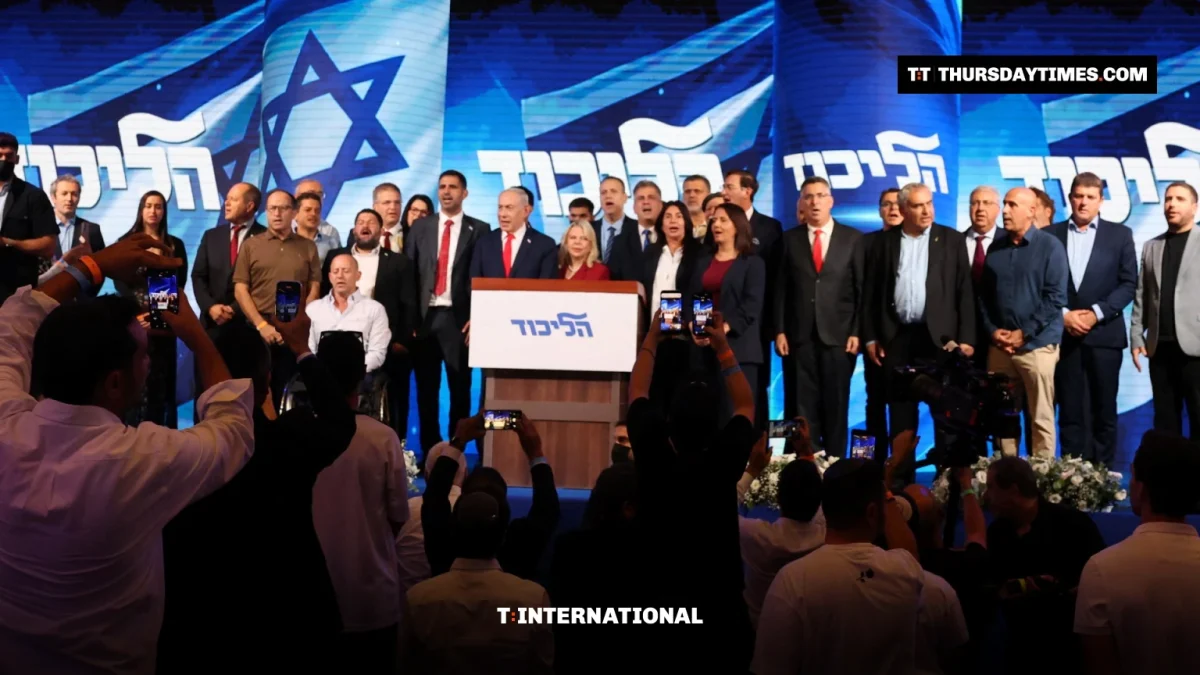
JERUSALEM (The Thursday Times) — Israel’s election committee chairman has ordered the Shin Bet security service to investigate “serious suspicions” of foreign funding aimed at influencing the vote, as partial results showed Prime Minister Benjamin Netanyahu’s bloc ahead but still well short of a majority.
With 93% of ballots counted, Netanyahu’s Likud and its far-right and ultra-Orthodox allies were on course for 53 seats in the 120-seat Knesset, the BBC reported. Former army chief Gadi Eisenkot’s Yashar party and three other Jewish opposition parties were set for 48, while Arab-led parties were heading for a record 19. A government needs 61.
Officials began counting as many as 480,000 absentee ballots on Thursday, cast by soldiers, diplomats, hospital patients and others who could not reach polling stations, which could still shift the final seat allocation.
‘Foreign funding’
Central Elections Committee chairman Justice Noam Sohlberg instructed the Shin Bet to look into what he called “serious suspicions” of “improper influence through foreign funding by external actors operating against Israeli interests”. He gave no details, but Haaretz cited a source as saying the committee had been presented with a claim that Qatar had funded efforts to raise turnout in Arab communities.
Likud, which has accused the Arab parties of “stealing” the election without providing evidence, called it “an attack on democracy aimed at enabling foreign control of the Knesset”. Balad chairman Sami Abu Shehadeh, whose party is part of the Joint List, said the losing side was “constructing a racist blood libel” and calling on the security agencies to overturn the result.
Weeks of talks ahead
President Isaac Herzog said he expected the official results next week, after which he will consult every faction and invite the leader with the best chance of forming a government, a process that could take weeks. He praised the 77.7% turnout, the highest in more than two decades, and urged parties to do everything they could to avoid another election.
Netanyahu has called for “a strong right-wing national government” and ruled out one that relies on “anti-Zionist Arab parties”, while Eisenkot says the public voted for change. The Arab parties could be kingmakers, but all but one of the Jewish parties have pledged not to work with them. Netanyahu’s bloc is on course for 15 fewer seats than it held in the outgoing Knesset.