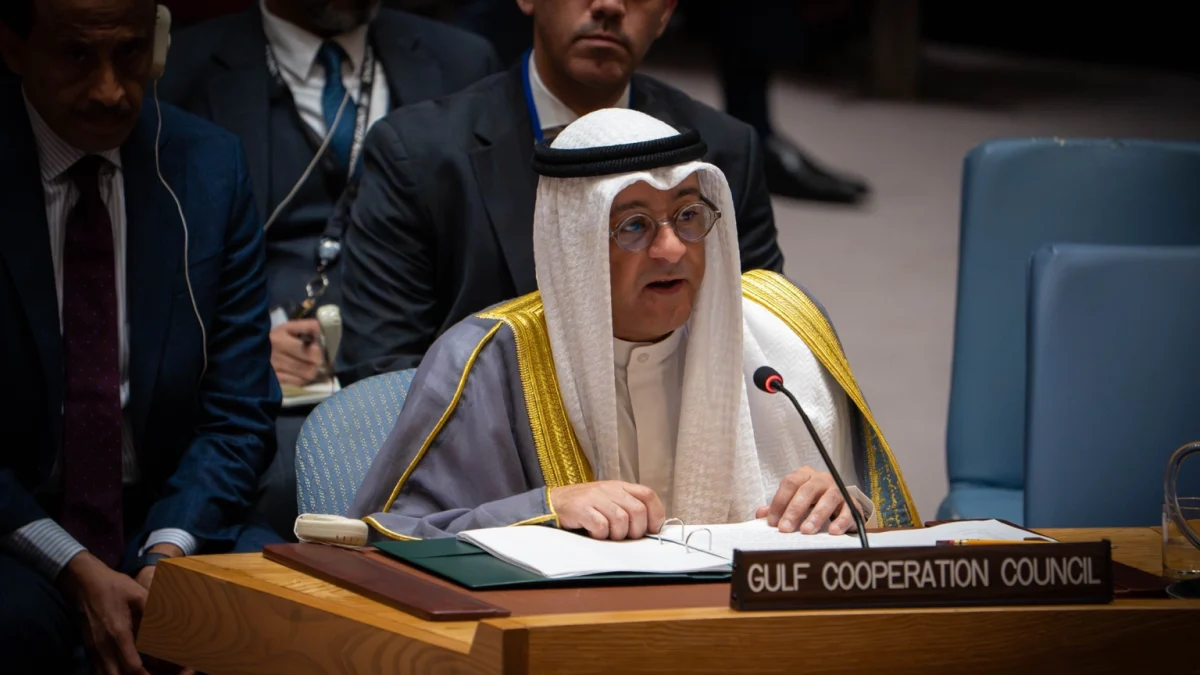
UNITED NATIONS (The Thursday Times) — Iran has fired more than 7,000 missiles and drones at the six Gulf Cooperation Council states since 28 February, the bloc’s secretary-general, Jasem Mohamed Albudaiwi, told the UN Security Council on Friday, as he called on the council to make the attacks stop and stop them happening again.
Albudaiwi said the strikes had hit airports, seaports, oil, gas, and power facilities, water desalination plants, and residential areas, killing and wounding people, badly damaging infrastructure, and harming the waters of the Gulf. “We are addressing your council today with a unified Gulf voice,” he told the 15-member council at UN headquarters in New York.
He said the GCC held Iran fully responsible for the attacks and their consequences, and rejected Tehran’s reasons for striking states that, he said, were not party to the war and had worked hard to keep the region from escalating. “The security of the GCC states is indivisible, and any attack against one member state is an attack against all,” he said, adding that member states kept their right to self-defence under Article 51 of the UN Charter.
The meeting was requested by Bahrain and convened by Latvia, which holds the council’s rotating presidency this month.
From Hormuz to the world’s farms
Albudaiwi said the disruption to shipping in the Strait of Hormuz had moved beyond an economic problem to “a serious humanitarian dimension”, with supply chains broken, food and other essential goods running short, and the flow of fertilisers and ammonia halted. He cited a warning by UN Secretary-General António Guterres that the poorest countries could face famine and acute food insecurity because of fertiliser shortages, and said the closure of one sea lane was being felt by factories, companies, and consumers on several continents.
“The GCC categorically rejects any attempt to close the strait, obstruct navigation within it, or impose illicit restrictions or transit fees,” he said. He condemned attacks on merchant ships and oil and gas tankers in the strait, which he said had killed a number of sailors, and Houthi attacks on shipping in the Red Sea and the Bab al-Mandeb Strait.
He welcomed Resolution 2817, adopted in March, which condemned the Iranian attacks on the GCC states and Jordan and demanded that they stop, and said the council now had a responsibility to see it carried out. He also pointed to a UN Human Rights Council resolution, 61/1, that called on Iran to pay reparations for the damage, losses, and injuries.
Solidarity with Riyadh
Turning to Yemen, Albudaiwi condemned attacks on Saudi Arabia by the Iranian-backed Houthis, whom he called a terrorist militia, saying they had targeted areas around the Two Holy Mosques, pilgrims, civilian airports, and oil facilities. He pointed to a strike on King Khalid International Airport in Riyadh in October that he said had killed 14 people. “We affirm our full solidarity with the Kingdom of Saudi Arabia,” he said.
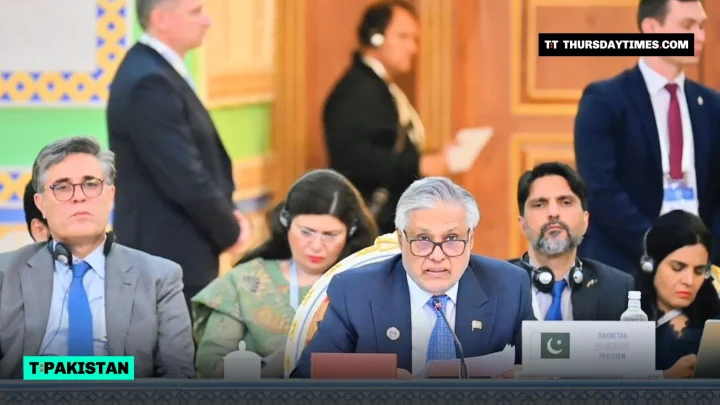
He welcomed the council’s presidential statement of 15 October, which affirmed Saudi Arabia’s right to self-defence, and Resolution 2837, adopted unanimously on Thursday, which condemned the Houthi escalation and demanded an immediate end to the attacks. Pakistan, a non-permanent member of the council, voted for that resolution and called the attacks on Saudi Arabia terrorist attacks.
Albudaiwi also condemned the Houthis’ treatment of UN staff and aid workers, saying a UN employee had died in their detention and others had been sent for trial on “fabricated charges carrying the death penalty”.
Read more: Houthis claim drone attack on Riyadh airport, missiles at Jazan; Gulf states to base joint forces at new military command in Kuwait; In Hormuz, claims move faster than the tankers.