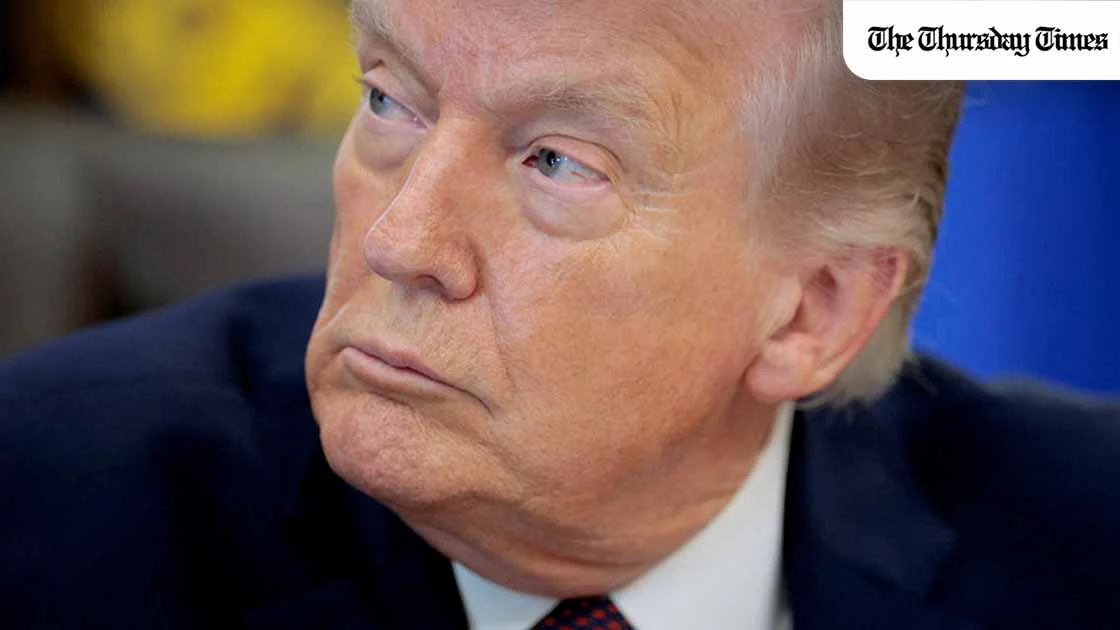
WASHINGTON, D.C. (The Thursday Times) — President Trump said that “a whole civilization will die tonight” if Iran did not agree to the terms of the Islamabad Accords before his deadline expired, sharpening fears that the White House could soon widen a war that has already pushed the region to the brink.
President Trump escalated his public pressure campaign on Iran on Tuesday, warning in a Truth Social post that “a whole civilization will die tonight, never to be brought back again” if an agreement was not reached before the expiry of his self-imposed deadline. He described the moment as one of the most consequential in modern history and suggested that regime change in Tehran could open the way for something “revolutionarily wonderful.”
The remarks were the latest in a series of increasingly stark threats from the White House as negotiations with Tehran approached a critical point. According to Reuters and the Associated Press, Trump has tied the deadline to U.S. demands that Iran reopen the Strait of Hormuz and accept a broader deal under intense military and diplomatic pressure.
His language also signalled how sharply the crisis has moved from coercive diplomacy toward the possibility of a deeper and more destructive confrontation. In recent days, Trump has threatened to strike Iranian infrastructure, including power plants and bridges, if Tehran refused to comply, while insisting that there was still a narrow window to avoid a far larger calamity.
What made Tuesday’s post especially striking was not only its apocalyptic tone, but its effort to frame the possible destruction of Iran in civilisational terms. Rather than limiting himself to the language of deterrence or retaliation, Trump cast the impending decision as a hinge point in world history, suggesting that the end of 47 years of “extortion, corruption, and death” might now be at hand.
The statement landed as the Middle East war widened on multiple fronts. International reporting said Iran had rejected a ceasefire framework backed by outside mediators and remained unwilling to yield under deadline pressure, even as the threat of expanded U.S. and Israeli strikes hung over critical civilian and industrial infrastructure.
That broader context gave Trump’s message a double edge. It was at once an ultimatum to Tehran and a signal to global audiences, including oil markets and U.S. allies, that Washington believed the final hours before the deadline could determine whether the conflict moved back toward diplomacy or lurched into something far more devastating. The inference is clear from the timing and content of his post, as well as from the administration’s earlier warnings about Iranian infrastructure and the Strait of Hormuz.
The post is also likely to deepen concern among governments and legal observers already alarmed by threats against infrastructure with obvious civilian significance. Recent coverage has noted that Trump’s previous warnings about bridges, power plants and related targets drew criticism from analysts who argued that such rhetoric edged toward threats of unlawful collective punishment.
For Iran, the immediate question is whether the message is intended as last-minute brinkmanship or as preparation for a much broader assault if no agreement is reached. For the rest of the world, the more pressing reality is that the United States president has now publicly suggested that the fate of an entire civilization could turn on the outcome of a single night’s diplomacy.
In that sense, the significance of Trump’s post lies not only in its language, but in its timing. It arrived just as Pakistan’s mediation effort had emerged as one of the few remaining diplomatic channels still carrying messages between Washington and Tehran. If the Islamabad Accord was meant to offer a ladder down from the brink, Trump’s warning suggested that the White House was still prepared to kick that ladder away.